I have a confession to make: I am a people-watcher.
I am fascinated by the invisible chess of human interaction: the subtle games of influence, the power dynamics, and the quiet ways we lead one another.
This fascination yielded several articles on what I extracted from the best managers I was privileged to work with, leadership under crisis and lessons learned from really bad leaders.
When I watched The Crown, I found myself less focused on the royal drama and more on the formation of Queen Elizabeth as a leader: the low self-esteem, fear, and vulnerability, traits I often recognize in myself, and the way she slowly learned to carry responsibility. I also found myself watching the old-school strategic operators around her, like Winston Churchill, and analyzing every pause, posture, and facial expression.
But recently, I found a new leadership role model in an unexpected place.
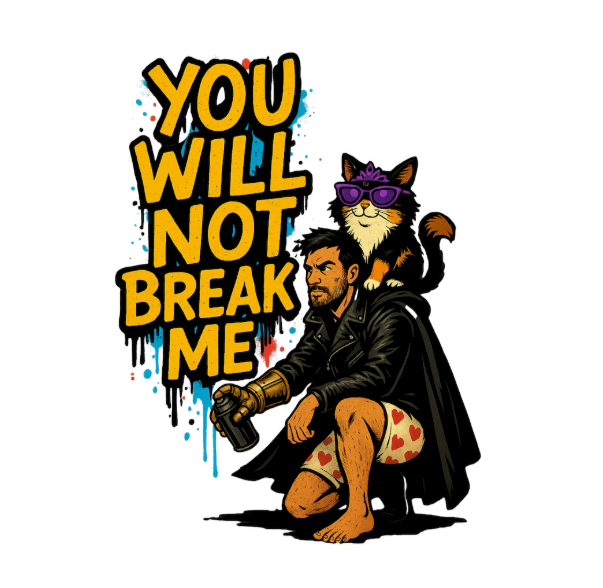
He is a muscular man in boxers with a deep voice, running through a maze with a cat named Donut.
His name is Carl. He's the hero of the Dungeon Crawler Carl series.
How We Met
When my husband played the first audiobook in our car, I spent the first ten minutes looking for the "mute" button. As a fan of productivity books, exploring hard sci-fi was hard enough, but hearing Carl's deep muscular voice in the intro — was too hard to bear.
As I journeyed through the books, I found myself not just passing time, nor simply entertained. I found myself in awe and taking notes of Carl's leadership traits (and Matt Dinniman's creativity, imagination and vocabulary). I realized that Carl wasn't just surviving a "System" designed to break him; he was leading a masterclass in modern, high-stakes management.
Here is what Carl taught me about being a better leader
1. Radical Empathy as a Tactical Edge
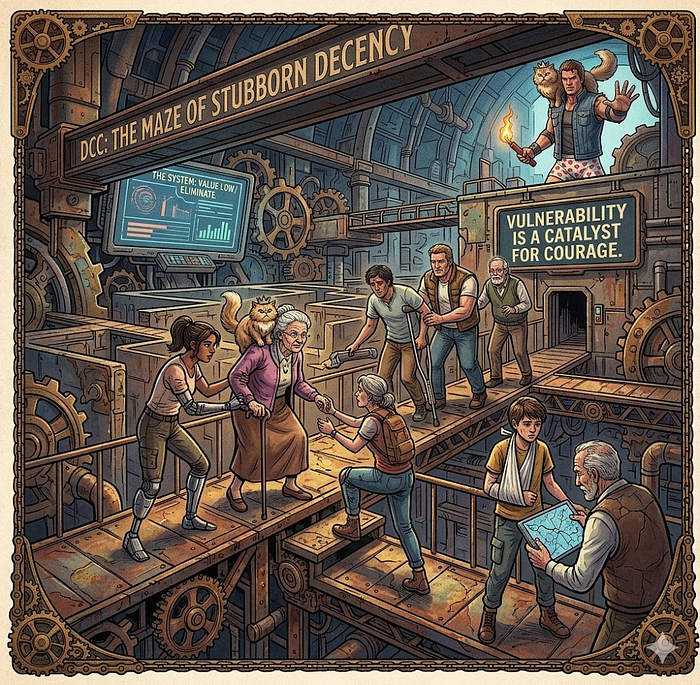
The dungeon is designed for you to abandon the weak in order to save yourself. It's designed to kill more and more people with each floor. Carl rejects that.
He risks his life for a group of elders from a senior care facility, Meadow Lark, then for struggling players deemed "low value," like Katia, and later for Non-Player Characters, NPCs, the system treats as disposable.
Carl's care is not networking, nor is it a diversity and inclusion strategy disguised as kindness. He helps because his inner compass tells him it is the right thing to do. When we have strength, safety, knowledge, or influence, we should extend some of it outward. Not always, not at every cost, but when we can help, we should.
The Leadership Lesson: People's value can be hidden or distorted by the system they are in. Effective leaders don't mistake current performance for potential. They invest the time to understand what people need in order to thrive, then adapt the conditions so their capabilities can emerge.
Under a micromanaging manager, I felt myself shrink. My next manager assumed competence and simply said: go hire and build a team. The challenge was bigger, but the conditions were better. That trust helped me rise and thrive.
Ask yourself: who around me has more potential than meets the eye, and what trust, support, or responsibility could help unlock it?
2. Negotiating with a Broken System
Carl is a master of "making the pie bigger" — a famous negotiation approach. He doesn't just play the game; he analyzes the mechanics to find the loopholes. He looks at a problem and asks, "How can I use the rules of this system to break the system?"
The Leadership Lesson: It's easy to fall into "the way things are done", updating our beliefs and changing our behaviors to match current company or organizational norms. Carl teaches us that influence comes from understanding the mechanics better than the people who built them.
When stuck between two bad options, don't ask, Which one should I accept? Ask, What assumption is making these the only two options?
3. Leading from Vulnerability
Brené Brown's research suggests that vulnerability is not weakness; rather, it is the absolute prerequisite for courage. Carl is often terrified, physically broken, and feels entirely unqualified for the weight placed on his shoulders as more people grow dependent on him. Carl uses his care and devotion for others, grit, and determination ("you will not break me") as fuel.
The Leadership Lesson: You don't need to feel like a leader to be one. Carl's "grit" isn't the absence of fear; it's the stubborn refusal to let the fear or others dictate his morals. He empowers others not by being their boss, but by being their catalyst. He recognizes and reminds them of their strengths even when they can't see them.
4. Humility Isn't a Weakness
Carl never walks into leadership assuming, "Of course I should be in charge."
His questions himself constantly: "Who am I to have this responsibility?"
Bad leaders assume authority belongs to them because they are smart, senior, loud, confident, or simply already in the room. Carl's humility is different. He understands the weight of responsibility. He does not want people depending on him blindly, but once they do, he takes that responsibility seriously.
The Leadership Lesson: Leaders and managers should continuously check what is the value-add they bring to their teams, how they are serving, helping and growing others. Humility is not thinking less of yourself. It is remembering that leadership means other people are affected by your judgment, your blind spots, and your priorities.
5. Empowering People, Not Collecting Dependents
One of Carl's most interesting traits is that he does not need everyone to remain smaller than him.
He helps Donut, his cat, become more powerful. He helps Katia, his fellow dungeon crawler, grow. He identifies what people are good at and creates space for them to become more capable, more independent, and more dangerous to underestimate.
That is real leadership.
Insecure leaders collect dependents like trophies. Strong leaders build other strong leaders — often in ways that surpass their own skills.
Carl consistently acts as a catalyst. People around him become more themselves, not less.
The Leadership Lesson: if everyone needs you in order to function, that may feel important, but it is not leadership. It is a bottleneck. It's a failure to scale yourself.
Ask: Who am I unintentionally keeping dependent on me? How can I give them enough context to make strong decisions without me?
An Unexpected Leadership Model
In a dehumanizing environment, Carl's greatest struggle is maintaining his humanity. He refuses to become a "monster" just to stay alive or win.
I've spent years studying leaders and learning from others with titles and positions of power, but Carl reminded me of a fundamental truth: Leadership is a choice you make when everything else has been stripped away. It's about being resourceful when you have nothing, being kind when the world is cruel, and "Carling it up" when everyone else expects you to break.