Introduction — Why This Arduino Toll Gate Project Is a Game-Changer
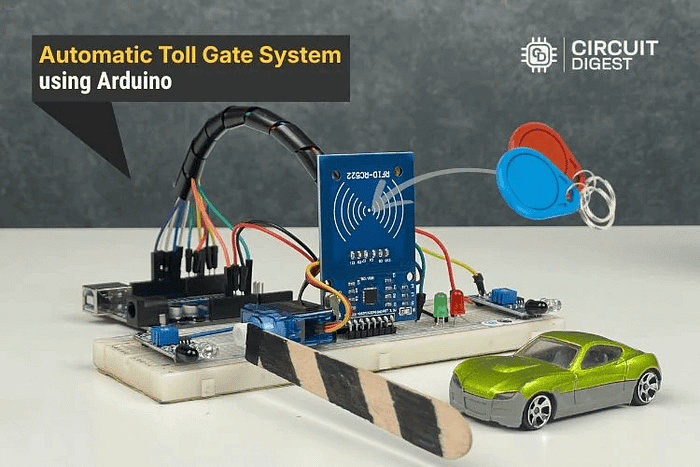
Imagine transforming a mundane highway toll booth into an intelligent, contactless, and fully automated system — using just simple components and an Arduino board. This project demonstrates exactly that: an automatic toll gate system that detects incoming vehicles, verifies payment via RFID cards, and opens the gate without a single button press or human operator. It's not just fun — but useful, scalable, and utterly shareable for anyone passionate about IoT and embedded electronics.
In an age where automation drives efficiency, projects like this are more than just school assignments — they're stepping stones into the future of smart infrastructure.
The Core Idea — What Makes It So Smart
At heart, this system replaces manual toll collection with a fully automated RFID-based workflow:
- Vehicle Detection — IR sensors identify an approaching vehicle.
- RFID Payment Validation — Drivers scan prepaid RFID cards; the Arduino checks the balance.
- Automatic Gate Control — If the balance is sufficient, the gate opens via a servo motor.
- Seamless Exit Detection — A second sensor ensures the vehicle clears the gate before closing.
This workflow mimics real-world systems used in urban toll plazas and smart parking facilities — but at a fraction of the cost and complexity.
Why It Matters — Practical Benefits for Builders
👉 Beginner-Friendly & Affordable You don't need advanced hardware skills — just an Arduino Uno, a few sensors, an RFID reader, and a servo. Total cost is under $30, making this ideal for classrooms, maker labs, and DIY enthusiasts.
👉 Hands-On Learning Get a taste of embedded systems, sensor integration, serial communication, and real-time control — all in one project.
👉 Real-World Relevance Automated tolling systems are increasingly common on highways and in smart cities; building one yourself gives you insight into how these systems work behind the scenes.
👉 Expandable Design Want online logging, database connectivity, mobile balance checking, or live dashboards? This base system can scale into a full IoT ecosystem.
Project Walkthrough — How It Works (Simplified)
🔧 Components You'll Need
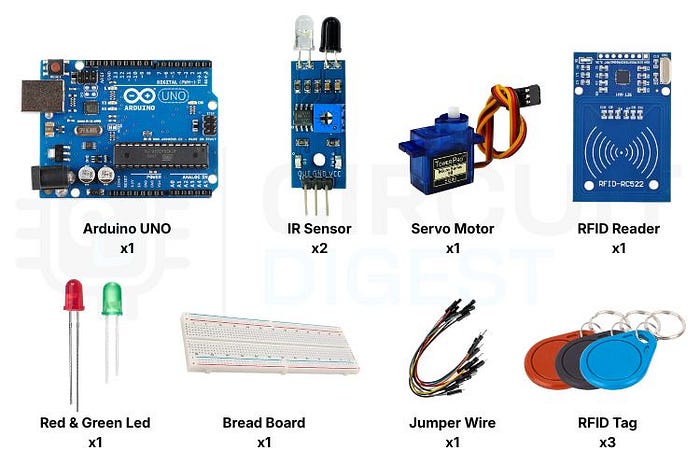
- Arduino Uno — The central controller
- RFID reader & tags — For contactless payments
- IR sensors — To detect vehicle position
- Servo motor — To open/close the gate
- LED indicators — Visual system status feedback
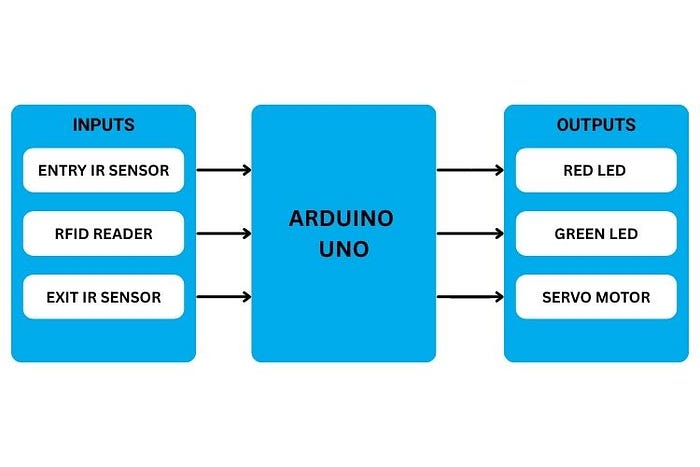
Each component plays a clear role in managing detection, validation, and motion control.
Behind the Scenes — The Arduino Logic
The heart of the project is the Arduino sketch:
- It keeps the gate closed until a vehicle is detected.
- When an RFID card is tapped, the system compares it against stored IDs.
- If a valid tag and sufficient balance are found, the system deducts the toll and opens the gate.
- If not, access is denied, and the red LED warns the driver.
This logic not only enforces payment but also teaches basic data handling and decision workflows in embedded coding.
Use Cases — Beyond a Simple Project
This isn't just a school assignment — it mimics real industry systems, and can be adapted for:
✔ Smart parking entrances ✔ Gated community access control ✔ University campus shuttles ✔ Industrial vehicle checkpoints ✔ Automated event traffic management
By showing where this project fits in the real world, you position your blog as valuable to both coders and decision-makers.
Future Enhancements — Make It Even Better!
Once you've mastered the basics, consider:
🔹 Adding Wi-Fi connectivity with ESP32 to log toll transactions in the cloud. 🔹 Integrating LCD or OLED displays to show balance and messages. 🔹 Building a mobile app for balance top-ups and real-time alerts. 🔹 Using license plate recognition and OCR to link plates with accounts. 🔹 Powering the system with solar energy for autonomous deployment.
These upgrades can turn a simple DIY project into a showcase piece for your portfolio.
Conclusion — Why Your Audience Will Care
This Automatic Toll Gate System Project Using Arduino strikes the perfect balance of practicality, creativity, and accessibility — the exact combination that Medium readers (from hobbyists to engineering students) love. By clearly explaining both the how and the why, you provide value that keeps readers engaged — and coming back for more.
Ready to build the future of tolling? Share your build, code, and lessons learned in the comments — and watch your blog traffic grow! 🚀.