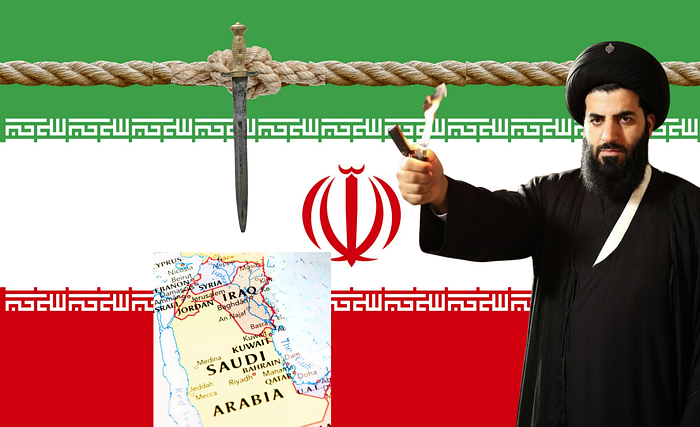
For the first time in history Middle East oil/gas PRODUCTION is being closed due to having NO PLACE to put the oil/gas. Most stories I read in the media compare these oil/gas disruptions to past ones in the 1970s (there was no decline in production, only distribution) or 2020 Covid (extreme decrease in demand; again, no loss in production).
Really, this bears repeating. For the first time in history the Middle East can't get its oil to market.
With each day that passes, Saudi Arabia, the UAE, Kuwait, Qatar and Bahrain find themselves involved in a war between the U.S./Israel and Iran. Iran attacks them whenever they assist the U.S./Israel.
For our amusement, they publicly claim complete surprise and innocence.
With each day that passes, the GCCs pump oil in storage that used to head towards global oil markets. Once that storage is full the GCCs will suffer economic losses that will take years, if not decades, to recover from. Oil well production can't be sped-up. They can't make up lost income.
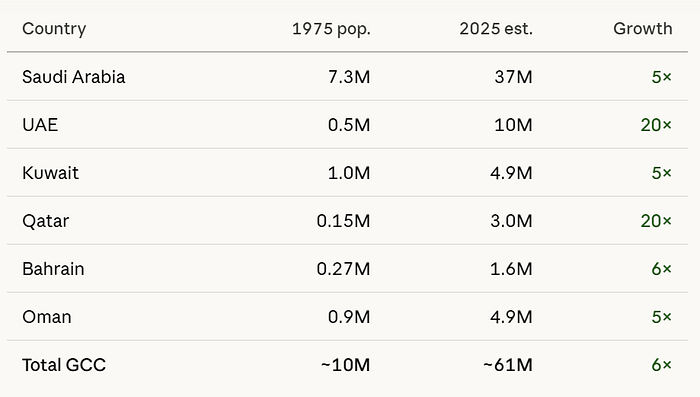
If you haven't thought about the Middle East in decades, consider the following. There are a lot of mouths to feed from those dollars.
The scuttlebutt is that the GCCs, on average, have 30 days worth of storage. As of this writing, they are 21 days in — all oil and gas going to storage because they can't move it through the Strait of Hormuz.
No one knows how long the GCCs can last with Iran controlling the Strait. Whether it's 30 days or 90 days everyone agrees it's unsustainable.
I would argue any ideas about alternate routes or pipelines would depend on preventing Iran from interrupting those projects. In any case, not enough time.
What can the GCCs do?
They can sell to an Iran-approved buyer.
They MUST get their oil/gas to market. I don't see that they can survive without the imports the oil and gas pay for.
Remove the oil revenue and you have sand, heat, and 61 million people with no food, no water, and a lot of time to organize a revolt. You get foreigners who, after experiencing the visceral fear of getting blown to pieces, never come back.
If they go off the petrodollar, then the 50-ish year deal with the U.S. ceases to be effectual. The oil and gas are more valuable today than ever (even though it's declining). They could start paying the U.S. directly for protection but there has to be some indication the U.S. can actually provide it.
The GCCs could make defense arrangements with China and/or other Asian buyers, which purchase the bulk of oil and gas. Is Beijing already fielding calls?
The brutal point of this story is that the Arab countries are increasingly vulnerable to invasion, regime change, social unrest, starvation — literal apocalypse.
As for the U.S. It has plenty of farming and water. But it will suffer just as much as the GCCs.
America will feel this too — just slowly enough that no one will know who to blame. See End of Petrodollar: No Going Back.