By Jesse Karjalainen (You can also find me on YouTube and TikTok.)
I grew up in the 8-bit era. But what exactly do we mean by "8-bit game", "8-bit sound" or "8-bit graphics"? The answer is that it simply depends on the platform or era in question. The problem stems from the fact that the earliest computers ran on 8-bit processors.
Without getting deep into technical detail, most people don't realise that most popular computers in the l970s and 1980s used the same processor — the MOS 6502, or later variants. Whether you bought an Atari 2600, Apple II, BBC Micro, VIC 20, Atari computer, Commodore 64 or even the Nintendo NES, they all used this very same 8-bit processor.
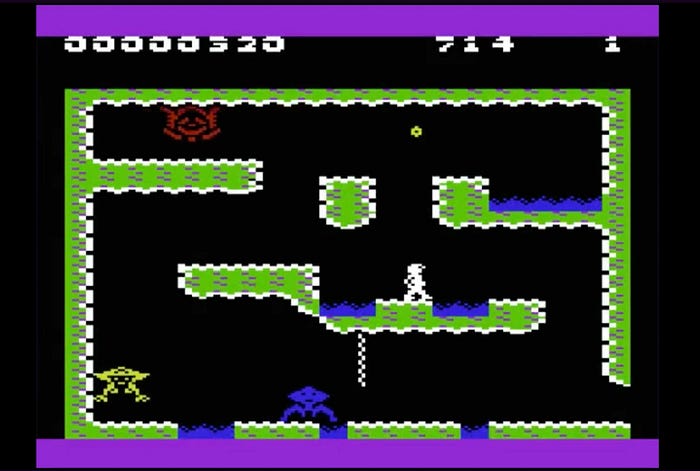
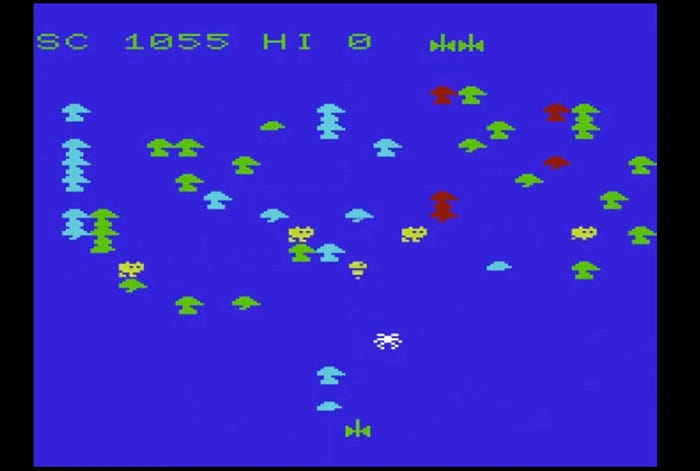
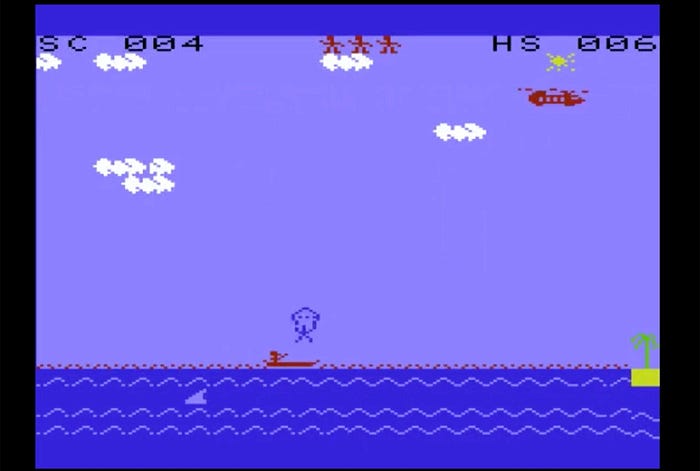
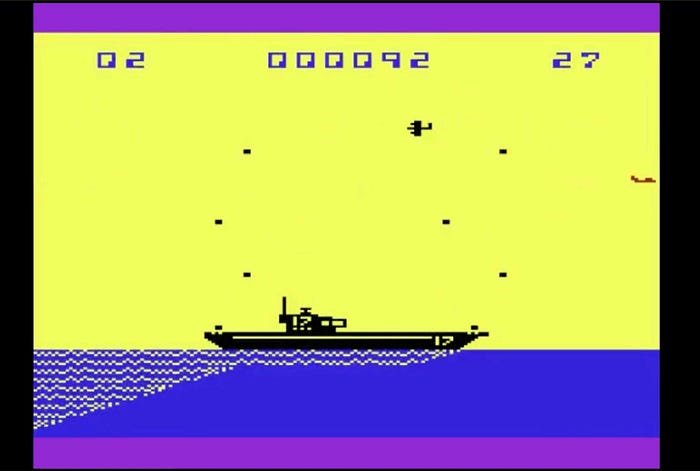
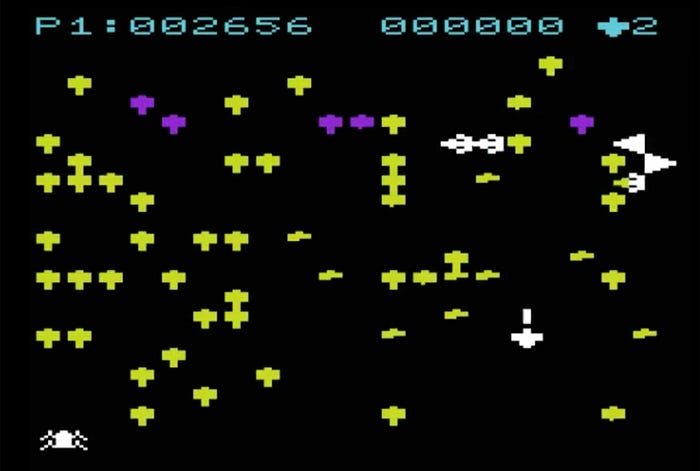
This means that more broadly we are talking about the "8-bit era", which of course developed and improved over time as computer memory (ROM/RAM) got better. In this way, the Commodore VIC 20 computer had a 6502 chip and just 20kb of ROM. Typical games for the VIC 20 looked like these games:
By contrast, the Commodore 64 computer had the same 6502 chip as the VIC but had a whopping 64kb of ROM. Here is how the early Choplifter looked on the VIC 20 and the Commodore 64.
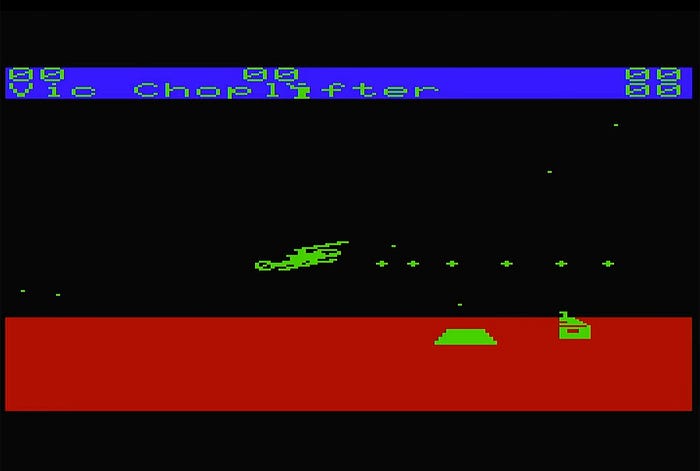
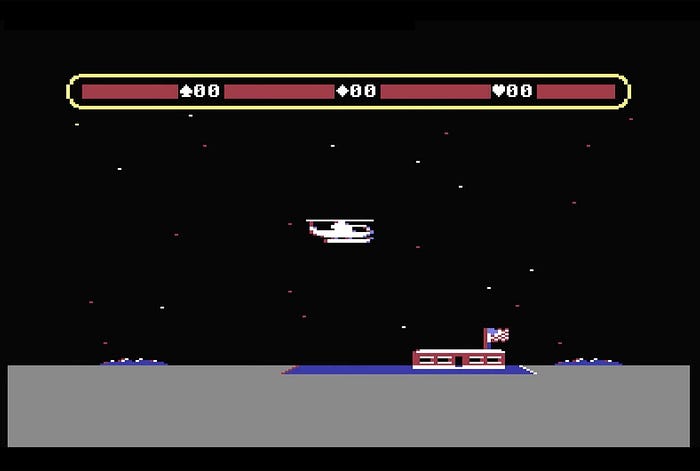
Now raise your hand if these images don't quite fit your mental image of "8-bit graphics". You are not alone.
Bit by bit
These early computer graphics got started around 1971 when the first arcade games appeared. With these came the switch from traditional computer "vector graphics" (lines displayed by plotting between points) to "raster graphics", made up from maps of bits — or bitmaps — that were transferred into television signal. In the early 1970s, visual displays prioritised function over form — often expressed on the screen in monochrome.
Then the 8-bit MOS 6502 processing chip appeared in 1975.
If we unpack the term 8-bit, what we are talking about is binary value whereby:
· 1 bit = holds 2 states of computation (either 0 or 1).
· 2 bit = holds 4 states of computation (00, 01, 10 or 11).
· 4 bit = holds 16 states of computation
· 8 bit = holds 256 states of computation
That's it. The next level in this equation is: what are you applying that computational power to? That's how we get 8-bit processors, 8-bit graphics and 8-bit sound. These, collectively, are what gave us the now famous, low-fidelity 8-bit aesthetics.
It was in 1977 that the first home consoles appeared on the market. The classic Atari 2600 (1977) console used the MOS 6502 chip. The first Apple II (1977) also used this same chip. In fact, the Apple founders used Atari parts in their early computers.
It was the video game Space Invaders (1978) that broke new ground in setting a new bar in terms of 8-bit graphics. For the first time, game characters were more than mere blips or blocks — instead they had distinct shapes, all created using bitmaps. A new standard was set the following year with the release of Galaxian (1979) was the first video game to use RGB colours. These games combined pixel art and layers of sprites or stamps to bring new detail and animation.
The VIC 20 appeared in 1980 and the memory limitations meant that its 8-bit graphics looked typically like this:
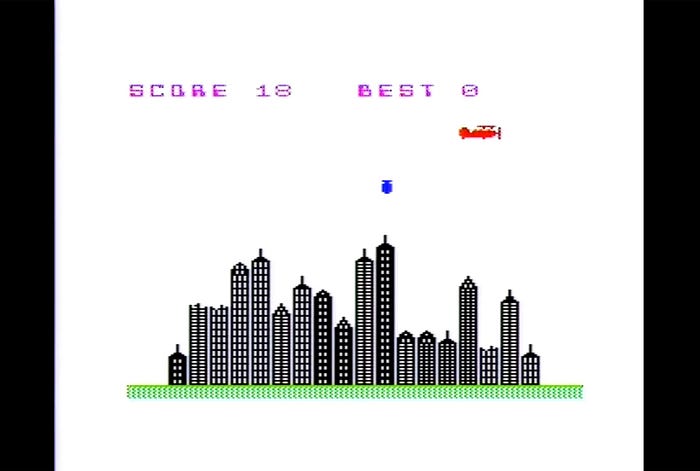
One game I remember on the VIC was Blitz, which involved flattening skyscrapers before you flew so low that you flew into them.
I was just 11 to 12 years old in 1985. This was when I switched from the VIC to the Commodore, launched in 1982. It, too, was an 8-bit computer using the same 6502 chip but the memory capacity meant the graphics were better. The thing that really opened my (and a lot of other people's) eyes once I got a "64" was not just the colour graphics but the quality of the games. The difference was night and day.
These next-generation games were visually stunning compared with anything I had seen on the VIC, the Atari or in the arcades. Suddenly we had games like 1942, Gauntlet, Bobble Bobble and Winter/Summer Games — all displaying far richer colours.
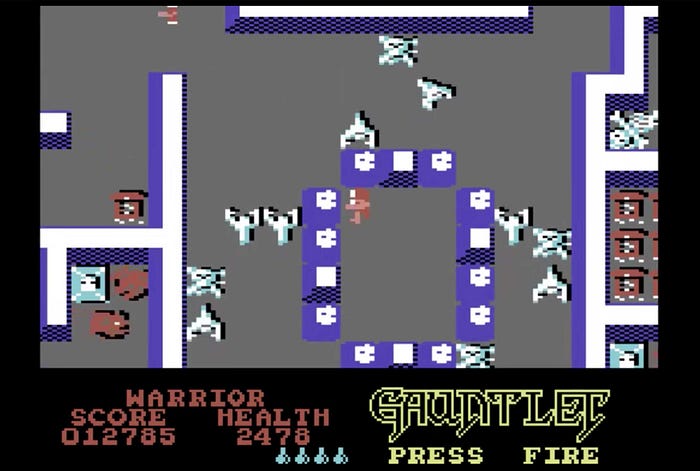
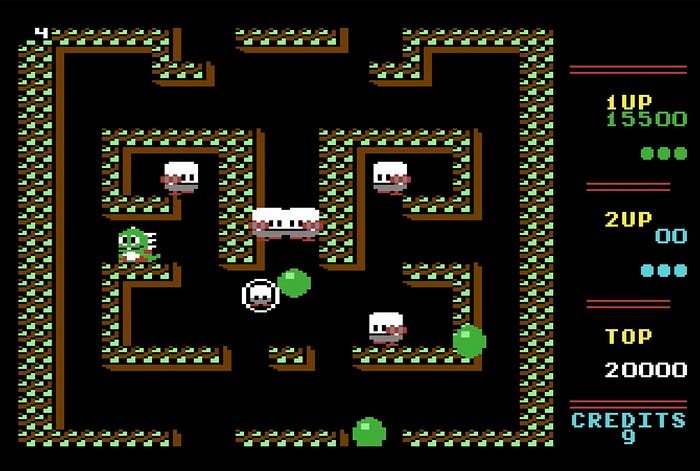
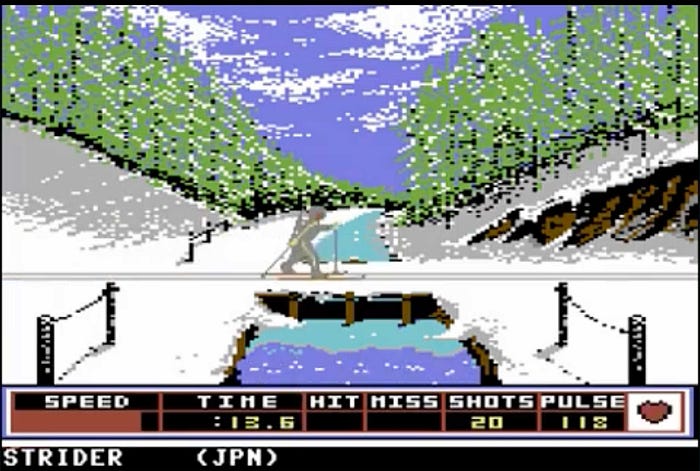
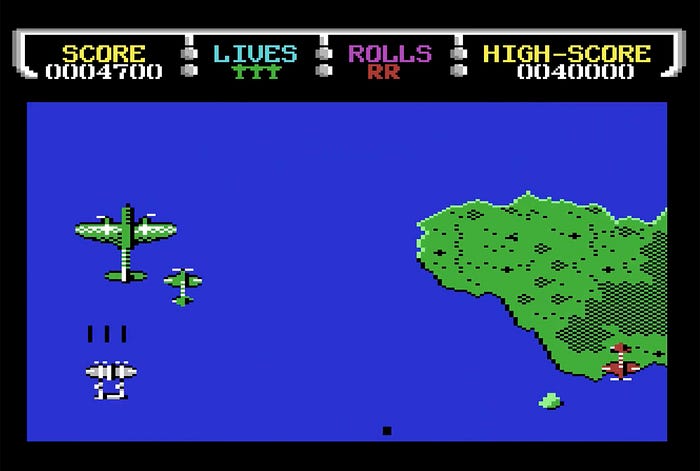
The top two games above were quite typical of the early Commodore games. The next two might look more like the 8-bit graphics of today's popular imagination but make no mistake: although you see a mountain scene or Pacific Island, these are all flat (or scrolling) background images. The "gameplay graphics" are moving overlay graphics (the skier or planes) known back then as sprites, which float above the background and form the playable elements of the game.
Ǝ-bit' graphics
The world at this point in the development of 8-bit computing experienced the so-called "video-game crash of 1983". The games industry had reached market saturation and kids no longer wanted games consoles. They wanted computers — and computer games. This was true also in my case.
By now, it was improvements in RAM and ROM that brought a marked improvement computer games and graphics. Much of this came about because of the greater demand for smaller pixels from the Japanese market, which needed to display the more detailed characters of written Japanese.
We saw earlier that 8 bits equalled 256 different "states". With 8-bit processors, computers could draw from a palette of 256 different colours but the limitations of memory restricted their usage to just 4, 8 or 16 colours at a time. It was thanks to the greater memory (64kb in the case of the Commodore 64) of 1980s computers that game graphics got more colourful and more granular.
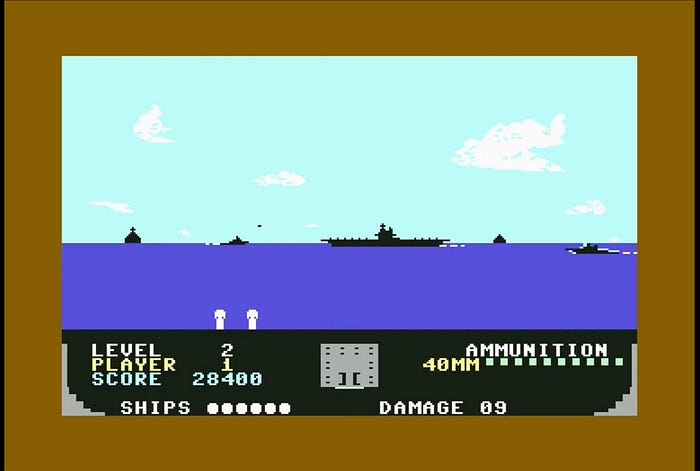
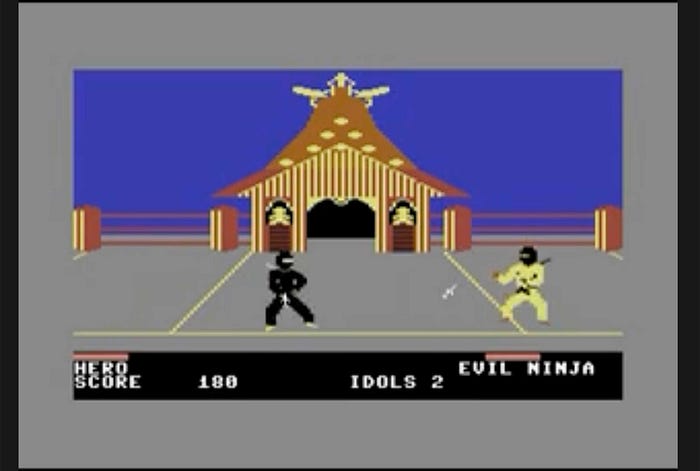
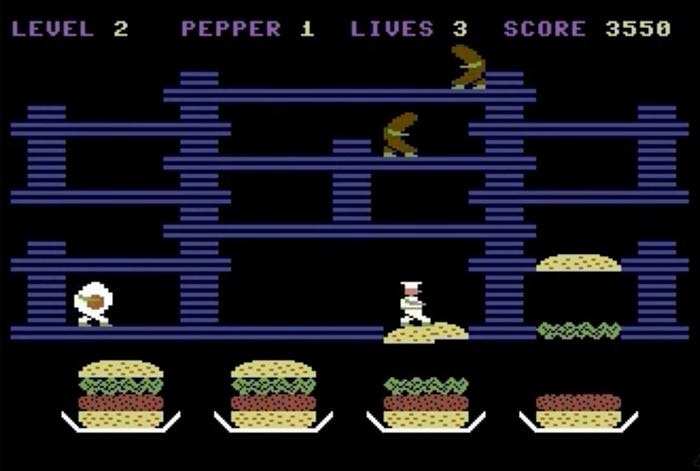
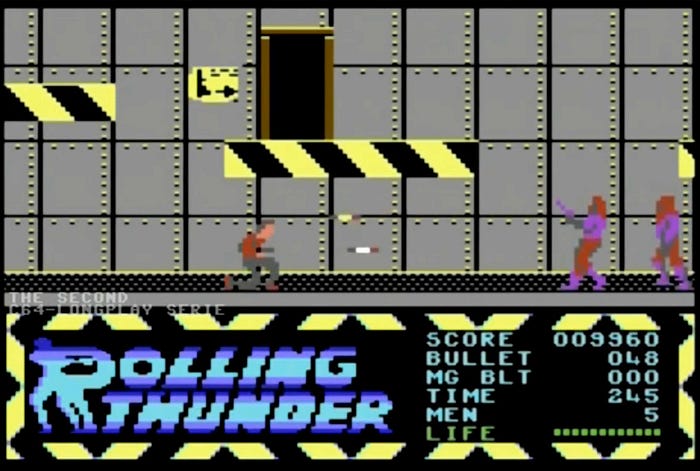
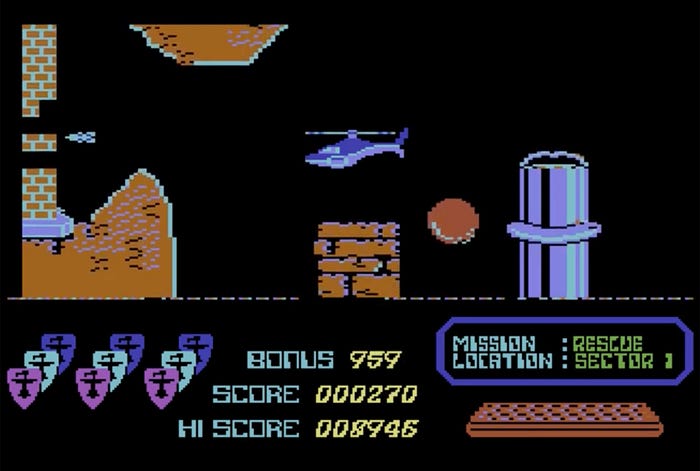
It was now, from around 1983 onwards that the pixel-art aesthetic of the 8-bit era began to resemble those of the modern imagination.
Some of my favourite games on the Commodore 64 included Beach Head, Batman, Ghostbusters, Ninja, Outrun, Airwolf, Burger time, Rolling thunder and Rampage. Gauntlet was a classic dungeon crawler
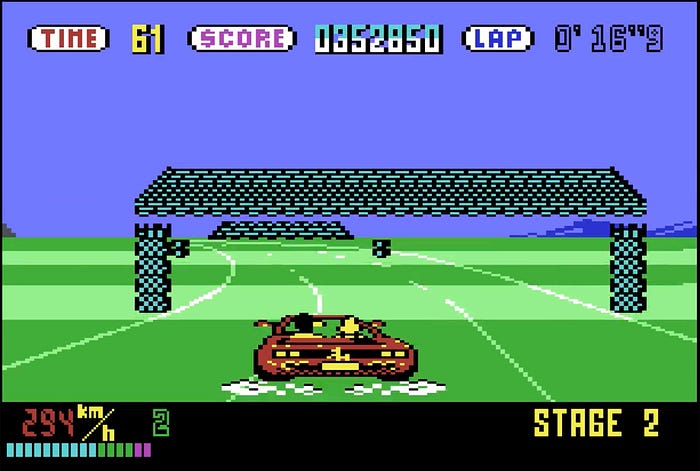
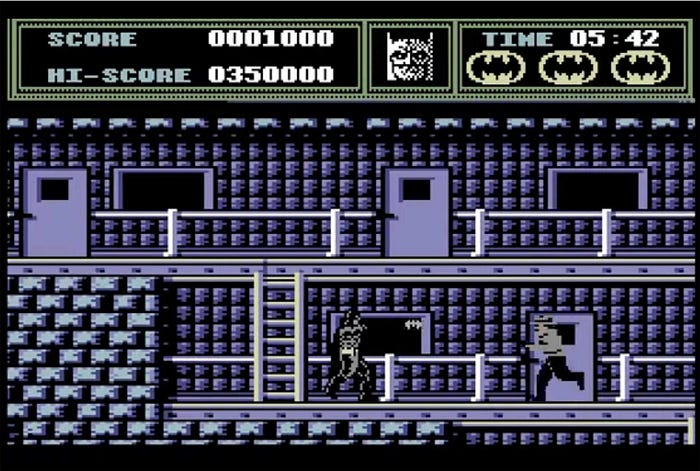
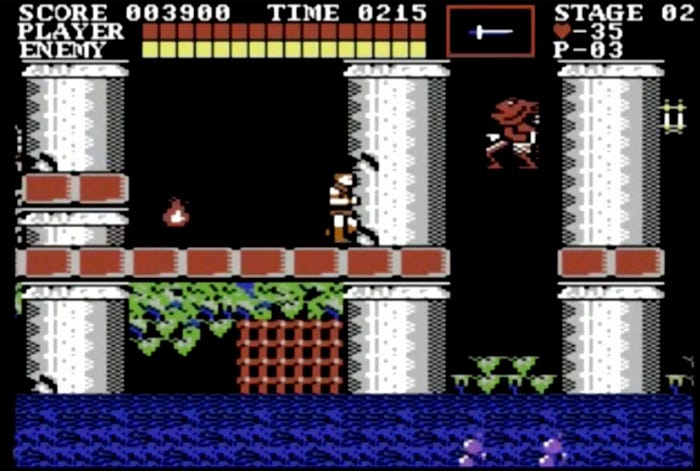
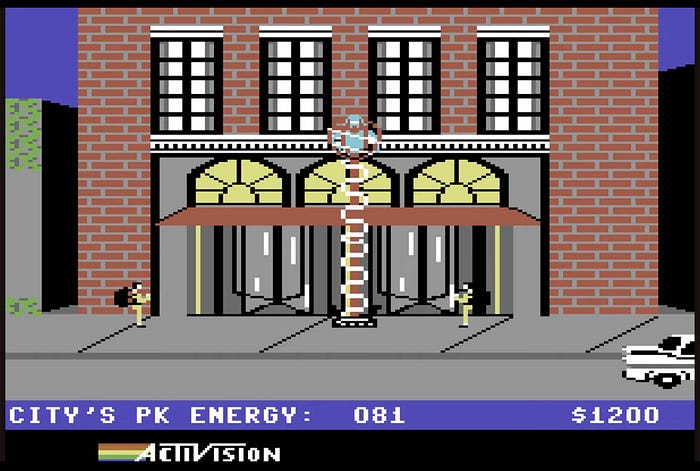
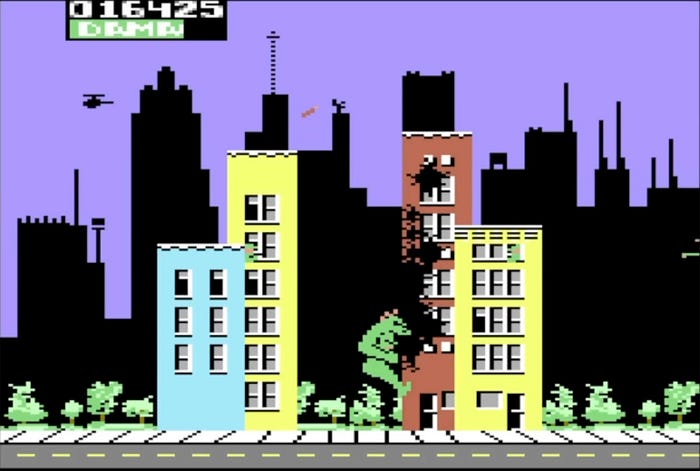
I LOVED playing Rampage.
The winner of the console crash of 1983 was Nintendo, which release its 8-bit Famicom (Family Computer) console (also with 6502 chip) that same year. This paved the way for the global launch of the Nintendo NES (with the 6502-based chip) in 1985.
The NES was an 8-bit system by represented the cutting edge of computing using the very same MOS 6502 processor. It was in the mid-1980s that processors were able to handle 516 colours, which began introducing greater detail and smoother designs. The astounding Amiga range introduced the world to the wonders of 16-bit computing. It's jaw dropping graphics were entirely next-level.
Ǝ-bit' sound
The first thing to know about gaming music in the 8-bit era is that computers did not play music files. Instead, they playedmusic according to instructions. It might seem a small distinction. The limited memory of early-1980s computers meant that a sound file could use a thousand times more memory than a set of computer-code instructions telling it to play theses sounds. It was smart engineering.
It's interesting because you wouldn't design a game that way now. Instead, you would include sound files in the code package. But in the 8-bit era, that would have been the equivalent of shoving a dictionary in between the pages of your notebook.
The piece of electronics for playing these now iconic sounds was the so-called SID chip — or the Sound Interface Design chip. This was a dedicated processor designed to control a set of different — what I am going to call — "speaker keys". Think of having a limited range of 5 or six keys on your piano to cover all sound.
The way the computers worked was that the 8-bit 6502 CPU/processor chip ran the computer. It instructed the SID chip, which then controlled and triggered each of its audio generators, or electronic "musical keys" in my analogy. In this way it played music according to chunks of 8-bit instructions, like a drum set or piano. There were no sound recordings.
Playing a series of musical sounds over a long period would have required a large sound file that the computers simply couldn't handle. So, the obvious think to do was to generate the music "live" and on the spot, rather than use any form of pre-recorded playback.
Therefore, what we today think of as "8-bit sound/music" is more broadly a description of the limited range of sounds that we heard in the video game and computer game era of the 1980s. Without getting technical, these sounds had various, distinct waveforms, including square and triangular, the SID took care of the rhythm and pulse of the sound coming from the speaker.
All of this applied whether you were using an Atari, a Commodore, an Apple II or a Nintendo NES console. Like we saw with colours, there were 256 musical options available in an 8-bit system but not all could be played at once. Thus, we get "8-bit music".
Pixel art
Today, a whole canon of modern aesthetics called "8-bit" is linked to nostalgia and retro-enthusiasm for all things pixel art and sounds that mimic (rather than recreate) what were the technical limitations of the day. What we are essentially talking about when we refer to the 8-bit era is that specific window in time when kids like me went from playing games with really chunky graphics to the next-level of having a "256 palette" for things colours, graphics and sounds. We witnessed the sharp improvement in visual design.
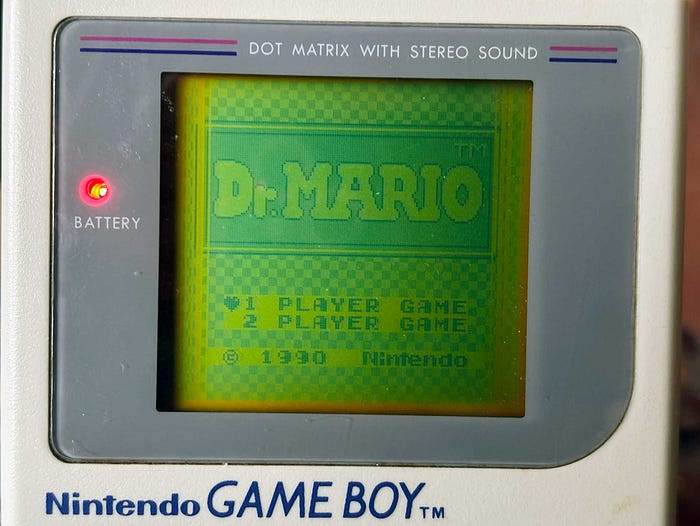
My original Game Boy was released in 1989. It, too, has an 8-bit processor. Although not initially available in colour, all images and sprites were rendered using what we might consider the classic 8-bit style. Each pixel is a value of light and dark, arranged in a matrix of dots. Here you can see Dr Mario drawn in this style.
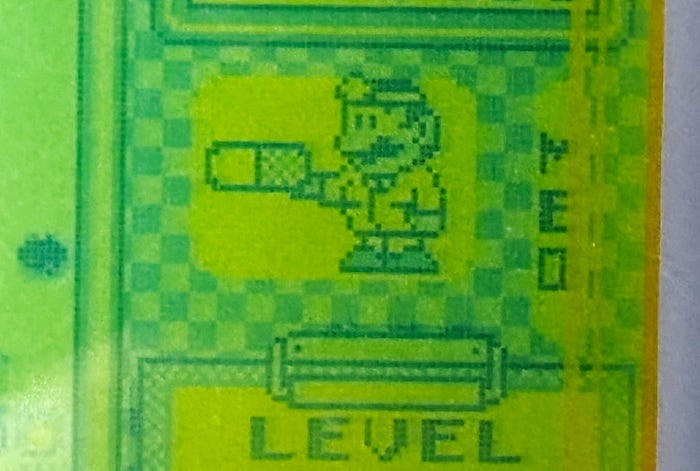
On reflection, the first version of Choplifter came out for the VIC 20 in 1982 and this Dr Mario game for the Game Boy was released in 1990. Both are "8-bit" games and devices but the evolution of improvements in graphics is stark. I don't have enough of a musical ear to tell if the same improvement occurred in sound design.
For old guys like me, the 8-bit era encapsulated the next level (3rd generation, according to some) of computer games. Seeing and playing these old games takes me back to my childhood days and unlocks countless memories. The irony is that, while we today talk about the era in terms of technical limitations, at the time these represented large leaps in technological advancements. Then came the Amiga and the even more amazing 16-bit graphics, which could now render an astounding 65,536 shades per colour channel.
The games of this period got infinitely better, harder and longer than anything we had seen before. Commodore games were serious games, despite the 2D graphics. Good examples include Gauntlet, Ghostbusters and Castlevania. Take Hunchback, released in 1983. It started off easy but rapidly became very hard. (Did anyone ever complete it??) It was of classic 8-bit design, with limited design and colours, yet it was incredibly satisfying to play. I doubt it would/could have been improved with more colours or 3D rendered worlds.
Yet, at the same time loading games from cassette tape sometimes look longer than playing the game because you died so quickly.
For younger generations, there is excitement in experiencing a world they never experienced first-hand. The games appear simpler yet contain layers of equally addictive gameplay. Like many things inherited from the late analogue age, these games focused on core mechanics of what computer games do best. Without the excessive storytelling or attempts to recreate realistic environments.
It turns out that the limited range of sounds, colours and pixelated graphics have a charm that continue to live on, whether in 2D or using isometric design. This is now "vintage digital". Given the choice between 4-bit Mario, 8-bit Mario and 3D Mario, many of us prefer the one from the mid-1980s. This style is now faithfully being recreated and applied in all manner of design in the form of pixel art.
Out of interest, I was curious and asked Photoshop to create a new image with the following prompt: "create 8-bit pixel art style image of man at a desk writing on his laptop". Here was the result:


I then asked: "create 8-bit pixel art style image of man at a desk writing on his laptop. I would like a lot of detail as if he is inside a computer game".
I got:

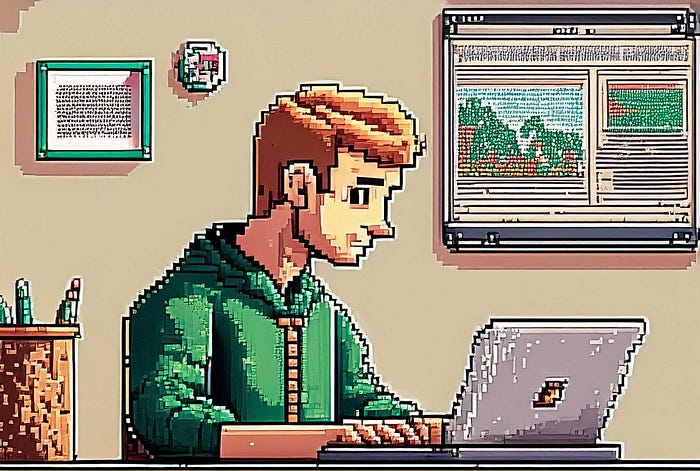
Hmmm. Not quite what I expected. I will stick to original pixel art.
See you next time.
Jesse is an author, illustrator and content creator currently based in Sweden. The Retro Tech show aims in chronological order to chart how the world went from the analogue age to the digital age. This is a personal memoir, starting in 1973, of every major technology I encountered in each year of my life.
None of the words in this series have been written by AI. This is 100% human sweat and toil. This content may not be used for AI training, so bots can stay away.
Find me and my content in my social circles:
You can also find me on YouTube and TikTok. Discover all my written content here: https://jessebooks.gumroad.com/