According to SEBI's 2024 study, only 7% of individual traders in India's equity F&O market make net profits, and just 1% earn more than ₹1 lakh after accounting for transaction costs. That leaves a massive 93% consistently losing money. This isn't to scare you; it's a reality check every aspiring trader needs before stepping into this world. 📊⚠️📉
I'm genuinely happy (and humbled) to share that after years of fine-tuning my approach, I've made it into that top 1% club. But let me be clear — it wasn't luck, insider tips, or any secret shortcut. It took: 💪🧠💼
- Relentless discipline
- Algorithmic systems (free from emotional bias)
- Ruthless risk management
- Plenty of hard lessons learned while being part of the 93%
All this data emphasizes one thing: Profitability in F&O trading is rare, and staying profitable is even rarer. 📌🔍📈
I feel proud (and a little amused!) knowing that while I'm busy coding, relaxing, or enjoying family time, my algorithms are quietly earning their keep. From paying electricity bills to weekend dinners — those bots have become my silent financial partners.
It's a great feeling turning lines of code into steady monthly income. Who would've thought my scripts and algos could foot the bills better than me? ☕💻💸Let me walk you through my journey, year by year, with real numbers and honest insights. 📝📊📆
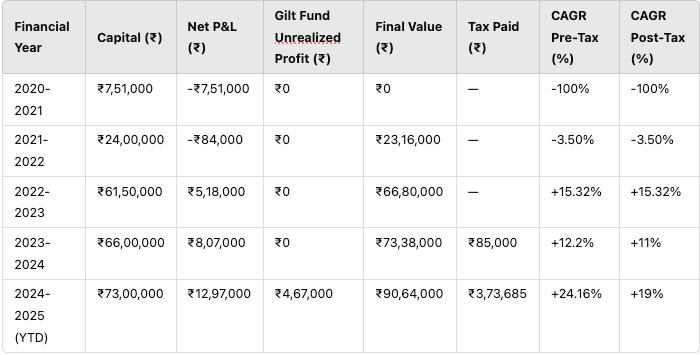
Multi-Year Trading Performance: From Painful Losses to Steady Profits 💹📅🔥
Why I Started F&O Trading 🎯💡💻
- I wanted a second source of steady income on a quarterly basis to help cover my Needs + Wants expenses. SIPs in equities require years before systematic withdrawals.
- My goal was to achieve a consistent yearly income of at least 12%, not just a one-off lucky year. Nifty index returns vary — one year 15%, the next year -5%.
- I needed something more stable for planning, reinvesting, and compounding profits. Also, last few years were the bull run, it will not always be the case to be able to depend on the equity market.
- Most importantly, as a software engineer, automating F&O trading with my coding skills was an exciting challenge that kept me energized. ⚙️📊🔥
Year-by-Year Breakdown 📆📈📌
2020–2021: The Year of Overconfidence and Humility 😓📉📚
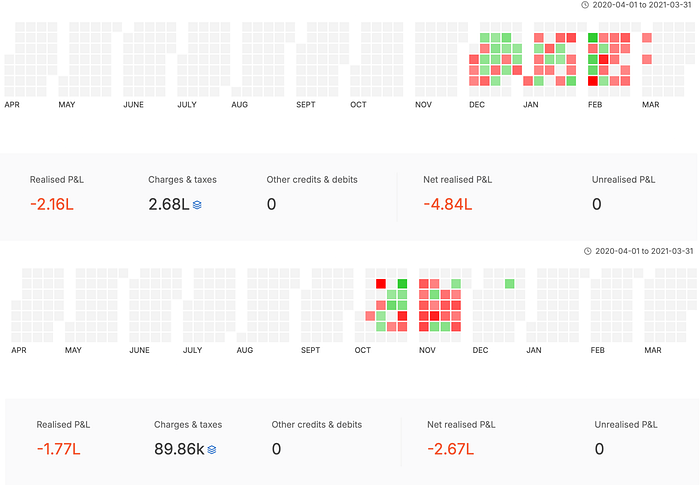
I wiped out my initial ₹7.5L, 2 accounts combined. Total loss. But I call it my "tuition fee" to the "Share Market University." It hurt but was affordable. 🎓💸🔍
I spent three months understanding equity trading, chart patterns, and commodities. Profits felt elusive. I stuck to SIPs and shifted focus to F&O. 📊📚🔄 By October, I tried manual trading. Watching my money swing 5–10% in minutes was thrilling yet nerve-wracking. In 5 months, ₹7.5L gone. It stung emotionally but financially little bit as i could afford to loose that much. 💥😰📉
Lessons Learned:
- Chart patterns are subjective and tough to backtest.
- Manual trading = emotional, stressful.
- Needed a system-driven strategy.
- Costs & taxes quietly eat profits.
2021–2022: The Year of "At Least I Didn't Blow Up Again" ⚙️📊💪
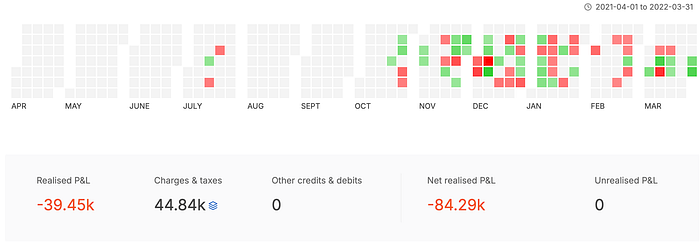
I re-entered cautiously in October 2021 with ₹1.5L. Focused on option selling. 🧠💡📉
Why Option Selling?
- Profits possible in any market direction.
- Time decay works in your favor.
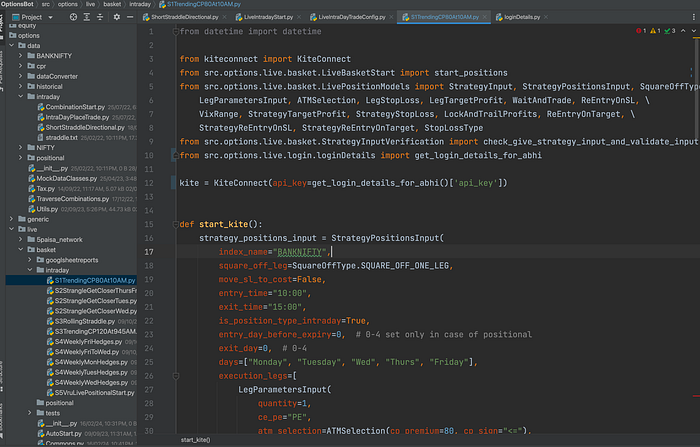
I combined my coding skills to build a Python trading bot using Zerodha APIs: 👨💻📈🔧
- Created short straddle/strangle strategies.
- Backtested over 2–3 years.
- Auto-deployed trades.
- Applied stop losses & monitored daily.
Why Backtesting?
Without backtesting, testing live would take months. Historical data gave faster feedback. 📊📜🔍
After two and a half months building/testing, I ran real trades in Oct 2022. With confidence, me and my wife did pay ins which at the end reached to ₹24L with small loss of -3.5% CAGR. 💼📈💰
Key Takeaways:
- Coding = total control
- Bots remove emotions
- Backtesting = must-do
2022–2023: The Algorithm & I Hit Our Stride 🔥📊🏆
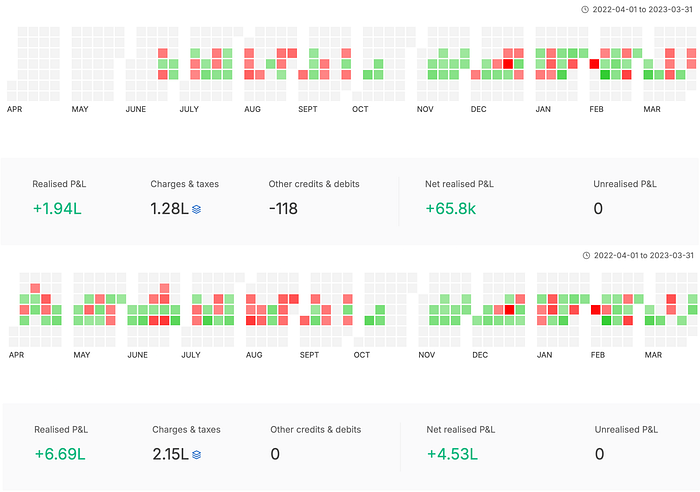
I doubled down. Finalised an intraday & positional Bank Nifty strategy based on backtesting results: 🧩📈🔍
- Max drawdowns (Not more than 10%)
- ROI (> 20%)
- Win rate (> 60%)
I focused on a weekly positional simple short straddle strategy, booking ₹1.5L profit in the first two months. By year-end, I made a total of ₹5.2L profit (+15.32% CAGR), fully recovering earlier losses. Me and my wife scaled capital from ₹24L to ₹66L with regular pay-ins and happily paid taxes on the solid growth. 📈💼✅
Key Takeaways:
- Simple > Complex strategies.
- Discipline & consistency beat emotions.
- Reduce transactional cost & brokerage control
2023–2024: Scaling Smartly, Trading Smoothly 🚀📊📉
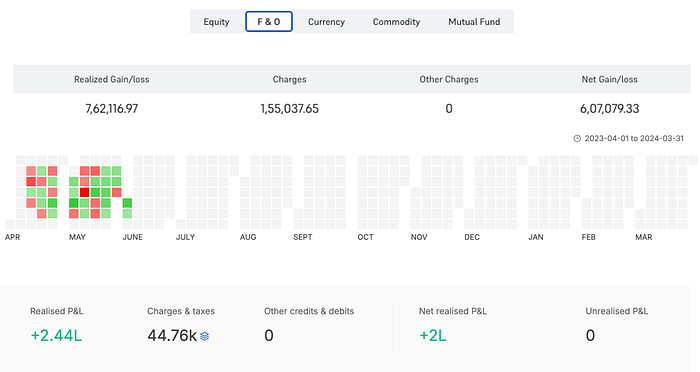
With ₹66L capital, fresh challenges arose: ⚙️📉💡
- Positional trades hit by overnight gaps.
- 4–5 weekly expiries available; I traded only one.
- Drawdowns ~10–12%.
- Coding tweaks tiring.
Solutions:
- Switched brokers (Zerodha → 5paisa) = 50% cost cut.
- Shifted to intraday-only trades = no overnight risk.
- Explored platforms Stockmock, Stoxxo, Tradetron, Streak → settled on Stoxxo for scaling.
By December, I fully moved to Stoxxo for backtesting. Diversified strategies, reduced drawdowns to 4%. 📊📈💡
In January 2024, began trading all five days' weekly expiries. 📆📊📉
Result: ₹8.1L profit with 12.2% CAGR, low drawdowns, taxes paid happily! 📈💰✅
Key Takeaways:
- Diversify strategies to smooth drawdowns.
- Use platforms for faster scaling.
- Switch brokers if fees too high.
- Go live fast, fail fast, learn faster.
2024–2025 (YTD): Compounding Starts to Shine 💡📊💰
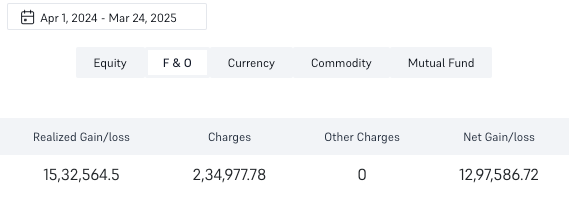
With 73 Lacs, Started with two big things: 📚🔑📈
Option Buying Tweaks:
Added option buying setups. Lower accuracy, but bigger profits. 📈💥📊
- Saw monthly returns 5–9%.
- September: 28% gain!
- 10–12% drawdowns later.
- Shifted to Algotest platform due to faster backtesting, quick deployments. Saved time.
Pledging Debt Funds:
Previously, 100% capital sat in broker's account = risk. 🏦📉⚠️
This year:
- Bought Gilt funds (85–90% capital), earning 7–8% yearly.
- Pledged them for margin.
- 10% cash for loss coverage.
Safe returns + capital protection = peace of mind. 💼🛡️📊
SEBI Curveballs:
SEBI made big changes: 🔁📉📄
- Removed major weekly expiries.
- Changed lot sizes & expiry days.
I adapted strategies three times. Ended year with stable Nifty strategy. Lower returns, lower risk. 📊⚖️📉
Key Takeaways:
- Option buying = high reward, high risk.
- Strategies need constant tweaking.
- Pledging = secure base returns.
- Backtesting ≠ real results; stay flexible.
Year-end profits crossed ~₹13L + ₹4.5L (Gilt Fund Unrealised PnL) with whooping 24% CAGR. Taxes higher, but more returns so fine. 😴💸📈
Next Year's Plan 📆📈🔍
- Diversify into monthly expiries & new strategies.
- Keep drawdowns low.
- Target: 1–2% monthly + 7–8% yearly Gilt Fund returns.
Final Thought 💡📊🏆
Joining the 1% profitable club isn't magic. It's 🎯✅📈
- Discipline: No impulsive trades.
- Backtesting: Test, refine, trust data.
- Forward Testing: With small amount, test, refine, trust data.
- Patience: Ride out drawdowns calmly.
- Monitor: Drawdowns, Win & Lose %, ROI Quarterly.
- Dynamics: Keep tweaking strategies based on market dynamics as change is the only constant.
This builds a sustainable, profitable F&O trading journey. 💼📈🔑
If you're curious about algorithmic trading or want to dive deeper into the strategies and tools I use, feel free to reach out to me anytime. I'm happy to share insights, resources, or even guide you in setting up your own system. Let's grow together! If you have any suggestions, feedback, or even constructive criticism, I wholeheartedly welcome it!
Special thanks to #Zerodha #Alogtest #Stoxxo #5Paisa #XTSSymphony For building fantastic trading platforms and enabling retailers exposure to algo trading.
Try out my advance excel sheet for finance and goal affordability planning, Read Chapter 3 for how to get benefit from it.
#Stoxxo #Zerodha #F&O #5Paisa #AlgorithmicTrading #RiskManagement #TraderJourney #PassiveIncome #OptionsTrading