Introduction
The ESP32 has become the go-to solution for small gadgets: compact, affordable, powerful, and supported by a vibrant community. Many makers reach a common challenge late in development — how to create a reliable, maintainable web interface for device management.
Traditional Web Interfaces: Typical Pitfalls
- Spaghetti-code single files: HTML and JS tangled in C++ string concatenations — hard to maintain or extend.
- Heavy frontends copied to SD cards: Operational headaches, unclear update paths, hard to support.
A Modern Approach: Serve Web Apps from ESP32
Thanks to the open-source svelteesp32 tool, you can:
- Build with Svelte (or React, Angular, Vue)
- Serve static assets right from your ESP32/ESP8266 webserver
- Update the entire WebUI with a single OTA binary — no SPIFFS or SD card
Step-by-Step Workflow
1. Prepare Your Frontend App
Use your favorite framework; here's Svelte as an example.
npx degit sveltejs/template svelteapp
cd svelteapp
npm install
npm run build
Your build artifacts (HTML, JS, CSS, assets) will be in svelteapp/dist.
2. Convert App for ESP32
Install svelteesp32 as a dev dependency:
npm install -D svelteesp32Generate a C++ header after building the frontend:
npx svelteesp32 -e async -s ./svelteapp/dist -o ./esp32project/svelteesp32.h --etag=true-e asyncfor ESPAsyncWebServer--etag=truefor efficient client-side cache
3. Integrate with Your ESP32 Project
Include your new header file.
Example for Arduino/PlatformIO + ESPAsyncWebServer:
#include <ESPAsyncWebServer.h>
#include "svelteesp32.h"

AsyncWebServer server(80);

void setup() {
  // Initialize frontend static files
  initSvelteStaticFiles(&server);
  server.begin();
}
Example for PsychicHttpServer (ESP-IDF engine):
#include <PsychicHttp.h>
#include "svelteesp32.h"

PsychicHttpServer server;

void setup() {
  server.listen(80);
  initSvelteStaticFiles(&server);
}
Visualizing the Architecture
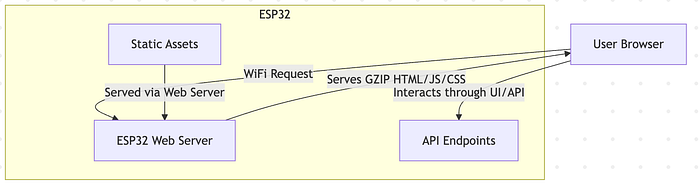
How Efficient Is It?
The tool compresses assets using GZIP at build time. Example conversion result:
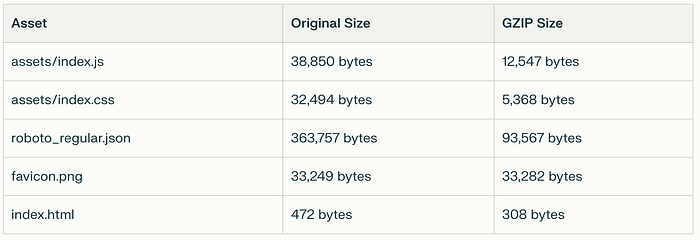
Total: ~458kB original, ~142kB after GZIP — all served from ESP32 flash!
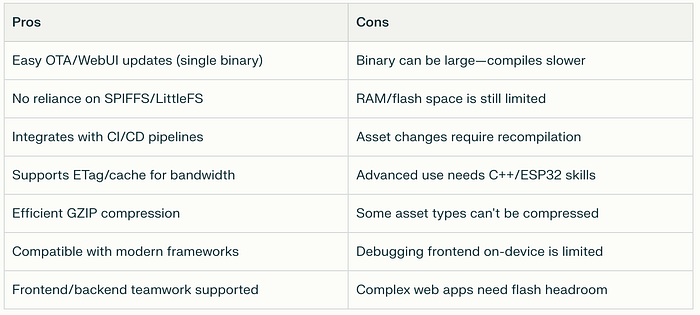
Pros and Cons
Real Experience & Recommendations
From a year of active development, I find svelteesp32 makes firmware delivery much easier and more reliable.
Shipping a quality WebUI as part of the ESP32 binary means fewer headaches for my clients, and quick rollouts of new features.
Have you tried something similar? Which workflow works for your team, and how long does building and updating web apps for ESP32 typically take you? Share your story below!
Conclusion
Building web apps for your IoT devices shouldn't mean settling for messy interfaces or tedious updates. Using svelteesp32 and similar tools, ESP32 can serve modern, maintainable, and updateable web UIs right from memory — no SD cards, no convoluted asset management.
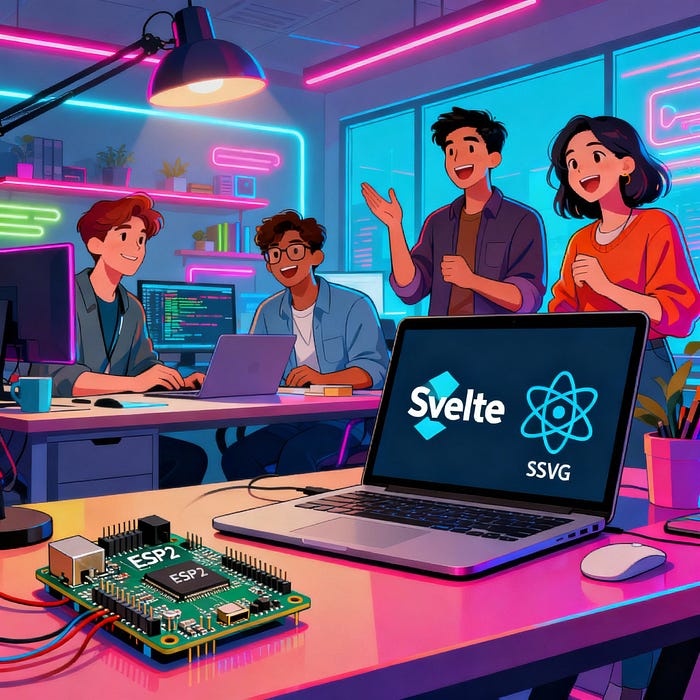
Ditch the old spaghetti-code: step confidently into a seamless, professional web experience for your ESP32-powered devices!
Feel free to use the diagram and code samples above, and adapt the workflow for React, Angular, or Vue as you need. Want deeper technical details or troubleshooting tips? Just ask in the comments!