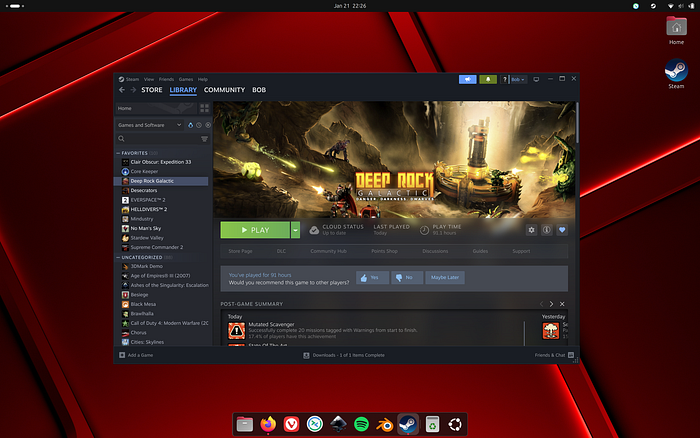
Over the past several months, I've been on a journey of sorts to rip off the Band-Aid and dump Windows from my creative life.
Especially as someone working in IT, I've grown more and more tired of the slop that Microsoft Windows has become. I'd had enough of the forced AI garbage, the telemetry, the ads, and the intrusive disrespect of user choice that had become the norm from Windows 11.
Toward the end of 2025, I rescued a to-be-recycled ThinkPad from the scrap heap, installed Ubuntu 25.10 and was amazed at how easy it was to set up and use.
Gone were the days of having to live in the terminal. I was genuinely having fun. Installing apps was super easy, and customization of just about everything was as easy as a few clicks.
That got me thinking: What if I finally made the switch? What if I finally did what I said I couldn't do, years ago. What if I finally said "goodbye" to Windows in favor of greener pastures?
After much internal debate and deliberation, that's exactly what I did.
I've switched to Linux for the vast majority of my computer usage, and I'm having more fun using my computer now than I've had for years.
That uneasy feeling using Windows
One of my biggest complaints with Windows 11 is not how unstable it can be. (Though it often is unstable.) It's how much data gets sent from your computer to Microsoft in the background without you knowing.
Yes, there are scripts and tools that help disable the majority of it, but even then your computer is constantly watching: logging what you do, recording your activity, and sending data to the cloud.
Even after running my own debloat scripts and using third party tools, I never felt "clean" using Windows 11. I had this uneasy feeling that someone was watching over my shoulder, recording which sites I visit, what ads I see, which apps I opened, the names of my Wi-Fi networks, and so on.
Yes, I know that some of that can be turned off, but I could never be sure (or at least feel sure) that it really was off. Especially considering some settings would mysteriously be flipped back to their defaults after installing an update.
It was like having a nosy neighbor who I couldn't see off in the distance, watching me with a pair of of binoculars.
You're creepy, Fred. Stop it.
Not that tracking can't happen on the web in other operating systems, of course. It can, especially if you're not blocking ads. But I knew that at least Linux wouldn't be tracking my activity and building a profile of me.
That was a big selling point. Still is.
To be honest, as a privacy-concerned IT guy, I don't know how someone today can feel comfortable using Windows without putting in place some serious network filtering and tracking prevention rules.
Windows is just so data-hungry that you'd be angry if you knew how much data about you it sends.
It's a nice feeling, being away from the prying eyes of Microsoft.
Curing years' worth of boredom
I've been using computers for well over 35 years, which just blows my mind (and that's a topic for another day I suppose).
In that time, I've used Windows and macOS so extensively that they've become second nature to me. Sure, I enjoy seeing the new version of macOS each year and some of the cool new features, but macOS is basically just macOS. It doesn't change that much year over year.
And Windows? It's been basically the same since 2021 with the launch of Windows 11, just as it was basically static from 2015 to 2021. That's not a bad thing necessarily. It's better not to have massive changes and upheavals in how an operating system works from year to year so that those who rely on it don't get thrown for a loop with every update.
But both macOS and Windows have just become… boring to me. They are what they are, and that's all good and well, but Linux is so varied and flexible that it seems almost impossible to be bored by it.
I've written before that I personally really like Ubuntu and Zorin OS. They're solid, stable distros of Linux, and I like how they work. But if I got bored with either of them there are literally hundreds of other distributions I can check out.
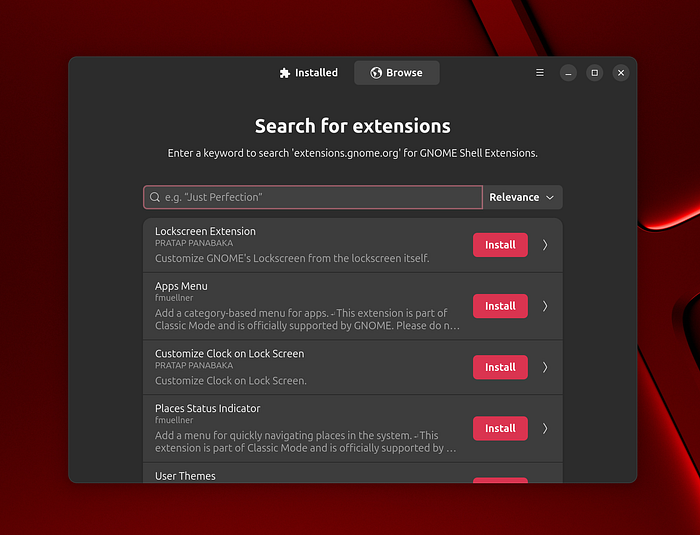
If tomorrow I got tired of Ubuntu's custom take on the GNOME desktop environment, I could change it up with extensions or I could dump it entirely and install KDE or the "K Desktop Environment" or the Cinnamon desktop. Or if not that, I could install a different distro entirely, like Linux Mint or Fedora or CachyOS or Bazzite or Pop!_OS.
There's always something else to jump to if I want to, but I don't have to. Which is a great position to be in.
Freedom to customize. Stability to not need to.
One of the constants of Linux is freedom. When you install a Linux distro, you're in charge.
Meanwhile, with Windows and macOS, Microsoft and Apple present two very different philosophies of how UI elements should be laid out, which apps should be preinstalled, which settings should be enabled or disabled by default, and so on.
You're getting Apple's or Microsoft's baked-in vision for how your computer should look and operate, with minimal power to change it.
That's all fine and great if you happen to agree with that vision. The problem is neither Windows nor macOS really gives much freedom to the user to customize his machine.
Sure, you can change the desktop background, change some theme colors, maybe even move the Dock. Add a few additional tweaks here and there, that's about all that's possible. (Windows 11 users can't even move the task bar, which is ridiculous.)
That philosophy is so diametrically opposed to the Linux philosophy of "you own your computer" that it might as well not even be in the same ballpark.
On Linux, you have a dizzying variety of options to choose from. You choose your distro. You choose your desktop environment. Don't like your desktop environment? Change it with extensions or dump it completely.
Don't like the apps that come preinstalled with your distro? Get rid of them and install the apps you actually want.
Windows and macOS have their strengths, but this is where Linux excels. With the former, you have little choice but to accept what Microsoft and Apple think best. With the latter, you truly own your experience and can design the interface and system that you like.
Some people won't care much about that. But to me? It's so much fun.
With Linux, Dobby is a free elf.
Gaming on Linux is surprisingly good now
When I switched to Linux, I didn't really have gaming in mind, to be honest. Windows has long been the king of that battleground.
Whatever game you want to play, the odds are, it runs on Windows.
What I didn't expect though was just how far gaming on Linux has come, thanks in no small part to contributions from Valve, the makers of Steam.
Valve's own handheld gaming device, the Steam Deck, runs Linux. So Valve has a vested interest in promoting compatibility of games on the free OS.
Some games, of course, simply won't run. Especially those that rely on kernel-level anti-cheat. (Side note: that's actually a good thing, once you realize just how creepy those kernel-level anti-cheats are and what they do on your system.)
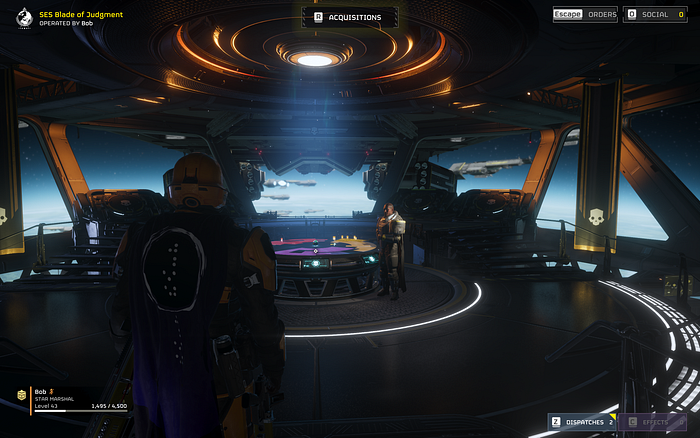
But many, to my absolute surprise, work beautifully right out of the box with no tweaks at all. No Man's Sky, Helldivers 2, Deep Rock Galactic, Clair Obscur: Expedition 33 and more from my Steam library just… work. Right out of the box.
I don't game nearly as much as I once did, but you know what this tells me? I don't actually need Windows to game anymore. A nice chunk of my library works with absolutely no extra configuration needed.
It's… it's so beautiful.
Feeling like I own my computer again is priceless
Most distributions of Linux are completely free to use, even for commercial use. Windows and macOS aren't. You pay for them either separately or with a hardware purchase.
So it's ironic, I suppose, that while using those paid operating systems, I have a hard time feeling like I truly own my own computer. When Windows 11 is running, Microsoft is in charge. When I use macOS, Apple is.
Sure, there are some settings I can change and apps I can uninstall, but in the case of Windows they're often reverted or reinstalled by updates. Don't want Edge in the task bar? Too bad. Don't like Copilot? Here it is anyway.
Microsoft even makes it notoriously difficult to disable automatic reboots for Windows updates (which has caused no shortage of problems for me while working on Blender renders.)
After all, as the old Internet meme points out, Microsoft is the company that changed "My Computer" as it was called in previous versions of Windows to "This PC."
It's no longer "my computer." It's "this PC." I see, Microsoft. I see.
I mean look, this feeling of not owning my computer may just be in my head. And you might be reading this thinking, "duh, you idiot. You can just change settings and uninstall what you don't want."
And you'd be right. To a point, yes. I can.
But while Apple and Microsoft have the ability to decide for me what should be installed on my computer and how it should be configured, am I not right to feel a bit less like the computer I bought is actually… mine?
This is exactly the sort of problem that Linux solves for me.
As soon as I installed Linux, Microsoft no longer had a say over what gets installed on my computer. They're not able to track which apps I run or how often I use them. They don't get to know when I sign in to my computer and from where.
It's none of their business.
Using Linux feels like finally escaping the burning gaze of an evil villain who wants nothing more than to track me and sell my data for a profit.
I can change what I want. Install what I want. Remove what I want. And I'm not forced to sign in with a Microsoft account.
What a concept.
I love the fact that Linux is free to use, even commercially. That's fantastic. But what I couldn't even begin to put a price tag on is feeling like my computer is actually mine again.
That's priceless.
Resurrecting old hardware with Linux is fun
Like I've said before, I'm not really a green-all-the-things environmentalist by any stretch of the imagination, but I do absolutely hate how much we as a society throw away, especially in terms of electronics waste.
That's one reason I have such an interest in trying to rescue older model computers from recycling and keep them working for a bit longer.
That's what I did with my own ThinkPad T14s Gen 2, and I highly recommend picking up a second hand ThinkPad over buying much of what's out there brand new.
Windows is a pretty hardware-hungry OS though, and while it does work on my ThinkPad, Linux runs better. A lot better.
That tends to be the case with older hardware, much of which can't even run Windows 11 at this point. Even on some that does support Windows 11, Windows might run but it might not be the most fun experience.
Linux, on the other hand, doesn't use nearly as many system resources and works beautifully.
Personally, I enjoy that. I enjoy knowing that I'm getting more performance out of that system than it could get from Microsoft.
Breathing the free air again
Windows and macOS aren't bad operating systems in and of themselves. They're not. They each do certain things very well, and I do recommend them to the right sorts of users.
I really enjoy using my MacBook Pro and will continue to do so. And Windows is the better choice for some people.
But from where I sit, Linux is the option that gives me the most freedom to use my computer how I want to use my computer without having to wonder just how much data Redmond or Cupertino are collecting from me.
I don't have to simply accept what Apple wants or what Microsoft thinks. I'll install the software I choose. Customize my system the way I want. Change it at will. And install updates on my schedule, not Redmond's.
My games work. I can be creative. I can do what I need to for my day job. And I can do it all without relentless telemetry, forced updates, ads, or Copilot.
I won't say it's been perfect, and I won't tell you that there haven't been challenges I've had to overcome.
But what I will tell you is this: This is the most fun using a computer I've had in years, and I can't recommend it enough.