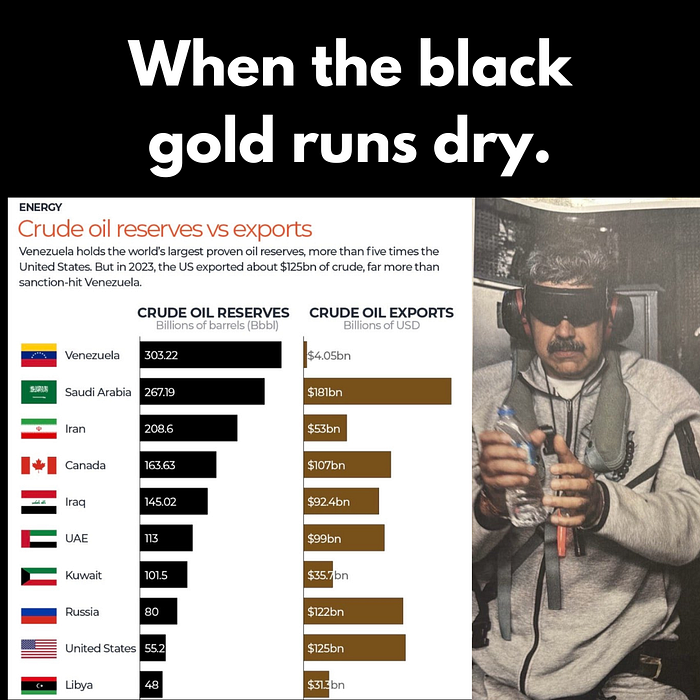
A country can collapse quietly at first. Not with one loud bang, but with small daily failures, a pharmacy shelf that stays empty, a pay cheque that can't buy dinner, a power cut that becomes normal.
The Venezuela crisis is often framed as a distant Latin American tragedy. It isn't. It's a warning about what happens when oil money becomes the state's oxygen, when institutions weaken, and when power turns into a family heirloom.
This matters in India, and everywhere else, because Venezuela sits inside the same web that shapes our lives: fuel prices, food costs, climate promises, and migration.
When oil shocks hit, household budgets shrink fast. When a state breaks, people move, and pressure ripples across borders.
If we ignore the lessons, we don't just repeat a story. We widen the stage for the next one.
What happened in Venezuela, and why it matters beyond its borders
Venezuela's crash didn't come from one cause. It came from a chain of choices, and a system built to hide consequences until it couldn't.
A simple timeline looks like this: oil wealth funds the state, politics becomes more polarised, the economy gets more dependent on one export, investment and maintenance slip, production falls, prices and shortages hit, money loses meaning, and families leave.
In 2018, Venezuela hit an inflation rate of roughly 130,060%.
That's the pattern. The details vary, but the logic is sadly familiar.
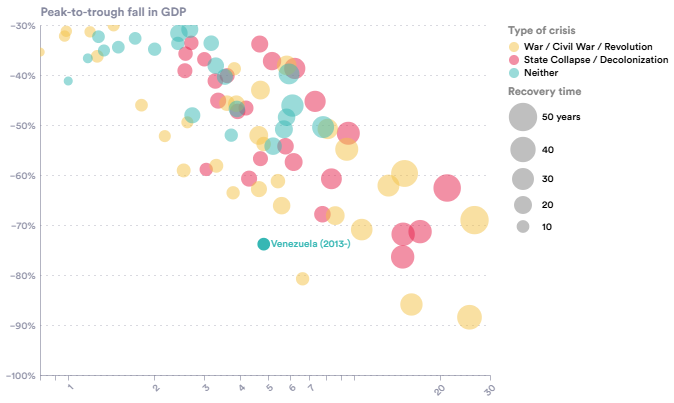
If you want a clear explainer on the economic mechanics, this breakdown from Economics Observatory on why Venezuela's economy collapsed is a useful starting point.
The oil trap: when one fossil fuel funds the state, and then fails
Oil can feel like a magic tap. When global prices are high, governments spend more, import more, and paper over weak public services. It looks like progress, but it can be a mirage.
The danger is that easy oil revenue can reduce pressure to build a broad tax base, diversify jobs, or keep public spending honest. Mismanagement becomes easier to hide.
Corruption risks rise because the money is concentrated, and the oversight is often thin.
Then comes the hard part: oil fields need constant care. Pipelines, refineries, safety systems, skilled staff, and spare parts aren't optional. Underinvest for years, and production can drop sharply, even if the oil is still underground.
One global oil price swing can hit daily life within weeks: jobs vanish, medicines run short, and power cuts spread.
The human cost: shortages, lost savings, and one of the world's largest migrations
A crisis isn't an abstract graph. It's parents skipping meals so children can eat. It's hospitals without basics. It's workers paid in a currency that buys less every day.
Shortages make everything harder at once. When food is scarce, prices climb. When spare parts are scarce, transport slows. When electricity fails, water systems and cold storage fail too. People don't just lose comfort, they lose time, dignity, and sometimes life.
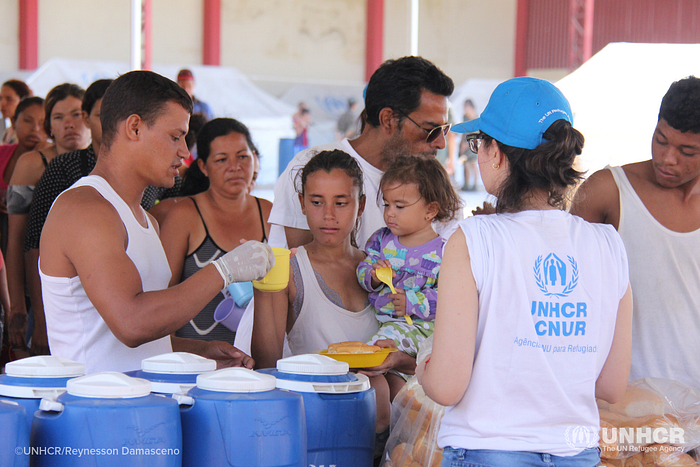
Then comes movement. According to the latest UNHCR data (2024), over 7.7 million Venezuelans have left the country. To put that in perspective, this exodus is now comparable in scale to the displacement crises in Syria (6.5 million) and Ukraine (~6–8 million).
Reporting like this AP News story on "reverse migration" shows how complex that reality has become.
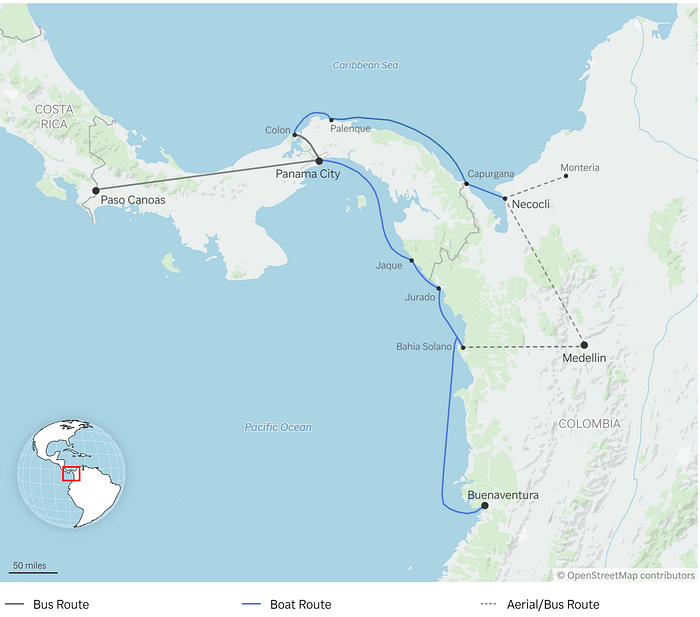
The global lesson is blunt: instability travels. It crosses borders as people, prices, and political strain.
Oil and power: why the world still dances to fossil fuels
Venezuela is not just a national story. It's a mirror held up to the world's energy habits. Oil sits at the centre of trade, transport, and military power. So countries keep "securing" it, even when the method corrodes democracy or delays climate action.
This is the part that should make us uncomfortable. We like to believe markets are neutral, and geopolitics is unavoidable. But oil politics has a moral shape.
Someone always pays. Often it's ordinary people, not the men in suits giving speeches.
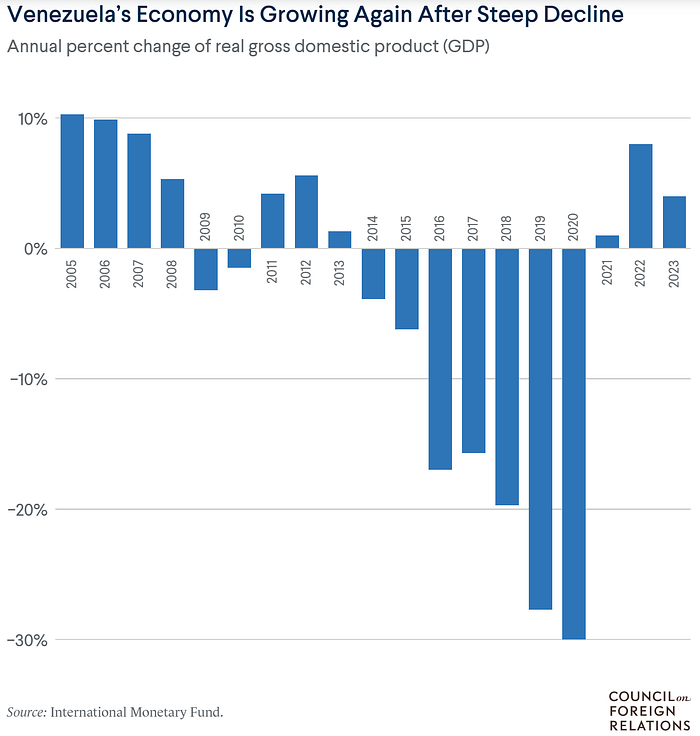
For a wide-angle overview of how Venezuela became a petrostate and how the politics hardened over time, this Council on Foreign Relations backgrounder adds helpful context.
Sanctions, sovereignty, and great-power moves: who pays the price?
Sanctions are meant to pressure leaders by restricting trade, finance, or access to key goods. In theory, they offer a tool short of war. In practice, they can land like a hammer on a dinner plate.
Sometimes sanctions squeeze ruling elites. Other times they tighten the whole economy, raising costs and reducing access to imports. Even when exemptions exist on paper, banks and firms can avoid risk and block transactions anyway.
This is where sovereignty becomes more than a legal word. When powerful states push, directly or indirectly, smaller nations can lose space to choose their path. The promise is "democracy".
The outcome can be deeper distrust, more propaganda, and leaders who point to a foreign enemy to justify staying in power.
That doesn't absolve national leaders. Venezuelan leadership choices, denial, and the habit of blaming everyone else have mattered for years. Staying in power at any cost is its own kind of violence, even without bombs.
Why oil politics slows climate action, even when disasters are obvious
Oil dependence doesn't just raise emissions. It shapes behaviour. It teaches governments to chase short-term fuel security, even if it locks in long-term harm.
When oil prices rise, public anger rises too. Many states respond by reopening coal, expanding gas, or weakening clean-energy rules. When oil prices fall, clean investment can stall because petrol feels cheap and urgency fades.
Either way, the clean transition gets delayed.
This is why the Venezuela warning belongs in climate conversations. An energy system built on oil doesn't only heat the planet. It also creates economic shocks, political panic, and easy money that funds patronage.
Climate justice is not just about carbon. It's about who gets stability, and who gets sacrificed.
Is the world listening, and what lessons should we act on now?
The world hears Venezuela in fragments, a headline, a speech, a spike in oil prices, a border story. Listening means connecting those fragments, then changing behaviour.
The point isn't to treat Venezuela as a cautionary tale for entertainment. The point is to treat it like a smoke alarm. You don't argue with it. You act.
For readers tracking the humanitarian side, this explainer from USA for UNHCR on the Venezuela crisis makes clear how large the needs are, and why displacement doesn't end when the news cycle moves on.
The early warning signs every country should watch for
- Overdependence on one export that funds the budget and buys political loyalty.
- Weakened checks and balances, where courts and watchdogs stop biting.
- Attacks on independent media, framed as "national interest" or "security".
- Currency stress, when savings shrink and trust in money breaks.
- Falling public services, where hospitals and schools decay in plain sight.
- Rising inequality, where a few live well and many fall through cracks.
- Polarised politics, where opponents are treated as enemies, not citizens.
A way out: diversify energy, protect institutions, and cut the greed loop
The most practical lesson is also the hardest: don't build a country on one faucet.
Energy diversity matters, renewables, storage, efficient public transport, and better grids. For India, this is also about cleaner air and fewer import shocks.
For every country, it's about reducing the power that oil holds over budgets and foreign policy.
Institutions matter too. Transparent budgets, independent regulators, and strong local governments aren't boring extras. They're seatbelts. Social safety nets matter because hungry people can't bargain with power.
Then there's the deeper problem, the one we avoid naming: ego and endless greed. Not as a personal flaw of "bad people", but as a system that rewards status, dominance, and short-term wins. When oil money and power mix, the incentives bend leaders, and sometimes whole societies, towards denial.
Choosing long-term security over short-term gain is not soft. It's survival.
Conclusion
The world is listening to Venezuela, but too often it listens with one ear, because oil and power are loud. The warning is clear: a fossil-fuel economy can break countries and the climate at the same time.
If we want stable prices, safer communities, and a fair transition, we can't treat oil as destiny.
The next crisis won't ask permission before it spreads. The choice is whether we learn early, or pay late. Listen, then act like the lesson matters.