Non-Medium Members Can Read the Full Article by Clicking Here.
👆 👆👆👆👆
Hi! I'm Axel, a psychologist, data analyst, and PhD candidate in Computational Neuroscience.
Healthy productivity has become a valuable skill not only in school and jobs but life.
So in this article, I will share 4 books that inspired me to develop a better system in my life.
I'm sure they will change your life as they did with me.
I added affiliative marketing links in all my recommendations, so I may earn a small commission if you click on them :)
🦜 Follow me to learn more about healthy productivity: Axel
About Toxic Productivity — Why You Should Stop
Do We Need to Aim to Do More in Less Time?
medium.com
Top 4. The 5 Elements Of Effective Thinking By Edward B. Burger And Michael Starbird
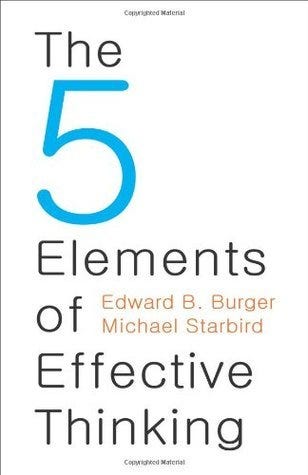
In the first book of this top, we have a brief book explaining some underrated metacognition methods related to learning and creativity.
Although they propose simple methods, they are incredibly powerful in changing how we think.
Note that thinking is the key to everything.
It is what makes us stand out from others, just like Einstein or Newton stood out from other physicists.
So for this, the authors proposed 5 elements or principles of thinking effectively:
- Understanding deeply
- Make mistakes
- Raise questions
- Follow the flow of ideas
- Change
Additionally, they recommend always asking ourselves based on those elements. Some questions for this could be:
- How deeply do I understand the concepts I encounter?
- Do I fear making mistakes, or do I see them as learning opportunities?
- Am I actively questioning assumptions and seeking clarity?
- How often do I allow ideas to flow freely and make unexpected connections?
- Am I open to changing perspectives and challenging my own beliefs?
It may seem like a small and silly skill to improve, but it will change how you experience life.
Check this book with this affiliative link: https://amzn.to/4dwzGY6
Top 3. How To Take Smart Notes By Sönke Ahrens
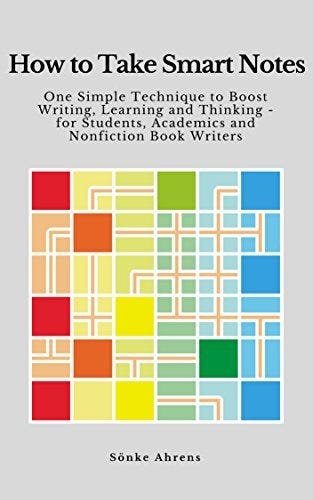
How to Take Smart Notes changed my strategy for studying, improving my learning and grades considerably at the university.
It is about one simple technique that can help not only students but also academics and writers.
This technique is the Zettelkasten method.
In the book, Sönke not only wrote about the method itself but also its creator.
Niklas Luhmann (its creator) was a sociologist known to publish tons of academic work, making academics question how he could do that.
Shortly, Luhmann's method was based on a note-taking and knowledge management system that focused on the interconnection of ideas through short unique notes.
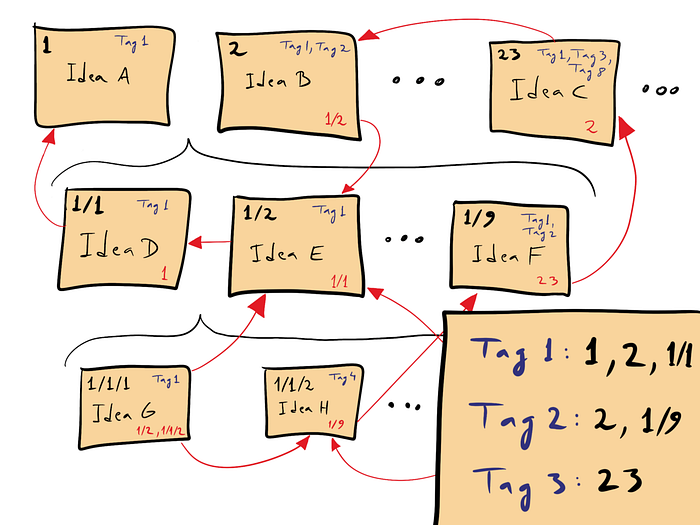
These notes are then organized, linked, and continually refined over time to facilitate creative thinking, knowledge synthesis, and idea generation.
At the end of the book, the author also suggests how Obsidian, a software for note-taking, works based on this philosophy.
Since then, I couldn't stop using it for my notes.
Check this book with this affiliative link: https://amzn.to/44yDwff
Top 2. Building A Second Brain By Tiago Forte
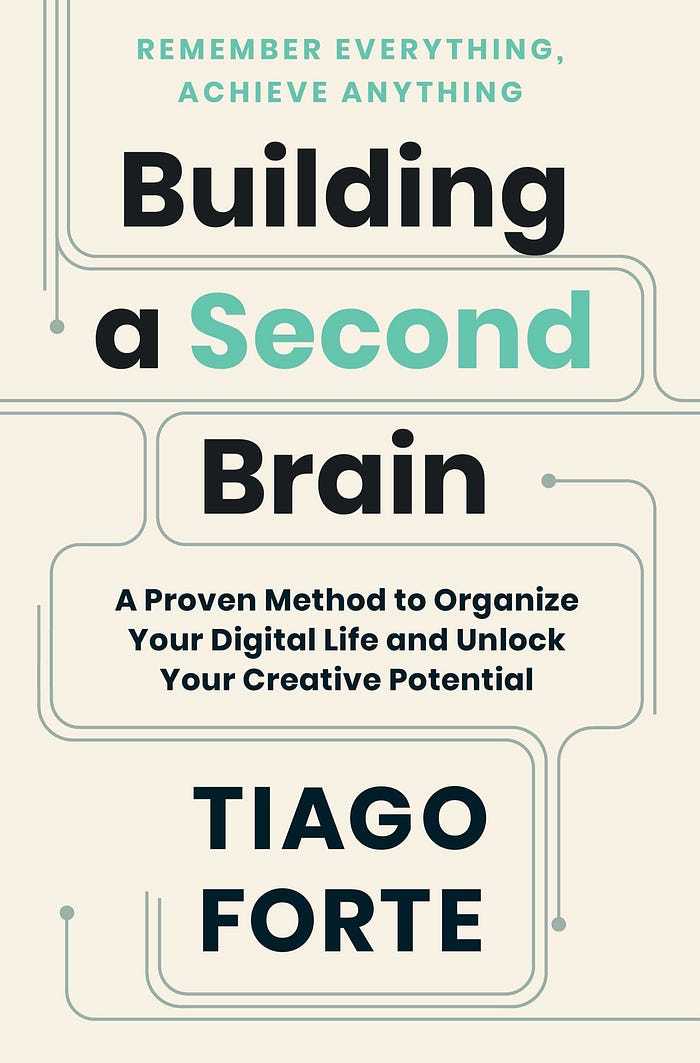
Moving on to the top, we got another book that completely changed how I see learning and life.
Tiago's core argument is that it is impossible to retain all the information we receive every day.
From news, social media, phone calls, messages, emails, study, notes, learning, radio, books, etc.
How is it possible that our brain can retain so much important information?
The answer is that it can't, because our brain is a forgetting machine.
It didn't evolve to remember the past but to predict the future.
So, to store and remember all the information, it is better to create an extension of your biological brain.
Using software, we can build a place to store everything important to us.
That's your second brain.
In the book, Forte shows us many contexts where a second brain is necessary, while also teaching you how to build one for yourself.
Every person will have a different second brain that works best for them, and Tiago reinforces the idea that it needs to resonate with you.
A truly inspiring book!
Check this book with this affiliative link: https://amzn.to/3UyYAhr
Top 1. Ultralearning By Scott Young
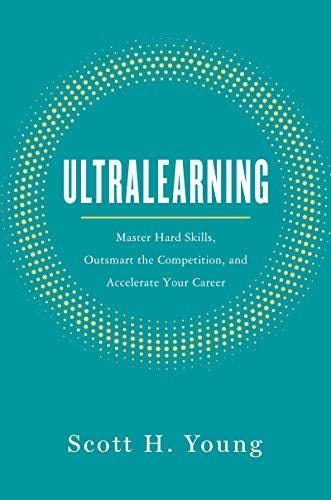
In Top 1 I want to share the book that inspired me the most when it comes to learning and productivity.
Scott talks about a new methodology to learn, ultralearning, which refers to intensive learning of any topic. For example, to master a language in a few months, or to finish a degree in record time.
Sounds insane? Well, everyone can do ultralearning with the right approach!
He shares his experience achieving a computer science degree in just 1 year and a half using MIT free resources.
From there, Scott argues that ultra-learning comes with 9 principles, which I talked about in detail in a series of articles:
- Principle N1: Meta-Learning
- Principle N2: Focus
- Principle N3: Directness
- Principle N4: Drill
- Principle N5: Retrieval
- Principle N6: Feedback
- Principle N7: Retention
- Principle N8: Intuition
- Principle N9: Experimentation
These principles are many strategies and tactics to confront some of the main problems when learning, like focus, motivation, or learning in context.
In the last chapter, he teaches how to structure your first ultra-learning project to start learning about anything you want.
Overall, this book represented my biggest motivation to become an ultra-learner and establish my mindset that I can learn anything.
Check this book with this affiliative link: https://amzn.to/3JO2xts
These books completely changed my life.
They gave me many new points of view to study and learn without getting stressed.
I hope they inspire you as well.
Ways You Can Help Me:
🦜 Follow me to learn more about healthy productivity: Axel
🗂 Subscribe to get my newest articles
👏 Clap and response to this article
You May Be Interested In:
Thanks for reading!
See you!
Axel