The danger that humanity faces isn't that algorithms and robots will rise up and seize power. The threat we face is that we will voluntarily become indistinguishable from the algorithms and robots.
Everywhere from digital nomad gurus to the false prophets of productivity, we are taught how to optimize every aspect of our existence. You can find carefully scripted routines for your mornings, your sex life, and your bowel movements.
There is no aspect of human life that you couldn't be doing better.
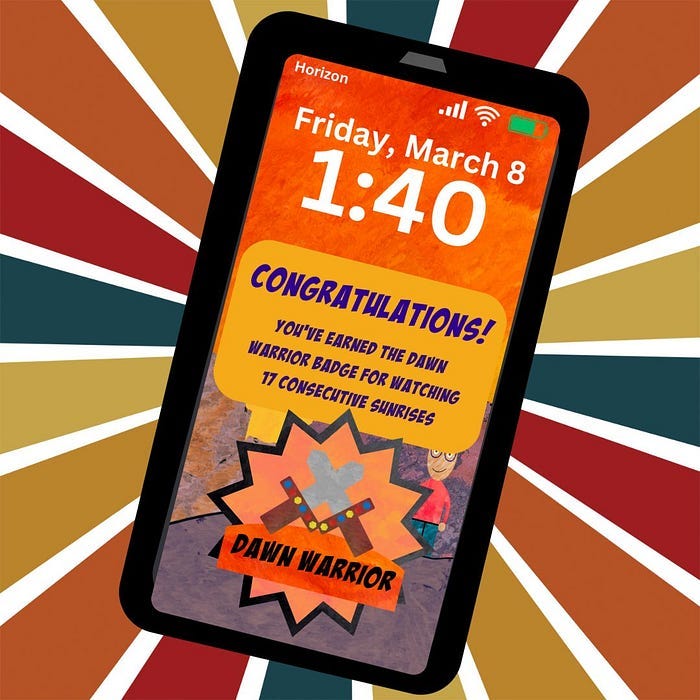
Our phones are littered with apps that help us "do better" by turning life into a series of mini-games and pinging us with alerts every hour of the day. Get a badge for reading seven days in a row! Complete a circle by taking lots of steps!
To paraphrase Jeff Goldblum's character, Ian Malcolm, in Jurassic Park:
We're so busy studying how to optimize our lives that we never stopped to consider if we should optimize our lives.
The illusion of optimization
Optimization means making something the best it can possibly be. Shouldn't that be what we are all striving for — to live the best life we possibly can?
One problem is that "best" is subjective, and optimization relies on objective processes. Most productivity hacks try to help you accomplish more in less time. But is that good? Does making more stuff for your boss make your life better? Does it even help your boss?
Optimization and productivity are fossils. Management consultants created these concepts during the Industrial Revolution.
Work doesn't work like that anymore.
If you are a knowledge worker, what does optimizing your productivity even mean? Do you need a waterproof notepad to write down all your shower thoughts?
Are you being productive when you have an idea for a piece of content for your business or employer while watching Netflix? Optimization is just another way for you to make more of your life about work instead of the work of being human.
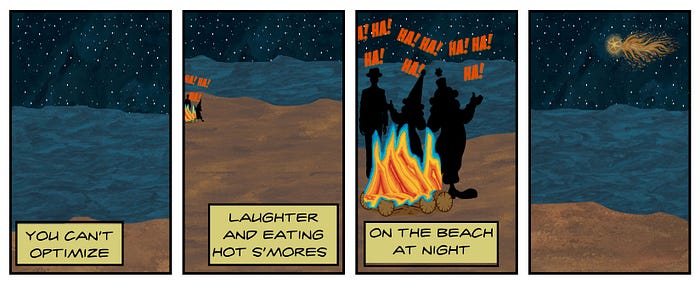
Most of the best things in life cannot be optimized.
Each one of us has a unique set of skills, life experiences, and environmental influences. No master routine will work for everyone. Getting up at 4 am might be great for a young, single Silicon Valley entrepreneur. But, getting up at 4 am is beyond suboptimal when the second you get up, you will wake up a house full of children.
We do not all have the same twenty-four hours in a day. We do not all have the same obsession with getting rich. I would rather not take fancy vacations to expensive resorts if it means working sixty hours a week.
I'm happier walking in the woods for an hour each day and quitting work at three or four in the afternoon.
It's easy to spend so much time trying to improve everything in your life that you fail to take stock of what you love about it. If you constantly push yourself to get more work done, consume more information, eat the best diet, and exercise the best way, you are acting like a machine.
Human intelligence isn't designed for a life of optimization. That is why we try to trick ourselves into doing more by gameifying everything.
We use the same psychological manipulation to push ourselves to do more work that slot machine manufacturers use to lure us into spending more money on a game we cannot win.
One of the worst elements of gamification culture is how we use it to track things we should enjoy. Do you need to track how many good books you read? Must you know precisely how many sunsets you watched? Does knowing exactly how many minutes you spent listening to that one artist make you enjoy their music more?
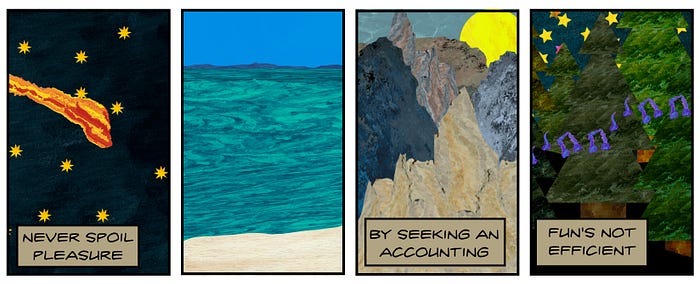
Life isn't about being the best at everything. Life isn't about maximizing anything. Life is about being human. It's about making mistakes, laughing, and loving. We all hope to become better, but constantly searching for the best increases anxiety and destroys happiness.
There is an opportunity cost to everything in life. Our culture is biased towards evaluating only the easily calculable costs.
You cost yourself money if you read a novel instead of sending three extra proposals to prospects. You can work out a formula to calculate exactly how much money you're losing.
But what is the cost of making a few extra dollars instead of feeding your creativity and relaxing with a book? We don't know how to calculate that, so we "optimize" by being more productive and making more money.
Optimization also has no sense of enough. We get so caught up in trying to obtain more success, earn more money, and get more stuff done that we never stop to ask how much is enough.
Many of the practices you find on business blogs and magazines are about ways to save time so that you can make more money. They want you to waste less time. This assumes your time is fungible — that every second is equal to every other second.
But some seconds are more precious than others.
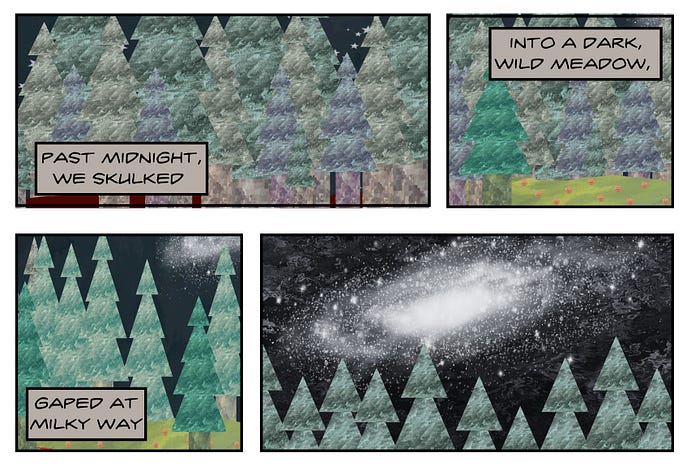
The actual waste would be to send another email instead of cuddling the one you love when they're experiencing a moment of pain.
One of my least favorite optimization hacks is listening to podcasts or audiobooks at higher speeds. When you listen to a podcast at a higher speed, you deny yourself the chance to ponder and process the information. We do not have a shortage of information — we have a shortage of analysis. You aren't gaining anything from this practice. What's your rush?
Before you seek to optimize any area of your life, ask yourself what are you trying to make more time for? What are you sacrificing to become faster, stronger, and better?
A simple alternative
Instead of optimizing your life, try living it.
I went to the woods because I wished to live deliberately, to front only the essential facts of life, and see if I could not learn what it had to teach, and not, when I came to die, discover that I had not lived. I did not wish to live what was not life, living is so dear; nor did I wish to practice resignation, unless it was quite necessary. I wanted to live deep and suck out all the marrow of life, to live so sturdily and Spartan-like as to put to rout all that was not life, to cut a broad swath and shave close, to drive life into a corner, and reduce it to its lowest terms…
— Henry David Thoreau from Walden
I'm not saying we shouldn't try to be better. Self-improvement is one of the great drivers of humanity. But we need to stop obsessing about being the best. Optimization is a fool's game because it relies on a negative comparison. You will never measure up to other people's performance or to the idealized potential you see for yourself.
Gradual self-improvement relies on a positive comparison. Are you better, even marginally, today than you were yesterday?
In the journey of life, the direction you're traveling in influences the quality of the life you lead more than the speed of your travel.
Instead of trying to optimize your life, live your life. Breathe deeply, laugh, and love. Work hard and play hard. Ask interesting questions. Observe the world around you and live in the moment.
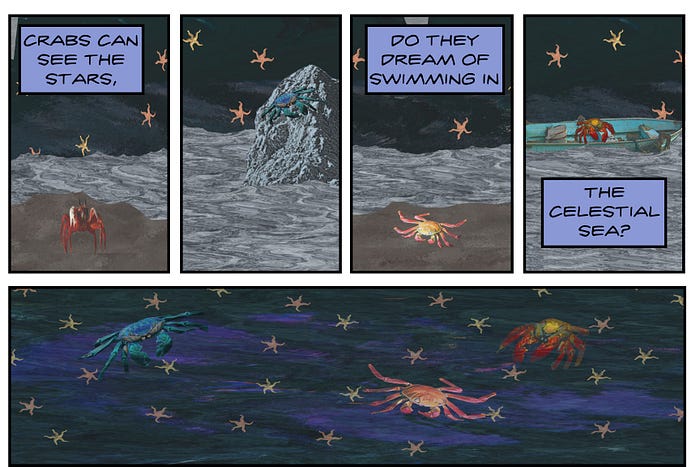
Automation should free us to be more human — not more like AI
Automation is going to change the way all of us live. But, many of us are reacting to automation by trying to out-optimize the algorithms. We react out of fear, and our reaction is making us more machine-like. But, the race to optimization is a race we cannot win.
We still need human intelligence. AI does not create — it imitates. It might write haiku faster than me, but its lines are just remixes of the words of humans placed in an arrangement people are statistically likely to enjoy. The "poetry" of a large language model doesn't tell you what it feels or describe what moves your soul. There is no truth in a line of AI-generated art.
Think about the old folktales of John Henry or Paul Bunyan. These men went head-to-head with automation. They optimized their work, and they lost. John Henry died trying to lay more track than the machine, and the giant Paul Bunyan became an exile after failing to cut down more trees than a puny man with an automatic saw.
AI-powered automation could be a gift. It could allow us time to explore what makes us uniquely human. Things like art, curiosity, and relationships. Instead of automating the most tedious work tasks, we are using AI to speed up the demise of our planet to create schlock.
A world where humans compete with AI by optimizing their productivity is a dystopia where humans and robots are indistinguishable.
Stop optimizing and start living your life. It's the only way to keep from becoming a robot.
Jason McBride is a poet and illustrator. He's also the author of several books, including the haiku comic collection "Wild Divinity" and the creator of the Weirdo Poetry, a poetry comics newsletter.