Some years ago, a teacher friend handed me a CD of an operating system I'd never heard of: Ubuntu.
I was intrigued. I'd used Windows for most of my life, starting with Windows 3.11 for Workgroups, and I knew about Macs, but I'd never had much experience with anything else.
I booted up the live CD of Ubuntu and tried it out.I loved tinkering and trying out all the ways that it was decidedly not Windows. And I loved it for that. But at the same time, I just couldn't justify switching, not when all my games and software depended on Windows.
Since that time, Linux has come a long way. Far from being heavily reliant on the Terminal, as it once was, most things can now be done without ever touching a command line. Installing and uninstalling apps, changing system settings, and making your computer your own can be done in large part without knowing even an ounce of Terminal-fu.
But despite its dominance in the server market, Linux just hasn't taken off on the desktop in any way that could even begin to threaten the dominance of Microsoft's Windows or Apple's macOS.
Let's do a thought experiment though. What would it take for that to finally start happening? What would it take for Linux on the desktop to really go toe to toe with the big dogs?
We need to address the stigma
Right or wrong, Linux has earned a bit of a reputation for being difficult to use. And I'll grant that some things about Linux are more difficult than you'd find in macOS or Windows. At least initially. Certainly.
I have fond memories of running Ubuntu 7.10 on my first MacBook Pro back in 2007/2008. At the time, the OS was much less mature and required terminal tweaks to get it working the way I wanted. Even Wi-Fi needed a terminal workaround to work. That was fun for someone like me, but for non-techy people? That sounds like a nightmare.
In the nearly 20 years since (which blows my mind…) Linux has come a long way, both in terms of functionality and in terms of ease of use.
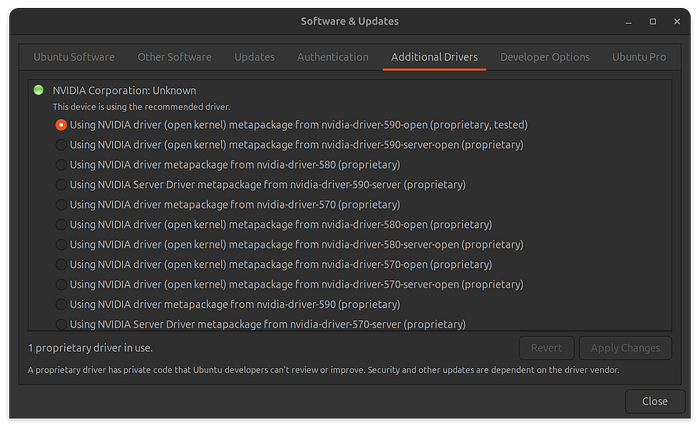
Since I switched to Linux, the most difficult hardware configuration I've had to do is to go to the Software & Updates app in Ubuntu and check a box to install my NVIDIA graphics driver.
That's a huge leap.
I just select the latest option that says "proprietary, tested" and get to work. Or gaming. Or both.
While there are distributions of Linux that are designed for the more advanced user, like Arch, distributions (or "distros") like Ubuntu, Linux Mint, and Zorin OS (among others) are very user friendly and offer clean, easy to use setups right out of the gate.
Years ago, I absolutely would not have recommended Linux to someone who isn't very tech savvy. Today? I actually see it as a viable option. Especially a distro like Linux Mint.
The days of Linux being an unwashed nerd's hobby operating system are long behind us. It's advanced to the point that it's now a solid replacement for Windows or macOS, depending on what a user wants out of his computer.
In my recent experience, it's been every bit as stable as macOS and Windows. Perhaps more so than Windows, in fact. Ubuntu, Mint, Zorin, Fedora, and many of the rest have built-in app stores that make installing many programs incredibly simple, and more app stores can be added to your liking.
That's not to say that there's not a learning curve or that there aren't things to learn. There is, and there are.
But the old, tired notion that Linux is for smelly basement dwellers is long, long outdated.
Unfortunately, I think that outdated trope scares people away from Linux. They think it's too hard or that they're not tech savvy enough. But even though that's no longer the case, the reputation for being the "scary" OS remains.
Total terminal independence
Even so, it's important to remember that what might seem "easy" to a tech-savvy user might as well be a request to rebuild the space shuttle for someone else, and certain things in Linux are indeed more complicated, and it's not right for everyone.
The Terminal in Linux, just like in Windows and macOS, is a powerful tool. It's been around since the beginning and is arguably one of the fastest ways to get certain things done.
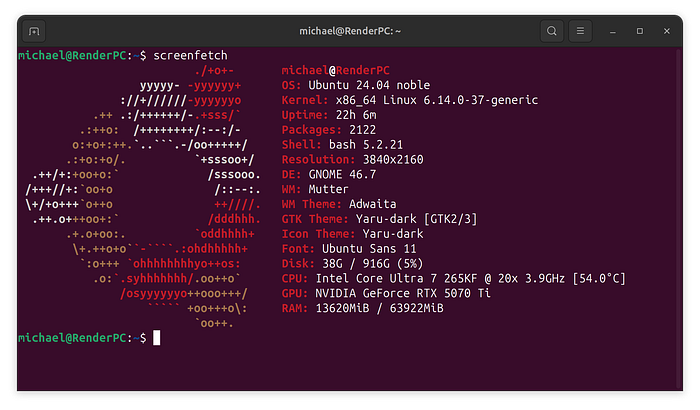
There are purely-GUI-based ways to do just about anything you might want to do, day to day. But sometimes it's easiest to open a Terminal window and type or paste a command.
Linux has reached the point that it's easy to use (in my opinion), and many things are self explanatory. Not all things are yet though.
System needs updates? Easy. I open my Software Updater and let it check for me, just like with Windows Update.
I need an app? Also easy. I open the App Center on Ubuntu, search for what I want and install it.
Unless… of course I don't find what I want.
Sometimes I can go to a developer's site, like Obsidian's for example, and download the app directly. But that's where it gets a bit messy.
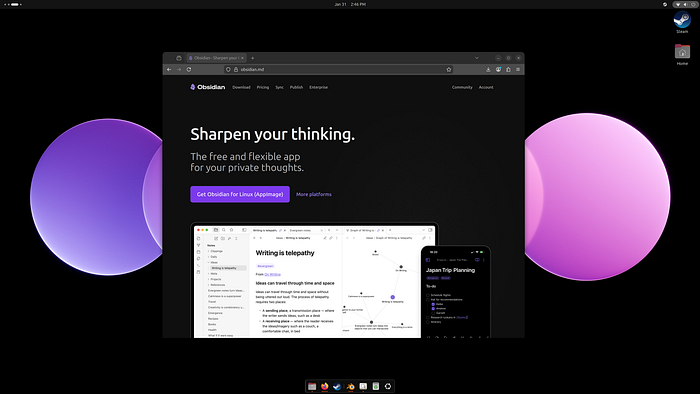
If I want to use the AppImage version, which is what's offered to me by default when I go to Obsidian's site from my Ubuntu computer, I have work to do.
In order to use an AppImage, I have to first make the AppImage executable as a program and then I have to install the libfuse2 prerequisite with the terminal.
Or I can install Flatpak which gives me access to Flathub and all the apps available in that collection, and install Obsidian from there. On the Flathub site, there are two copy-and-paste terminal commands that take care of setting up Flathub for you, and then all you have to do is browse the app store. (Another option would be to use a distro with Flathub already installed.)
But are these things that the sweet grandma down the street is going to know how to do or feel comfortable doing? Absolutely not.
I know plenty of people, brilliant people, who call me when they get a pop up they don't recognize and ask me what to click. They wouldn't feel comfortable copying and pasting commands into a Terminal, and honestly I wouldn't want them to. You should never copy and paste commands from the Internet into a Terminal on any operating system if you don't trust the source and understand what they're doing.
Linux has come a long way, but we're not to grandma-friendly levels yet for these kinds of things. That will have to continue to improve in order to compete with Windows and macOS.
The distro wars are ridiculous
When I say "Linux," to be clear, I'm not talking about a single, unified operating system. There are literally hundreds of ready-to-install variants of Linux, called distributions or "distros."
Ubuntu, Zorin OS, Linux Mint, Fedora, and Debian are some of the more popular options, and each is excellent. And each can be configured to look and operate very similarly to each of the others. The Linux kernel is at the core of each.
As with most things in life, people have their favorites of course. And they're often all too happy to get into heated forum flame wars to defend their favorites and attack the alternatives.
These arguments, sometimes friendly and sometimes not, have come to be affectionately referred to as "distro wars."
Sometimes it's all in light-hearted fun. Sometimes, not so much.
They're entertaining for those of us who are already using our distro of choice, but they're incredibly confusing and off-putting for those who are considering a switch from (or an addition to) macOS or Windows.
Granted, the Windows vs macOS debate is as old as dirt, but that at least is a conversation about TWO options. Not hundreds.
Someone considering switching to Linux has to decide between Ubuntu, Fedora, CachyOS, Bazzite, Manjaro, Linux Mint, Zorin OS, Debian, Nobara, and a huge list of others I've not mentioned.
And in some cases, they need to decide on a desktop environment too. Cinnamon, KDE, GNOME, Xfce, Budgie, MATE, Pantheon…
The list goes on.
With Linux, the name of the game is "options." No matter your preference, there's most likely something that works beautifully for you. You just might not know the name of it yet.
But that ocean of options is daunting enough for newcomers. The last thing they need is for switching to be made all the more confusing with infighting and arguing.
I would like to see the Linux community as a whole start celebrating when someone tries out Linux for the first time and finds a use for it, even as a hobby, instead of complaining that he should have used Fedora or should have tried Manjaro or would like Mint better or… You get the idea.
If Linux is ever going to be a real contender against the giants of Apple and Microsoft, and that's a BIG "if," the distro wars are going to have to stop.
A house divided can't stand.
Better professional app support
Even as a creative person, I find that I can do the vast majority of my work on Linux. But I'll be the first to say that Linux support for professionally-recognized creative software isn't fantastic.
If you need Adobe Creative Cloud or Final Cut or Cinema 4D, then forget it. Linux isn't going to work well for you. You might be able to get some apps running, at least in part, but it's not going to be nearly as easy as it is on macOS or Windows.
It's not.
If I want to use Affinity or a similar tool, I need to boot up my Mac or use a virtual machine. And while DaVinci Resolve does work well on Linux these days, you can forget about using a tool like Adobe Premiere or Final Cut Pro on Linux.
While there are tools on Linux that work well for creative and professional work, those who are tied to specific apps may find it difficult or impossible to switch.
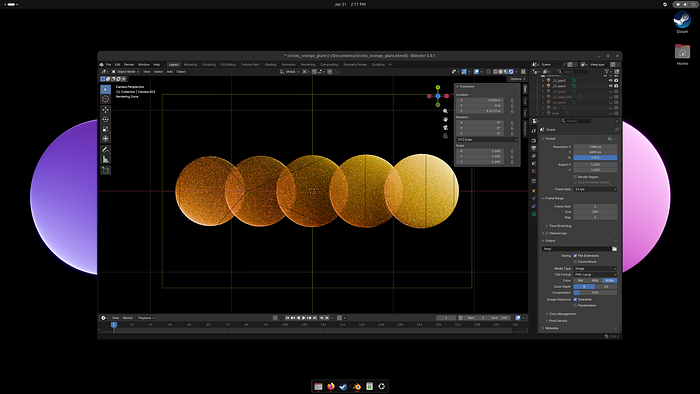
Blender runs beautifully on Linux, and I've even switched my rendering setup over to Linux for that reason. But if I needed Cinema 4D or ZBrush or Illustrator or Photoshop? Linux wouldn't cut it.
Inkscape and GIMP are great for vector and raster work, respectively. But they're not full replacements for Illustrator and Photoshop.
OpenShot and Kdenlive are decent video editors for Linux, but again, aren't nearly as capable as Premiere or Final Cut. DaVinci resolve is available for Linux and is excellent but lacks some codec support on Linux, sadly.
And if you need the Microsoft Office desktop apps, you're out of luck. LibreOffice and OpenOffice are excellent alternatives, but if you absolutely must use Microsoft's software, you'll either need a virtual machine or to stick to Windows or macOS.
Software support is an area that has improved for Linux over the years as tools like WINE, Bottles and WinBoat have made it easier than ever to run Windows apps, but support is limited and some apps won't work correctly. If at all.
In order for that to change, major software companies like Microsoft, Adobe, Maxon, and the like will have to start supporting Linux, and I don't see that happening any time soon.
Supporting an operating system takes time and resources. Right now, Linux has such a small share of the desktop market that it's barely a blip on the radar for many of these software companies.
But in order for Linux to grow significantly on the desktop, it's going to need strong software support.
And in order to get strong software support, it needs strong adoption on the desktop.
So it's a bit of a Catch 22.
The only way I see that changing is for more companies to take the approach that Valve has.
Businesses would have to catch on
In the history of computing, influence has often gone from business to home rather than home to business.
Home users running Linux on their custom PCs or old laptops won't mean squat to businesses who have infrastructure to maintain, supplier relationships to uphold, and processes to refine unless somehow Linux were to provide a real, tangible benefit to their bottom line.
I work with lots of different companies in my day job. I'm frequently in meetings with C-suite executives, vendors, and key stakeholders. The majority of them are using Windows. Windows on the desktop. Windows server. SharePoint. Intune. Teams. Azure.
Why? Because it works.
Whether you love Microsoft or hate Microsoft (and there's a lot of reason to hate Microsoft), they have an iron grip on the business world. A grip that not even Apple can break.
Unless or until that changes, Windows will remain the dominant desktop operating system, and Linux will be far, far behind, even if it has key advantages over Windows and macOS.
Better doesn't always mean utilized.
I'd argue that macOS is tangibly better than Windows in many ways, but not even Apple with its massive ~$3.76 TRILLION market capitalization has managed to tip the scale much in the business world.
Maybe, in an alternate timeline where Windows has reach critical en-sloppification and businesses start to abandon it in numbers that matter, that might change. But even then, the more likely stepping stone would be macOS with its solid software support and proven track record.
Granted, some businesses and large scale enterprises do use Linux for big pieces of their operations. And distributions like Red Hat Enterprise Linux (or "RHEL") are designed to provide a solid OS foundation for businesses who don't want Windows or macOS.
But what about the small and medium sized businesses that rely on tools like Microsoft Office? Getting them to switch to Linux, though I'd love to see it happen, is a tall order.
Could it ever happen?
In light of Microsoft's incessant push toward AI, arrogantly forcing users to sign in with Microsoft accounts, and rampant ads and telemetry in Windows 11, few things would please me more than to see Windows 11 lose its crown to Linux.
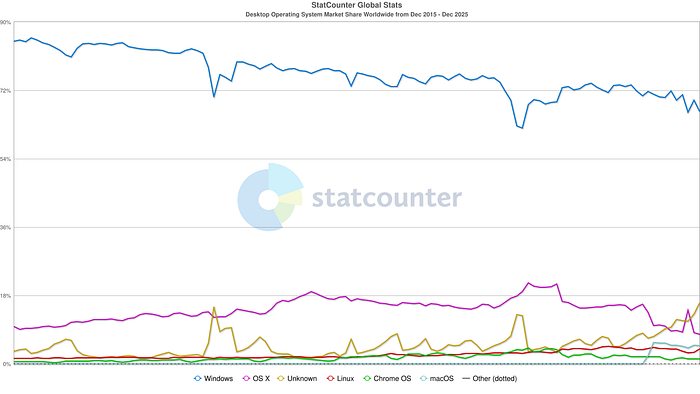
Since December of 2015, according to Statcounter, Windows has lost a significant portion of the worldwide desktop market, going from 84.89% in December of 2015 to 66.47% in December of 2025.
Meanwhile, Linux has crept up from a market share of 1.48% in December of 2015 to 4.71% as of December of 2025.
Will that trend continue? I hope so.
The philosophy of Linux as a whole is so diametrically opposed to that of Microsoft that it's almost a meme at this point. On one hand, you have a company that seems to be doing all it can do to make the computing experience worse. On the other, you have a community of people saying, "It's your computer. Do what you want with it."
But that's not enough to propel a desktop operating system into first place, unfortunately.
As much as I would love to see Linux dethrone Windows, I just don't see it happening. Not for a very long time.
In order to get there, we'd have to see some pretty big changes to how Linux is perceived, better support for professional software, and more buy-in from businesses of all sizes. And certain things are going to have to be made much more grandma-proof, at least as an option for those who don't want to touch the Terminal.
I'm not saying it'll never happen.
I know Linux is already seeing its day in the offices of several European governments which have chosen to move away from Microsoft and proprietary software. And well-deserved frustration over the end of support for Windows 10 has driven many to alternatives.
Pair that with the dumpster fire that Windows 11 has been for the past several months, and interest in Linux is growing it seems.
But that doesn't mean that this is the "year of the Linux desktop."
Not yet.
It's the year of the Linux desktop for me, though. I've moved on from Microsoft's dumpster fire, and I'm not looking back.