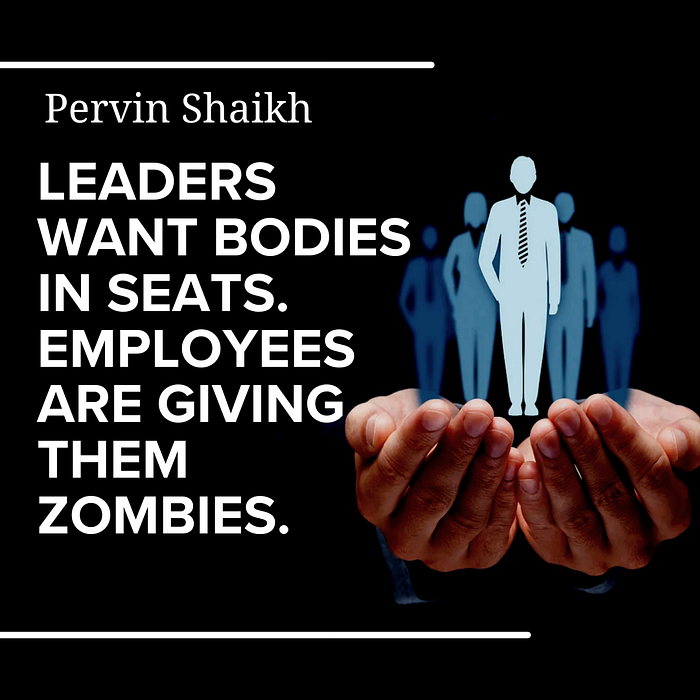
Leaders and top executives want more staff to return to the office, but it's creating a new problem — the presenteeism crisis. Face Time, or Presenteeism, is costing American businesses $1.5 trillion.
In the U.K., it can cost businesses over £4000 in lost productivity per employee each year. In the U.K., the latest employment figures suggest that in Aug–Oct 2025, 25.09 million were employed full time and 8.70 million, giving a total of 33.79 million employed.
What Is Presenteeism?
I like to call it FaceTime (not the app), but it's being in the office but not necessarily doing anything worthwhile. The employee doesn't want to be in the office but ends up spending time doing non-business critical things like surfing the internet, chatting or idling time away.
The other face of Presenteeism is the 'office martyr' as I call them. Examples of the Office Martyr include:
❎Being in the office whilst feeling unwell
❎Regularly working overtime
❎Taking calls out of office hours
❎Coming in over the weekends or holidays
❎Always connected to work-related issues, thus looking tired most of the time due to lack of recharge and work stress
All of the above, those who don't want to be in the office and those in the office pose a big headache. Productivity thus takes a hit, and managers have to figure out innovative ways to improve employee engagement.
Presenteeism can be more disruptive than absence. Why?
❎Productivity dips
❎Motivation falls
❎Lack of engagement
❎Absence increases
❎Staff retention rockets
What Can Companies Do?
❇️Self-care Programs
❇️Mental Health
I've never been a fan of being in the office for the sake of being in the office, especially when you finished your work.
Eight Hours Of Fake Activity
Several forward-thinking companies, mostly in tech and remote-first spaces, have built cultures and policies that explicitly reject presenteeism — the practice of judging employees by how long they're seen at their desk or online rather than by their actual output. Basecamp, GitLab, Automattic (WordPress), Buffer, Doist (Todoist), Gumroad, Linear, DuckDuckGo, and ConvertKit all measure performance strictly by results, not hours.
Many of them enforce short overlapping "core hours" at most, run fully asynchronous workflows, or have moved to permanent four-day workweeks with no reduction in pay. Leaders at these companies publicly criticise hustle culture and long hours; for example, Basecamp's Jason Fried calls presenteeism "fake work," Buffer warns against "heroic 80-hour weeks," and ConvertKit's founder says "if you're working on Fridays, you're doing it wrong."
Even larger or more flexible organisations have taken strong anti-presenteeism stances in parts of their operations. Netflix's famous "no vacation tracking" policy paired with its freedom-and-responsibility philosophy means no one monitors when or where you work as long as the work is exceptional.
Valve's flat structure and "desks on wheels" remove any incentive to be visibly busy, while Patagonia encourages employees to go surfing or climbing during the workday if their tasks are under control. In these companies, showing up just to be seen is not only unnecessary — it's quietly discouraged, and in some cases openly mocked or penalised.
Parting Comments
Let's face it: humans must be recognised for contributing to our work. It's the way we're hardwired.
Recognition makes us feel valued/respected, and appreciated. Turning up and not being there 100% isn't a satisfying way of living let alone thriving.
Let's do so with a win/win mindset if we're expected to return to the office.
Thank you for your attention.
Follow me for more valuable tips.
Pervin
linktr.ee/AimHighLtd