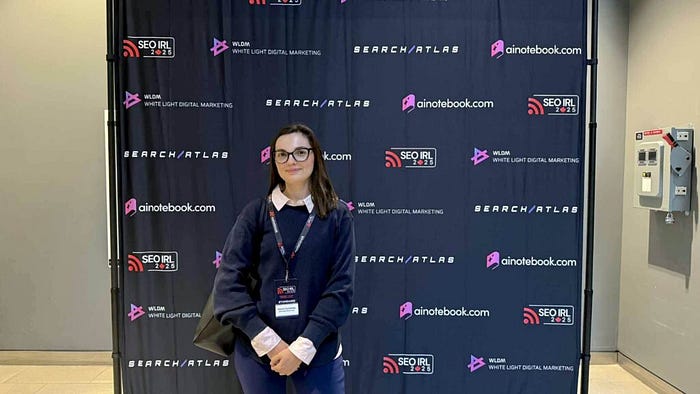
This post is a bit different from what I usually share on Medium or my website, Self Made Millennials. Why not mix things up and share some exclusive insights with you?
I attended SEO IRL 2025 in Toronto (October 16–17), and wow… what an experience!
Two full days of learning, networking, and finally meeting some amazing SEO folks I've known online for years. Seeing them in real life felt surreal!
Before jumping into my takeaways, let me give you a quick background on the event.
SEO IRL is the biggest SEO conference in Canada, organized by Steve Toth, who is the founder and CEO of Notebook Agency, CXL instructor, and the mind behind two popular SEO newsletters: seonotebook.com and ainotebook.com.
The event has been running every October since 2022, and this year marked its third edition.
What started as a one-day event in 2024 became a full two-day conference with world-class speakers, including Aleyda Solis (Founder of Orainti), Kevin Indig (Founder of Growth Memo), JC from TripAdvisor, Ted Kubaitis from SEO Tool Lab, and many more brilliant minds.
Everything was perfectly organized, from the schedule and speaker sessions to the catering. Honestly, it was such a well-run event and absolutely worth attending!
Now, let's get to the fun part — my key takeaways from SEO IRL 2025 (plus some memorable quotes from the speakers).
Remember: learning without action means nothing.
So take at least one thing from these experts and start applying it.
P.S. All the images below are screenshots of the speaker presentations that I took during the conference.
Marie Haynes — Google's new AI Search Engine will radically change our lives
Marie kicked off the conference with a jaw-dropping talk about the current state of AI — from Gemini 3 to AI agents that will soon be talking to each other to process our requests.
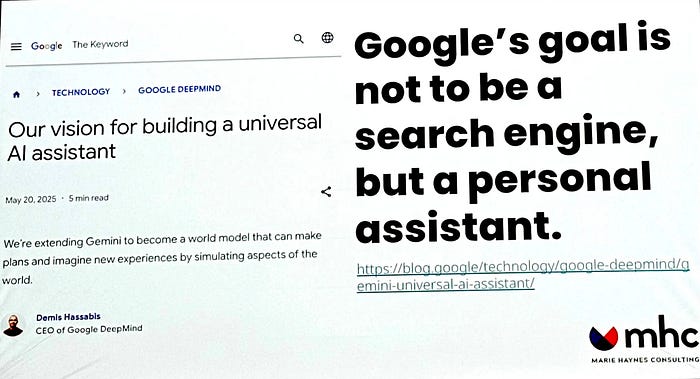
She shared that Google never really wanted to be a search engine.
Instead, its real goal is to become your personal assistant, helping you find, use, and interact with data. That's why we now see fewer links and more interactive results that don't even require visiting a website.
Marie also mentioned something called "whitecoding," saying everyone should try it to understand how AI works.
In simple words, whitecoding means using AI to write code through natural language prompts. So instead of typing every line yourself, you describe what you want, and AI generates it for you.
Brie Moreau — From PageRank to AI: Reverse Engineering Google's Algorithm with Data
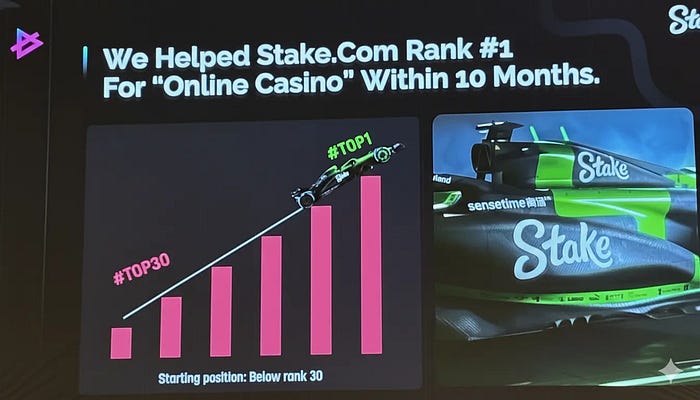
Brie, an SEO from Australia and the CEO of White Light Digital Marketing, shared something mind-blowing — his team built their own search engine to figure out what high-quality backlinks actually look like.
After analyzing thousands of websites, they found that two things make a backlink truly valuable:
- It comes from a page that ranks for keywords related to your niche (topical authority).
- It's from a page that gets real traffic and links to your site naturally.

Their team used this data to rank a casino site #1 for "online casino" in just 10 months. Crazy, right?
Steve Toth — Truth, Not Traffic: How to win in LLMs
If you're in Canada's SEO world, you probably know Steve Toth!
He's the founder of Notebook SEO and the mastermind behind SEO IRL itself.
Steve's main message hit hard:
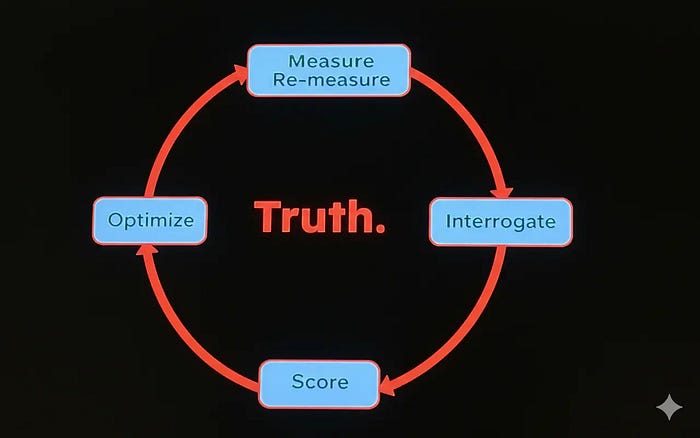
"Stop tracking AI citations — start tracking truth."

What he means is that instead of obsessing over AI mentions that change daily, SEOs should measure how credible and accurate their content is across the web.
If your brand becomes known as a trusted source of truth, you'll stand out in AI search results and LLMs.
That means keeping your info accurate, updated, and featured on authoritative sites.
JC Chouinard — From SERPs to AI Search: Which SEO Principles Will Stand?
JC, Senior SEO Strategist at Tripadvisor, surprised everyone by saying:
"AI SEO comes back to the fundamentals."
And I couldn't agree more!
The basics still work — keyword research, technical SEO, helpful content, and strong internal linking.
Why abandon what's already working?
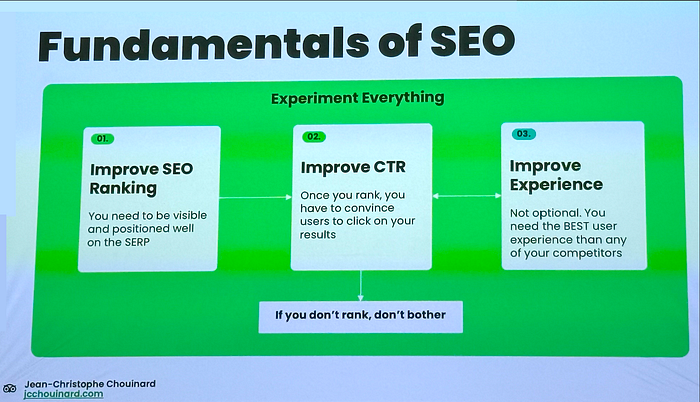
Some of his standout quotes were pure gold:
"SEO isn't a place for poetry." — You don't need 50k-word skyscraper posts anymore. "Improving CTR means taking more space on SERP." — Be visible, get clicks! "I built 5 AI sites: big spikes, big drops. Your brand is all that matters."
Couldn't have said it better.
Branding and SEO are now inseparable. I've talked about it in detail in my AI SEO Trends post.
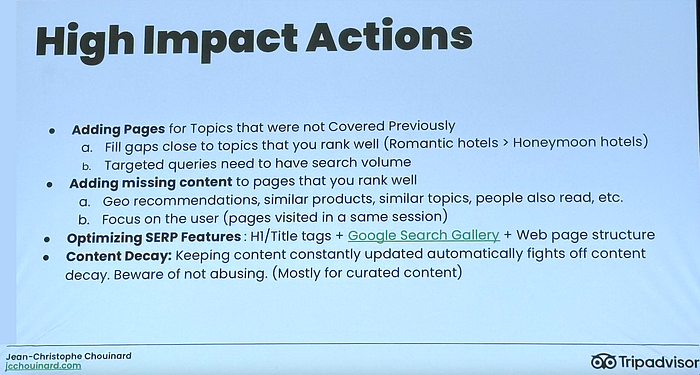
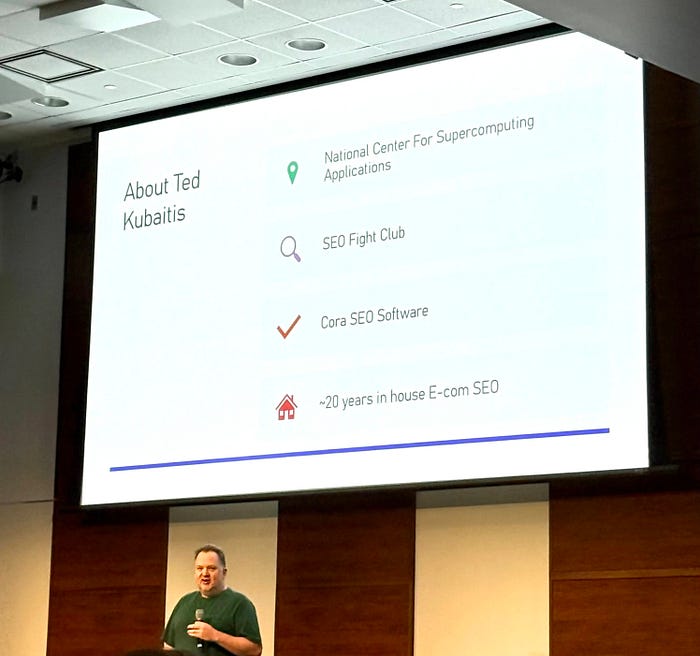
Ted Kubaitis — How to Hit a Moving Target. SEO is Changing
Ted Kubaitis is the Founder and CEO of SEO Tool Lab from Seattle. He's been doing SEO for the past 20 years and literally has seen it all!
Ted was definitely one of the most memorable speakers thanks to his charisma and clarity in every word.
Ted's presentation was just 4 slides, but every sentence deserves a quote.
Here are some gems:
"You can rank #1 with Schema.org + a title tag." He means optimizing new sites for low-to-medium competition keywords.
"If you push one Google algorithm too far, you'll stop seeing results. Look at what you've been ignoring — that's where growth is."
"There's no bad SEO. Just incomplete SEO."
"In the AI age, don't just track rankings — track how far your page is from the top."
That last one blew my mind!
With so many SERP features, being "#3" or "#4" doesn't matter anymore. What matters is how close you are to the top of the fold.
Ross Simmonds — Content Distribution in the Age of AI
Ross Simmonds, the Founder and CEO of Foundation Marketing (a B2B content marketing agency), kicked off Day 2 of the SEO IRL conference, and his session was easily one of the most engaging ones.
Funny enough, the girl sitting next to me (also a content marketer) whispered that his was the most attention-grabbing talk of the day… and honestly, I couldn't agree more.
Ross shared insights that both tech-savvy and non-tech folks could learn from — all centered around how content distribution is evolving in the age of AI.
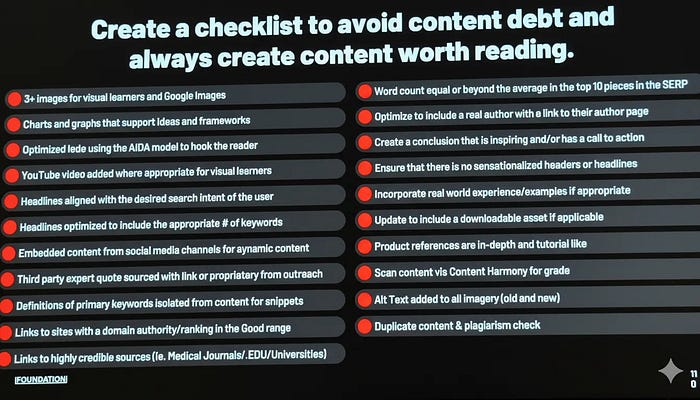
His presentation followed his Content Growth Framework, which breaks down the entire content creation and distribution process.
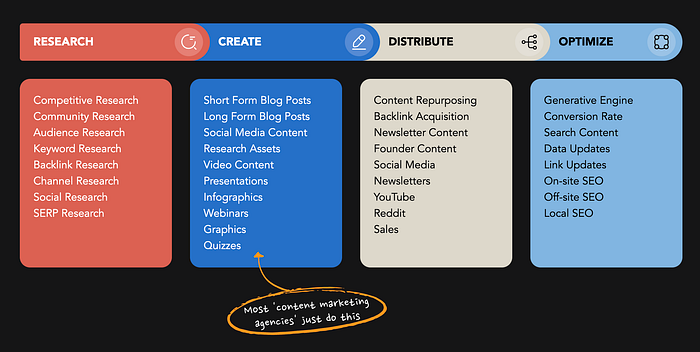
Here are a few standout quotes from Ross that stuck with me:
"Research has never been more effective."
"Reverse engineer content that ranks."
"Find popular content on Reddit, repurpose and post it. It works because human behavior doesn't change."
"I've been banned 18 times on Reddit."
That last one made me laugh, and I totally get it. Reddit is one of the best places to get your content seen.
What gets me a few hundred views on Medium can easily bring thousands on Reddit. Wild, right?
Here are a few practical tips Ross shared that are worth trying:
- Use SparkToro to discover where your audience hangs out online.
- Upload your quote spreadsheets to Canva Pro to create visuals fast.
- Run remarketing ads targeting Reddit users.
- Try Distribution.ai to repurpose your main content into smaller posts for different platforms.
- Use ElevenLabs to turn your photos and voice into AI-generated videos.
For me, Ross' presentation was all about speed and scale: how to turn one piece of content into many, optimized for different channels. What used to take hours of manual work can now be done in a fraction of the time with AI, as long as you know how to use it wisely.
He wrapped up with a super practical checklist slide, which contained a perfect summary of everything he covered.
Manick Bhan — LLM Visibility in Practice: Early Learnings from Thousands of Queries
Manick Bhan, the founder of Search Atlas (yep, one of the top AI SEO tools I've talked about on my website), gave a fascinating talk. If you're curious, you can check out my full Search Atlas review, which dives deep into how the tool works.
His presentation covered insights from studies his team has been running over the past few years, and the findings were mind-blowing!
I had to share a few highlights.
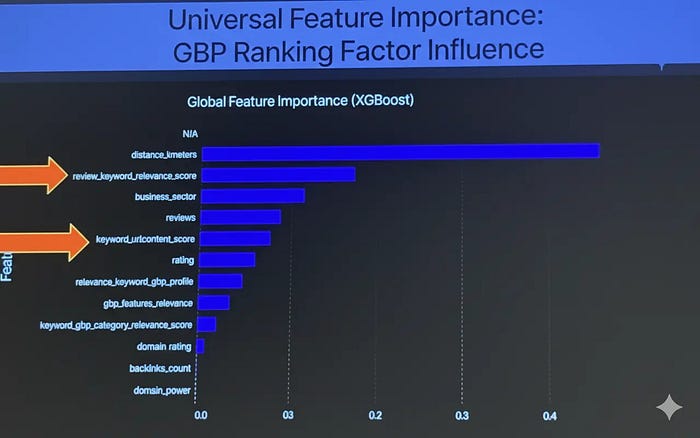
Here's one of the first slides that really stood out — especially for anyone working in local SEO. According to their research, the most important factors that impact Google Business Profile rankings are:
- Distance from the consumer
- Keyword relevance
- Business sector
- Reviews
Of course, the weight of these factors changes by industry. For example, local businesses like law firms or car repair shops often see reviews playing a bigger role than location.
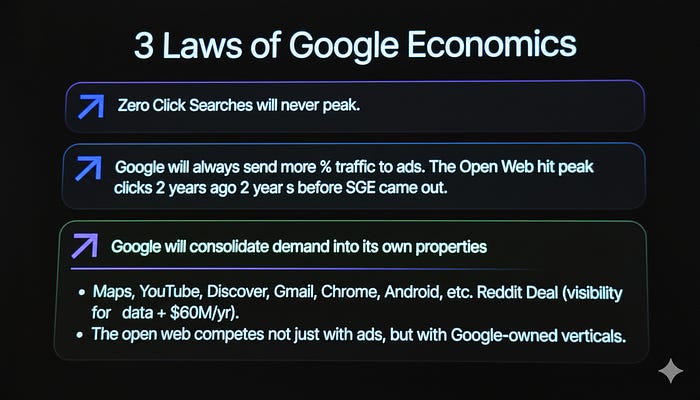
Another powerful slide showed what Manick called the "laws of Google Economics."
He and several other speakers pointed out that Google's main goal is to maximize revenue, which means Google will keep experimenting with SERPs to monetize the 80% of search queries that still aren't monetized yet.
Here are a few quotes from Manick's presentation that really hit home for me:
"Topical relevance is the way to win in the age of AI."
"Fresh content is more visible in LLMs."
"AI Mode is a black hole that consumes web content."
"We're all gonna have to run paid ads."
That last one really got me thinking…
With organic results now buried under paid ads, AI Overviews, and featured snippets, running ads might soon be the way to maintain consistent traffic.
Did I also mention that Manick has founded LinkGraph, a digital marketing agency that's helped big names like Shutterfly and Samsung scale through data-driven SEO?
One of his quotes that stuck with me was:
"Agency helps separate theory from facts."
Honestly, that's gold. SEO only makes sense when you've tested things yourself — theory alone doesn't cut it.
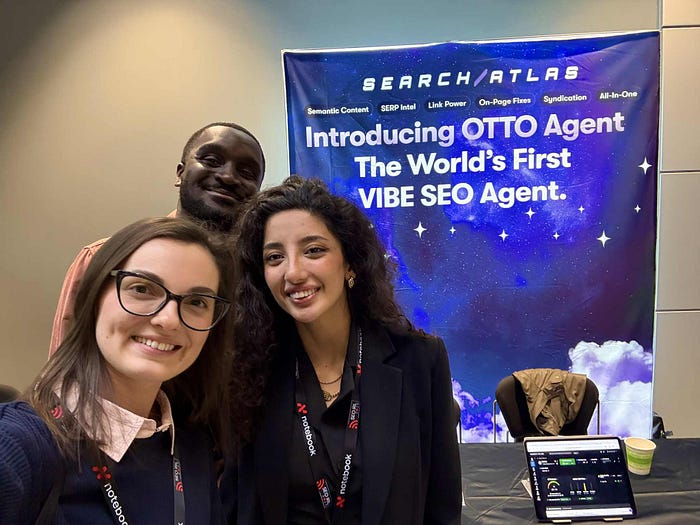
And on a personal note, it was so nice finally meeting the Search Atlas team in person! I've been an affiliate partner for over a year, and we had such a great chat about business (and beyond).
Kevin Indig — What Works in AI Search?
I've been following Kevin Indig for a while now, ever since I took his SEO course through Semrush Academy (and honestly, it was worth every minute!).
This time, Kevin has talked about their AI Visibility case study and what works in AI search nowadays.
Kevin mentioned that "the peak years for traffic were 2020–2024," but things have started to change drastically with the introduction of AI Overviews and AI Mode.
In his presentation, Kevin mentioned that old-school KPIs no longer make sense since even the top 1 organic search results are that far away from the top of SERP, which means a good chunk of users never get to scroll there.
Instead, the KPIs of the future could be the following:
- Brand recalls and awareness surveys
- Crawls by user agent in log files
- LLM sentiment across all topics and prompts
- Number of citations and snippets
- Impressions from the #1 position
- Conversions from LLMs and Google
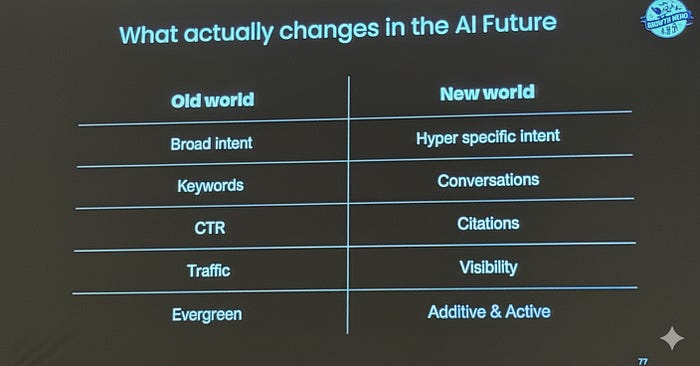
Kevin also has shown us this slide ,which illustrates what critical changes we, SEOs, are experiencing in the age of AI that we have to take into account when working on our SEO campaigns.
Aleyda Solis — How to Build an AI Search Optimization Roadmap
If you've been in SEO for a while, you've probably heard of Aleyda Solis.
Aleyda is a regular speaker at pretty much every big SEO conference.
She's also the founder of Orainti, a boutique SEO consultancy that works with top brands and online platforms from SaaS companies to big marketplaces.
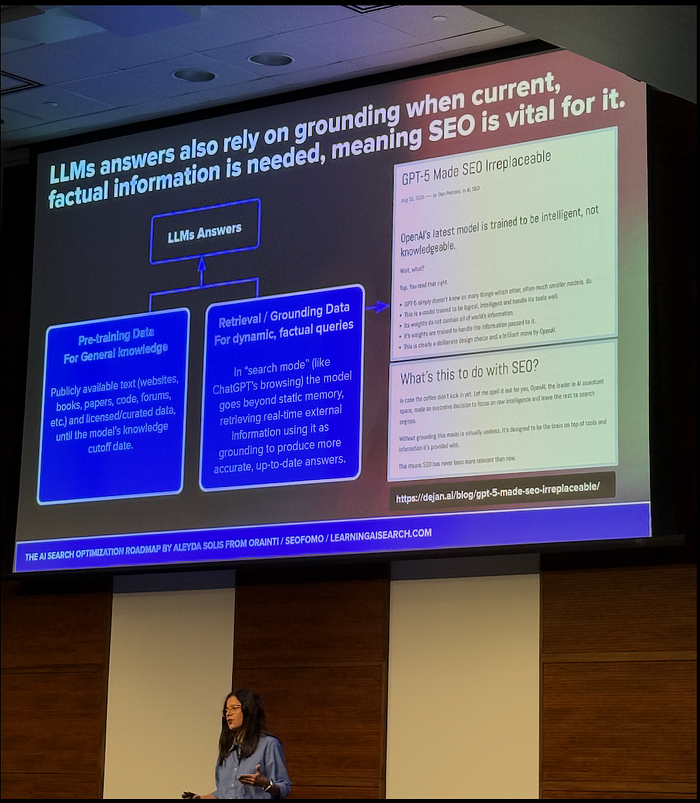
At SEO IRL, Aleyda kicked off her talk by pointing out that, according to OpenAI, ChatGPT relies on existing data to generate responses. That means SEO isn't going anywhere! It's actually more relevant than ever. The content we create through SEO is what fuels LLMs like ChatGPT.
As Aleyda perfectly put it, "LLMs are extending, but not killing traditional search."
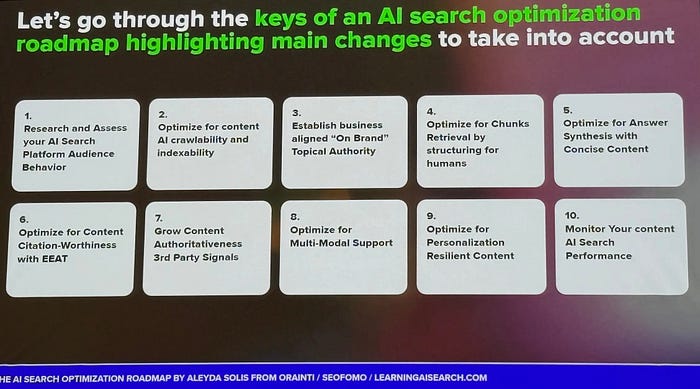
She then walked us through her AI Search Optimization Roadmap, which I've shared below. It's a great reminder that all the SEO basics still matter — E-E-A-T (Experience, Expertise, Authority, and Trust), structured content, and building a strong brand presence are all key to showing up in AI-driven results.
Aleyda has also quoted an insightful Microsoft AI content optimization post that aims to help you understand essential practices for AI visibility.
In my opinion, it all boils down to the basics of doing SEO the right way. I highly encourage you to check the blog post, as it may help you make your content more noticeable by AI.
That wraps up my two days at SEO IRL.
If I had to describe this event in one word, it would be "surprise." I was surprised (in the best way) by finally meeting people I've known online for years, chatting with SEO pros I've learned from since day one, and even being recognized by people who said, "We haven't met, but I know you, right?"
It was two days full of learning, inspiration, and amazing conversations.
Already counting down to SEO IRL 2026. I'm sure it'll be even better!
Subscribe to my newsletter and get a behind-the-scenes look at my journey as a solopreneur, SEO pro, and thriving content creator! 🚀
Want more marketing tips and tricks? Subscribe to the Better Marketing newsletter The Marketing Memo here.