
Most AI book lists are built for curiosity. They are not for builders. A backend engineer building agents does not need the same books as a product manager trying to understand the AI stack. An ML engineer focused on evaluation reads different things than an infrastructure lead worrying about latency and cost.
That is why this post exists. I want to answer a more useful question than asking what the best AI books are.
Not a medium member? Read the complete article here.
The real question is what you should read next if you actually want to get better at building AI systems in 2026. We are past the phase of writing a quick prompt and calling it a product. Context windows are massive now. API costs are dropping. But building reliable systems that do not crash or hallucinate in production is still incredibly hard.
I know the frustration of scrolling through random Twitter threads trying to find a solution to a memory leak or a drifting agent loop. You do not learn how complex systems work from a tweet. You learn them from long and structured thinking. The ecosystem has matured enough that we finally have serious engineering books that treat AI as a systems problem, not just a data science experiment.
How To Use This Reading List
I set a few strict rules for this list. The books must be highly relevant in 2026 and help builders actually ship code. I grouped the books by use case so you can find exactly what you need right now.
The goal is not to read everything. You will burn out if you try to read twelve technical books back to back. The goal is to pick the right three books in the right order. Pick one foundation book to get your mental models right. Pick one application book for the specific thing you are building right now. Pick one production book to make sure your system actually survives real users.
Read This If You Are X
I know twelve books is a lot to process. Here is the fast track based on what you actually do all day.
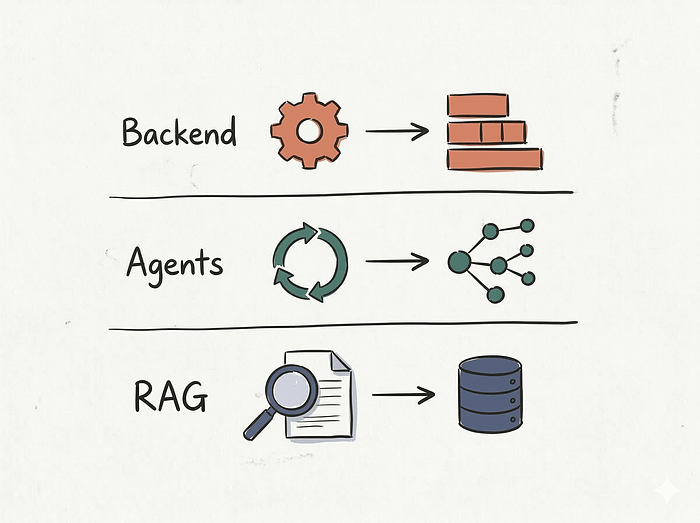
If you are a backend engineer entering AI: Read AI Engineering by Chip Huyen first. It will fix your mental models. Then read Generative AI Design Patterns by Valliappa Lakshmanan and Hannes Hapke. It will show you how to connect your existing software architecture skills to the new AI stack.
If you are building autonomous agents: Read Designing Multi-Agent Systems by Victor Dibia to understand the underlying mechanics from scratch. Then read Agentic AI Engineering by Yi Zhou so your agents do not accidentally destroy your production database.
If you are building RAG pipelines: Read Mastering Retrieval-Augmented Generation by Ranajoy Bose. It will give you the exact chunking and retrieval strategies you need. Then read System Design for Large Language Models by Marc Rolland to make sure your generation step is reliable.
If you are an engineering lead: Read LLMOps by Abi Aryan. You need to understand how to monitor these systems and manage the unpredictable costs before you let your team deploy anything to real users.
Foundation Books
Start here if you are transitioning from traditional software engineering or if you feel like you have been patching tutorials together without really understanding the underlying systems.
1. AI Engineering: Building Applications with Foundation Models
Best for: Getting your systems thinking right before you write a single line of code. Read if: You are moving from a model-first mindset to a product-first mindset. Skip if: You are looking for a deep dive into PyTorch internals or low-level CUDA optimization.
Chip Huyen wrote this book to explain how AI engineering differs fundamentally from traditional machine learning engineering. We used to spend months training models from scratch. Now we build applications using foundation models that already exist. This shift changes the entire engineering stack.
The book focuses heavily on evaluation. Evaluation is honestly the hardest part of building AI applications. You cannot just calculate a simple accuracy score for an open-ended text response. You have to build custom evaluation pipelines. Chip explains the AI-as-a-judge approach in detail. This approach uses a strong model to evaluate the output of your application model based on a strict grading rubric.
What it will change in how you build: You will stop relying on manual vibe checks. You will learn to calibrate your judge models to avoid verbosity bias, where a model prefers longer answers just because they look more detailed. You will start treating dataset engineering and evaluation as your primary engineering tasks.
2. Hands-On Large Language Models
Best for: Building a deep visual intuition for how transformers and embeddings actually process text. Read if: You want to understand the math and mechanics without getting buried in dense academic notation. Skip if: You already know exactly how self-attention, positional embeddings, and Byte Pair Encoding work under the hood.
Jay Alammar is famous for his visual guides to machine learning. This book takes that visual approach and applies it to the entire LLM lifecycle. It goes from basic text embeddings all the way to fine-tuning and deployment.
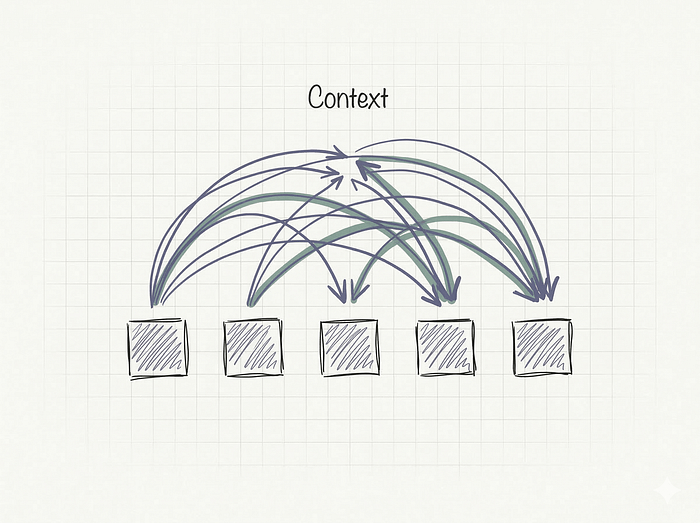
The best part of this book is how it makes the abstract math feel very concrete. The transformer processes all tokens at once so it has no concept of order. The authors explain exactly how we inject positional information into the input embeddings so the model knows which word comes first. They also cover semantic search systems that go far beyond basic keyword matching.
What it will change in how you build: You will stop treating LLMs like black boxes. When your model outputs garbage you will actually understand whether the problem was in the tokenization step, the embedding space, or the generation parameters.
3. LLM Engineer's Handbook
Best for: Hands-on implementation of the full data and fine-tuning lifecycle. Read if: You want to build a production-ready system from end to end using open-source tools. Skip if: You only plan to use closed-source APIs like OpenAI or Anthropic and never want to host your own weights.
This book is pure engineering. It walks you through building an open-source system called the LLM Twin. The authors cover the entire lifecycle from data collection to model deployment. Maxime Labonne is well known for his work on fine-tuning open-source models and he brings that exact expertise to this book.
You learn the practical differences between Supervised Fine-Tuning and preference alignment techniques. Supervised fine-tuning teaches the model how to format its answers. Preference alignment teaches the model which answers humans actually prefer. The book spends a lot of time on parameter-efficient fine-tuning. Fine-tuning a massive model requires updating billions of parameters. The authors show you how to freeze the original weights and inject small trainable matrices so you can run training on consumer hardware.
What it will change in how you build: You will gain the confidence to pull models off Hugging Face and adapt them to your specific use case. You will understand how to bridge the gap between machine learning research and actual software engineering.
Agent Books
Most agent tutorials stop at showing you a basic prompt. The real work is in the control loops, the memory architecture, and the failure handling. Read these when you need your AI to take actions.
4. Designing Multi-Agent Systems
Best for: Learning the first principles of agent architecture from scratch. Read if: You want to understand why frameworks like AutoGen and LangGraph work the way they do. Skip if: You just want to copy-paste a quick LangChain script and move on.
Victor Dibia is a principal researcher at Microsoft and the creator of AutoGen Studio. He knows exactly how fragile multi-agent systems can be. Instead of just teaching you how to use an existing framework, this book takes a first-principles approach. You literally build a feature-complete agent library from scratch.
The book covers patterns for collaboration, observability, and interruptibility. This last part is crucial. If an agent starts going down the wrong path, a human needs to be able to interrupt it, correct its context, and let it resume.
What it will change in how you build: You will stop relying on magic framework abstractions. You will understand how to build systems where multiple agents reliably collaborate to solve complex tasks without getting stuck in infinite loops. You will design for trust and transparency.
5. AI Agents in Action
Best for: Connecting agents to real-world tools and modern protocols. Read if: You need to deploy agents that can search databases, call external APIs, and manage long-term memory. Skip if: You are looking for high-level theory rather than hands-on code orchestration.
This book guides you through the latest breakthroughs in LLM-powered autonomy. Micheal Lanham covers the core layers of an agentic system. He dives deep into reasoning frameworks, tool usage, and feedback patterns.
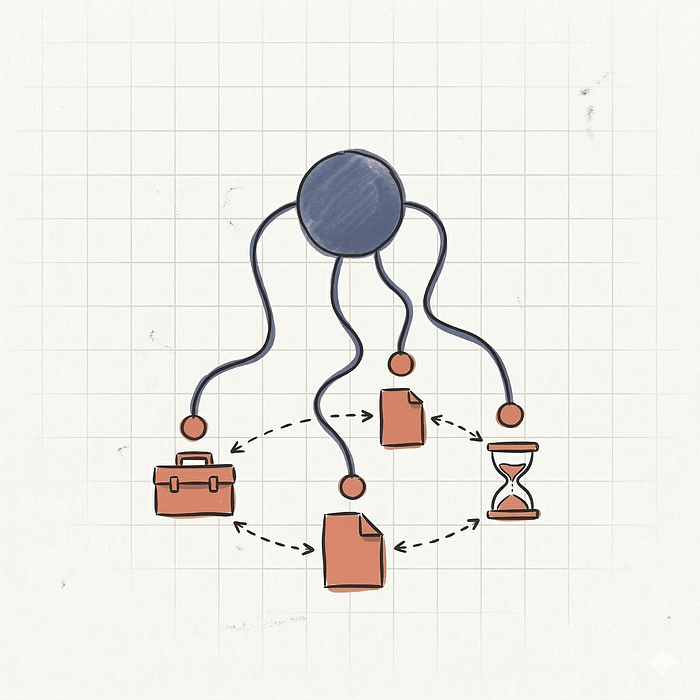
A major focus of the book is the Model Context Protocol and advanced multi-agent collaboration. You learn how to take advantage of retrieval-augmented memory so your agent actually remembers what happened three days ago. The book also covers containerized deployment. This is a massive pain point for most developers. You cannot just run an agent locally and expect it to work in the cloud. You have to containerize the environment so the agent has a safe sandbox to execute code.
What it will change in how you build: You will move away from fragile assistants that require constant supervision. You will learn how to orchestrate fleets of internal agents to automate enterprise tasks reliably.
6. Building Agentic AI
Best for: Optimizing agent workflows for enterprise environments. Read if: You need your agents to balance cost, speed, accuracy, and privacy. Skip if: You are building simple chatbots that do not require complex reasoning or planning.
This book takes you beyond basic chatbots to create fully functional autonomous agents that drive measurable business outcomes. Sinan Ozdemir looks closely at how LLMs make decisions inside an agent loop and how those decisions drift over time. Small design choices can turn a useful system into something unstable very quickly.
The book is intensely practical. It covers how to deploy multimodal AI systems that seamlessly integrate text, vision, and code generation. It also dives into optimization techniques like quantization and speculative decoding. Speculative decoding is a brilliant way to reduce latency in agentic systems. You use a small fast model to draft a sequence of tokens and then use a larger target model to verify them in parallel.
What it will change in how you build: You will stop treating agents as a novelty and start treating them as a core part of your enterprise architecture. You will learn how to implement comprehensive evaluation frameworks that measure precision, recall, and latency.
7. Agentic AI Engineering
Best for: Making agents survive contact with the real world and regulatory audits. Read if: You are deploying agents in healthcare, finance, or any highly regulated industry. Skip if: You are just building internal tools where failure is acceptable.
Most AI agents shine in controlled demos but collapse in production. They hallucinate confidently or fail silently without explanation. Yi Zhou wrote this book to deliver the missing discipline. He shows how software engineering must evolve into agentic engineering.
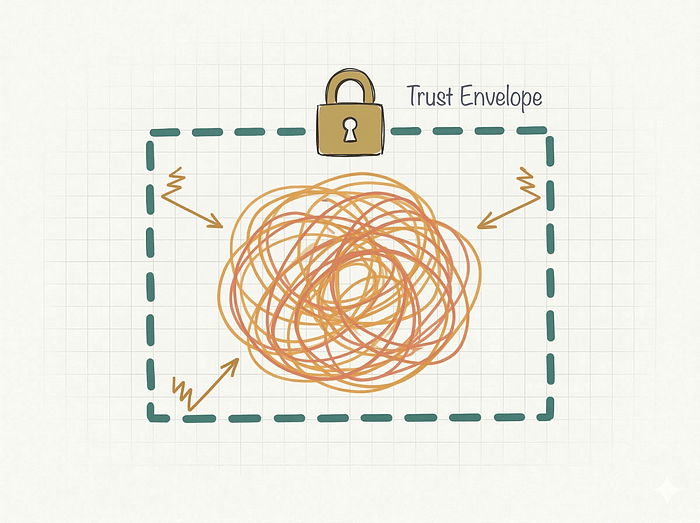
The book introduces the Agentic Stack and the Agentic Maturity Ladder. It breaks down the system into the Cognition Loop, the Agent Runtime Environment, and the Trust Envelope. The Trust Envelope is fascinating. You cannot inherently trust the agent to behave correctly. You have to build an execution environment that restricts what the agent can actually do. You implement safety gates and retry logic so the system remains auditable.
What it will change in how you build: You will stop blaming the model for bad behavior. You will realize that correctness is just the baseline. You will start engineering for trust in motion, building systems that reason under uncertainty but adapt responsibly.
Production And Ops Books
Models are cheap. Infrastructure is expensive. Read these books when you need to scale your system, manage your costs, and figure out why your application is running so slowly.
8. LLMOps: Managing Large Language Models in Production
Best for: Keeping LLM systems running smoothly when real money is on the line. Read if: You are responsible for the infrastructure, monitoring, and operational health of GenAI applications. Skip if: You are strictly focused on prompt design and do not care about deployment pipelines.
Traditional machine learning operations completely fall apart when you deal with generative AI. In traditional MLOps you monitor metrics like accuracy and recall. The model outputs a single prediction. Large language models output open-ended text. The security assumptions crumble and traditional monitoring breaks.
Abi Aryan wrote this book to explain the new discipline of LLMOps. The book covers how to monitor LLM performance when traditional metrics do not tell the whole story. It tackles prompt drift. You write a prompt that works perfectly today. Two months later the API provider updates their weights and your prompt stops working. You have to track these changes and run automated regression tests.
What it will change in how you build: You will stop deploying blindly. You will learn how to wrangle the operational mess of agents and evolving prompts. You will figure out how to scale your infrastructure without burning through your compute budget.
9. AI Systems Performance Engineering
Best for: Hardcore optimization of hardware, software, and algorithms. Read if: You are deploying your own open-source models and need to maximize GPU throughput. Skip if: You only use managed APIs and never touch bare metal or virtualized GPUs.
This is the most technically dense book on the list. It is all about making your models run faster and cheaper. Chris Fregly dives deep into GPU memory management, CUDA kernels, and PyTorch-based algorithms.
When you run an LLM, the memory management is a nightmare. As the sequence grows, the KV cache grows. Traditional systems allocate a large block of contiguous memory for each request which leads to massive memory fragmentation. The book explains how to codesign hardware and software to achieve maximum throughput. It covers cutting-edge inference strategies that reduce latency in real-world settings.
What it will change in how you build: You will stop throwing more expensive GPUs at your latency problems. You will learn to profile, diagnose, and eliminate performance bottlenecks across complex AI pipelines. The book ends with a massive checklist of proven optimizations that you can apply immediately.
10. Generative AI Design Patterns
Best for: Solving recurring architectural problems with proven templates. Read if: You are tired of reinventing the wheel every time you face a hallucination or a context limit. Skip if: You prefer to figure out your own architectural solutions from scratch.
Generative AI enables powerful new capabilities but comes with serious limitations. Experts in the field have compiled a library of 32 tried-and-true design patterns to address the exact challenges you encounter every day.
The book covers how to handle hallucinations, nondeterministic responses, and knowledge cutoffs. Each pattern describes a specific problem, shows a proven way to solve it with a coded example, and discusses the trade-offs. You learn how to ensure that generated content follows a specific style or format. You also learn how to build patterns for agents that plan, self-correct, and take action.
What it will change in how you build: You will gain a shared vocabulary with your engineering team. Instead of arguing over vague concepts, you will say "we need to implement pattern 14 here to handle the context overflow." It brings clarity through principles.
RAG And Safety Books
Retrieval-Augmented Generation is the default architecture for enterprise AI. It sounds easy in theory but it is full of edge cases in practice. Read these to make your generation step actually reliable.
11. Mastering Retrieval-Augmented Generation
Best for: Scaling RAG from a weekend prototype to an enterprise production system. Read if: Your vector search keeps returning irrelevant documents and your LLM keeps giving bad answers. Skip if: Your data is perfectly structured and fits easily into a standard prompt window.
This book provides the definitive roadmap for building and optimizing enterprise-grade RAG systems. It takes you way beyond basic concepts. You cannot just split your documents into naive chunks. You will cut sentences in half and lose the context.
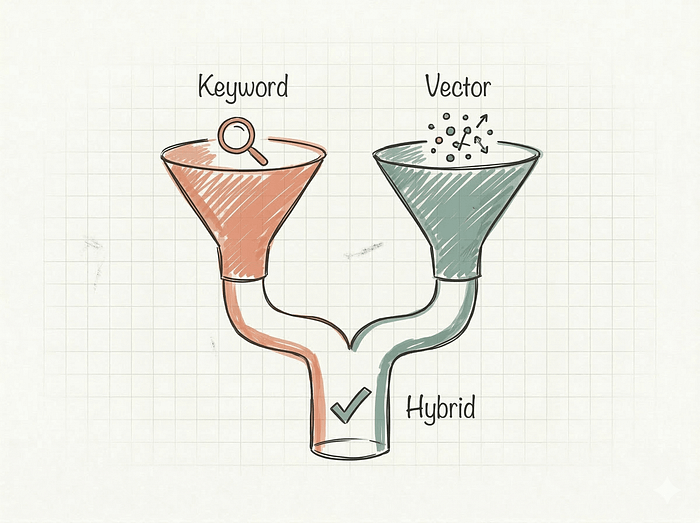
Ranajoy Bose explores proven techniques for document processing and vector optimization. He covers advanced retrieval strategies including graph-based approaches and multi-modal systems. You learn how to fine-tune embedding models and vector databases for maximum efficiency. The book also covers hybrid search extensively. Dense embeddings are great for meaning but terrible for exact keyword matches. You have to combine them to get accurate results.
What it will change in how you build: You will stop relying on basic vector similarity. You will troubleshoot and fine-tune your pipelines for optimal performance. You will deploy scalable systems with proper monitoring and continuous improvement processes.
12. System Design For Large Language Models
Best for: Treating prompts as rigorous system boundaries rather than copywriting exercises. Read if: Your carefully engineered prompts fail precisely when the business stakes reach their peak. Skip if: You still believe that the "perfect prompt" exists and you just need to find the right magic words.
Marc Rolland dismantles the dangerous illusion that prompt engineering is merely advanced copywriting. He establishes a rigorous systems framework for designing applications that behave reliably without requiring constant operational heroics.
The book draws from systems engineering, safety analysis, and control theory. You learn to conceptualize prompts as critical operational boundaries mediating between human intent and computational action. You advance beyond isolated prompt optimization to implement explicit instruction hierarchies and deliberate task decomposition.
What it will change in how you build: You will stop tweaking adjectives in your system prompts hoping for a better result. You will build robust observability mechanisms that render failures detectable rather than merely infrequent. You will encode fundamental decisions regarding risk management directly into your architecture.
Final Recommendation
Do not try to read all twelve. You will get stuck in tutorial hell. The technology changes too fast to spend a year just reading.
Pick one foundation book. Pick one application book for your specific project. Pick one production book. That three-book stack will help you more than reading ten random titles badly.
Read a chapter. Write some code. Break the code. Read the next chapter to figure out why it broke. That is the only way to actually learn AI engineering.
Continue Reading
AI Agents Explained (2026) — Turns this reading list into a practical systems overview before readers pick frameworks, runtimes, or orchestration patterns.
Modern RAG (2026) — Extends the RAG section into a concrete implementation path from simple retrieval to production-grade architecture.
How I Would Become an AI Engineer in 2026 If I Had to Start Over — Broadens the article from what to read next into how to sequence the skills, tools, and engineering habits that matter most in practice.