👆 👆👆👆👆
2 years ago I read 50 academic books.
That's almost a book per week.
You may think that this is cool or "wow", but the reality is that I wasn't proud of it.
Why?
Because I couldn't remember most of what I read.
Ah, that uncomfortable feeling of not being able to remember.
So I decided to change my reading technique to avoid that.
In this article, I will tell you how you can do it in 3 steps.
Step 1: Take Notes
The reason why we struggle with retaining information is that our brain is a forgetting machine.
Our brains didn't evolve to remember everything. They evolved to make us survive by learning a few details from a context.
So if you expect to digest all the information from a book by just highlighting, like my younger me thought, you're wrong.
Instead, you should take notes.
Our brain LOVES notes, as they summarize important information.
But don't copy-paste them from your book highlights.
Write them down on a piece of paper or your favorite software (Word, Google Docs, Notion, Obsidian, etc).
By doing this you will remember the general content of your book.
Tip: In my notes, I love to write a section called "The Chapter (or the Book, paper) in 3 Sentences".
- This allows me to think of the general idea of the information and summarize it in 3 sentences.
- Then I can go back to my notes and fastly check and retrieve my information.
Step 2: Explain to Yourself
If you want to remember while reading, a good tool is the Feynman technique.
This consists of stopping after some paragraphs, closing the book, and trying to explain the concept in easy words.
Imagine you're trying to explain the concept to someone who doesn't know anything about it, let's say a kid.
Imagine that situation and try to explain the concept.
This will help you enormously to remember and learn the information.
Do this and you will avoid that uncomfortable feeling of not remembering what you just read.
Step 3: Retrieve Information
This is an extra step that I do when I need or want to study the topic I'm reading about.
I use Anki to make flashcards with questions about the most important topics of what I'm reading.
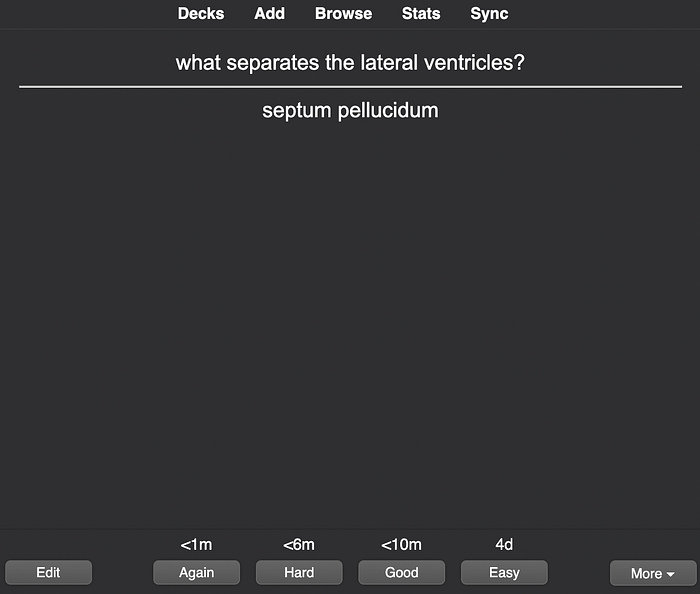
Additionally, I love to create mind maps comprising a whole chapter in a beautiful way in Obsidian:
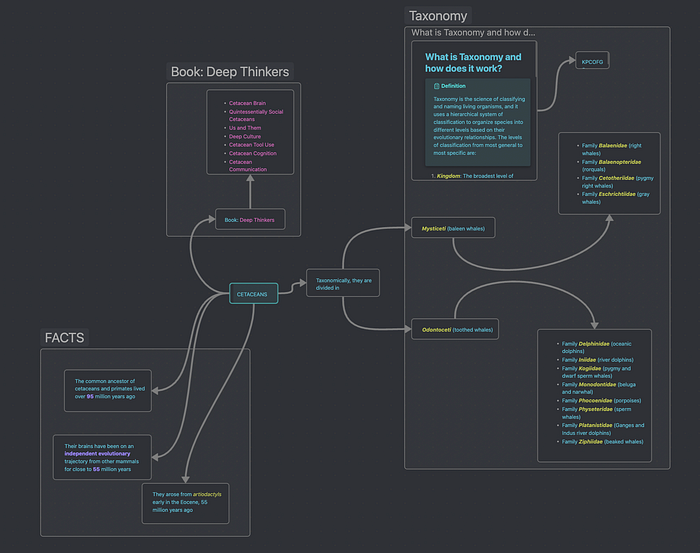
🤓 Would you like to know more about Anki and Obsidian? Let me know in your responses :)
Extra Tip: Build a Second Brain
A second brain is a place where you can store all your information without needing your biological brain.
Remember when I wrote that our brain is a forgetting machine?
If we hope that we will remember everything we consume through the day by keeping in mind all our responsibilities, we're not good.
So making a place where you can store that information and retrieve it whenever you want is a great way to stop forgetting and be more productive, while also reducing stress and anxiety.
That's the second brain.
I will write more about this in my next articles.
Conclusion
In this article, we learned how to stop forgetting what we read.
Summarize, take notes, explain the topic to yourself while reading, and retrieve information and you will never forget the information again.
I hope these tips will help you avoid the uncomfortable feeling of not remembering what you just read.
❤️ If you liked it, please clap 👏 (50) to motivate me to write more articles about sleep, neuroscience, animals, and Python.
If you love animals follow me and check Cognitive Creatures or all my articles about animal intelligence, behavior, and cognition. 🦜
See you!
Axel
My Friend retro games NES SEGA