What is the point of finishing every book without actually understanding?
You finish a 300-page book, feel inspired, and 48 hours later, can't explain the core thesis to your friend. This is a "fluency trap". Reading passively sounds effective. The goal is to learn what you read so you can communicate new ideas and apply them to your life.
You don't need to finish every book; you need to understand deeply and apply it to your life.
The Feynman technique can help you acquire a deep understanding of every book you read.
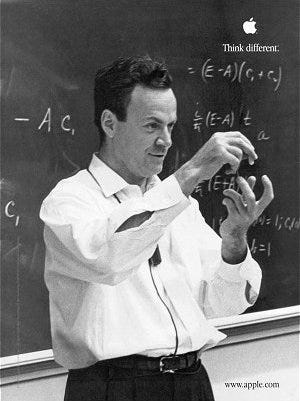
It has been developed and named after Nobel-winning physicist Richard Feynman, who is known as the father of modern physics and one of the most influential scientists of modern times. If you want to move beyond just collecting books and start building a real knowledge arsenal, you're in the right place. By applying his 4-step technique to your reading, you'll retain 90% more than the average reader.
Here is the four-step mental model that will change how you read.
1. The "Toddler" Explanation

If you can't explain it to a child, you don't understand it.
After every chapter, close the book and write down the core idea on a blank sheet of paper. Explain the core concepts as if you're talking to a 12-year-old. This forces you to see if you actually get it or if you're just hiding behind big words. At this stage, jargon is a mask for ignorance. If you see yourself using complicated words without defining them simply, you don't grasp the material yet.
You just memorize sounds.
2. The "Gap" Identification
Now, you get to know what you don't know.
When you get stuck explaining a concept in simple terms, congratulations — you've found the gap. Now go back to your material specifically for that missing link. Pinpoint where your explanation falls apart, then dive back into the book to fix that specific link. This turns reading into targeted reading rather than a marathon. You aren't re-reading the whole book; you are surgically repairing your understanding of the weak points.
Once you strengthen your weak points in your knowledge, you can easily understand your material.
3. The "Analogy" Stress Test
To truly own an idea, you must connect it to something the reader already knows.
Create a mental bridge. (e.g., If the book is about Compound Interest, explain it using a snowball rolling down a hill). Analogies are the glue of memory. If you can't create a simple metaphor for the book's message, you haven't internalized the logic; you've only borrowed the author's words.
We understand new concepts best when we anchor them to things we already know.
In conclusion, this technique works as a reading audit for your books.
The moment you finish a chapter in your book, pause, then start explaining what you have benefited from the book to a child. The moment you struggle to explain a concept, that's a good start. Note that part and go back to your material to understand more of that concept. Also, using fancy words is a sign that you're hiding your poor understanding of the idea. Use your analogies and simple language to explain your ideas.
You're no longer just collecting pages — you're mastering ideas.
Hey, thanks for reading — I'm Ahmed Gadaken.
I write about nonfiction books, smarter reading habits, and self-improvement.