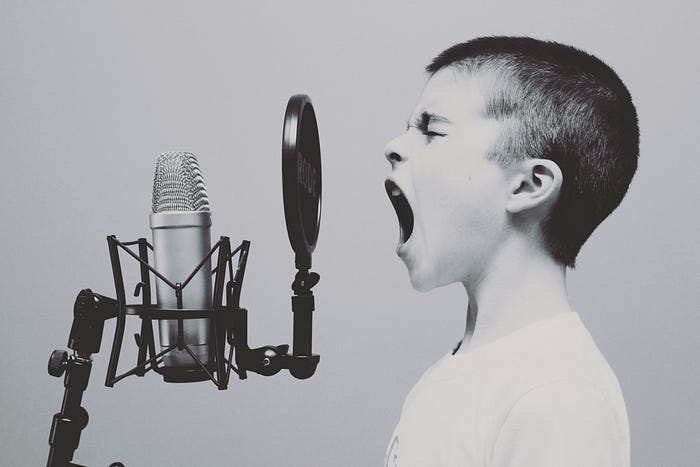
When you're learning a language, feedback is crucial. How else can you learn from your mistakes?
When I decided to take the C2 German exam, everyone thought I was crazy. The main challenges I had to overcome?
I live in Italy and have no German-speaking friends, relatives, or acquaintances.
I've never spent time in a German-speaking country (except for a four-day school trip when I was eighteen).
And finally, I had no time or money for private tutoring sessions.
If you're familiar with CEFR levels, you know C2 corresponds to the highest proficiency level. It means you understand everything you read or listen to and can write or talk about everything, including complicated societal issues or academic subjects! How could I hope to pass such a high-level exam under these circumstances?
I relied on a variety of strategies — from grammar books to podcasts to flashcards, you name it. I also had to differentiate based on the skill I wanted to strengthen — because in a Goethe exam, your score is calculated on each of the four modules (Listening, Speaking, Writing, Reading) separately and independently.
Unlike what happens in a Cambridge English certification, in which a good score in the Reading part can compensate for a weaker performance in Writing, here you have to pass each one of them in order to be successful!
And I did. Not just that: my scores in three of the four modules were higher than 90/100, and the most incredible thing is, I scored an incredible 100/100 in the Speaking part — the module that worried me the most because my possibilities to practice were limited.
But how did I do it?
Good habits with written texts
My writing in German improved dramatically thanks to the habit of completing a written task, then reading it aloud, and painstakingly looking up every word or grammar structure I had doubts about.
It would take twenty minutes to actually write down the exercise and up to an hour to double-check it.
That was no waste of time. Week after week, my sentences became longer and more complicated. Looking them up and trying to dissect them with the help of Reddit threads and ChatGPT was a meaningful learning task in and of itself.
Actively correcting my writing was much more useful than just having a teacher or a piece of software provide me with the correct text. The process of looking up, reading different sources online, and finally deciding to leave it unchanged or to cross the wrong part out and replace it with the correct version made each mistake memorable, and consequently easier to avoid.
However, how do you do the same with speaking?
I had no one to speak German to, and even in that case, only an experienced and excellent teacher can jot down notes while you're talking and correct your mistakes without interrupting the flow.
So I had to get creative. That's where recording myself came into play.
I would choose a topic and prepare a three- or four-minute monologue. In the beginning, I would brainstorm ideas, look up relevant words in advance — but no more than five or six — and prepare a draft. Later on, I started to just talk with no preparation time.
During the monologue, I recorded myself. The easiest way for me was to just record everything on a four-minute Telegram voice message, but you could use any other kind of app or alternative solution. The only thing that matters is having your voice there, ready to be listened to again.
Ouch. Cringe. Or, as Germans would put it, 'peinlich'.
I know.
But trust me: it does wonders for your speaking ability.
And for your confidence too, because after spending weeks listening to and amending your own sentences, you will have a realistic and precise idea of how far you've come and how much progress you've made.
How the process worked for me
I would listen to my voice and just pause the message whenever I wanted to check a verb tense, compare my pronunciation with the correct one found in online dictionaries, and so on.
Whenever I found significant mistakes, I would note down the whole sentence in the wrong and then in the correct form, to highlight where I had messed up and teach my brain not to do it again.
Plus, I could reflect on my choice of words. While you're speaking, all you want to do is keep going and not get stuck, so you just have to make do with the first word that comes to your mind and remotely resembles what you want to say.
But if you record yourself and then listen, you have all the time to pause, look up the word that better fits what you want to express, and maybe check that you didn't once again mix up begleiten ('to accompany') with beleidigen ('to offend')!
It could take up to forty minutes to be done with a single four-minute monologue and I couldn't do more than two or three a day, because it was honestly tiring and often disheartening.
But it worked, as my exam results testify.
Because I built confidence and paid attention to the details, I didn't just complete my speaking or writing exercise and then move on to the next task — I stopped, checked, and painfully corrected my mistakes.
Recording yourself not only allows you to correct your speaking, which is otherwise extremely difficult to do.
It also makes progress visible — hearable, in this case!
Witnessing your progress helps with confidence too
You notice that the pauses between words are getting shorter. You need less and less time to correct your recording because there are fewer mistakes. You start to sound decent. You're not so embarrassed to hear yourself speaking in your target language anymore.
And it doesn't just do the trick with languages — it can be useful if you have to talk about anything else, too.
Suppose you need to prepare a presentation on any topic — school, college, work, you name it.
You have your PowerPoint, practiced in front of the mirror, and maybe even asked your best friend, your dog, or your little brother to listen to you going through the presentation.
But you don't know how you're really going to come across to your public.
Record yourself. Listen to it. See if there's anything you'd like to change, add, or delete.
Then do it again.
I know you're going to hate it but trust me, your audience is going to love you!
Final take
Learning a language is no easy feat. Language production, i.e., speaking and writing, are often the most critical skills to develop. Passively completing one exercise after the other is not effective; if you want to see improvement, take your time, focus on each task completely, and make the most out of it.
How? Recording your own voice and listening to it can be a precious strategy because it allows you to correct yourself, notice progress, note down your mistakes, and look up words in order to expand your vocabulary and make it more precise.
Have you ever tried this strategy? What are your favorite methods to refine and strengthen your productive skills?