Introduction
If you are learning backend development today, you are stepping into a field that is constantly evolving. New frameworks appear, tools change, and best practices get updated. But here is something most people do not tell you clearly.
The tools may change, but the core backend skills remain the same.
Many developers spend too much time jumping between frameworks and not enough time mastering the fundamentals that actually matter. That is why some developers with fewer tools still build better systems than others who know many technologies.
This blog is not about trends. It is about real backend skills that will stay relevant in 2026 and beyond.
If you focus on these, you will not just write code. You will build systems.
Click here and read it free now
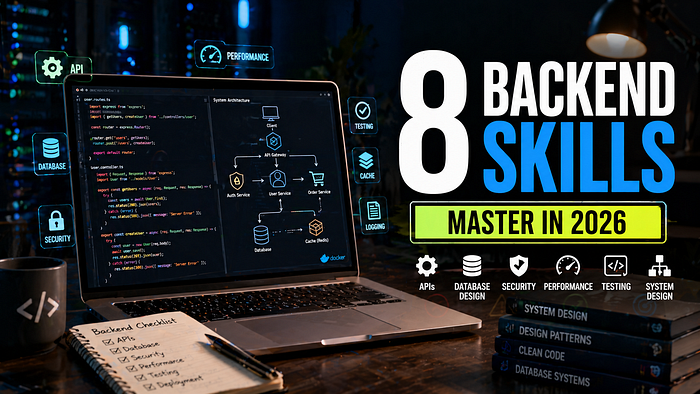
1. Understanding How APIs Really Work
Most beginners can create a REST API using Spring Boot. But very few understand what is happening behind the scenes.
An API is not just about endpoints. It is about communication between systems.
What you should understand
HTTP methods and their purpose Status codes and when to use them Request and response structure Idempotency and why it matters
Example
@GetMapping("/users/{id}")
public ResponseEntity<User> getUser(@PathVariable Long id) {
    Optional<User> user = userService.findById(id);

    if (user.isPresent()) {
        return ResponseEntity.ok(user.get());
    } else {
        return ResponseEntity.status(HttpStatus.NOT_FOUND).build();
    }
}
Why this matters
A well designed API is predictable and easy to use. Poor APIs create confusion and bugs for frontend developers and clients.
2. Database Design That Scales
You can write queries. But can you design a database properly?
Backend development is deeply connected with data. Bad database design leads to slow systems and messy code.
Key concepts
Normalization and when to avoid it Indexes and how they improve performance Relationships between tables Handling large datasets
Example table design
User table id, name, email
Order table id, user_id, amount
This relationship ensures proper data organization.
Example query
SELECT * FROM orders WHERE user_id = 1;Why this matters
A good database design can save you from performance issues later. A bad design will haunt you.
3. Writing Clean and Maintainable Code
Code is not just for machines. It is for humans.
If your code is hard to read, it will become hard to maintain.
Example of bad code
int x = 0;
for(int i = 0; i < list.size(); i++){
    if(list.get(i).isValid()){
        x++;
    }
}
Improved version
int validItemCount = 0;
for (Item item : list) {
    if (item.isValid()) {
        validItemCount++;
    }
}
What to focus on
Meaningful naming Small methods Single responsibility Consistent structure
Why this matters
Clean code reduces bugs and improves team collaboration.
4. Error Handling and Logging Like a Professional
Things will go wrong. That is guaranteed.
The difference between a beginner and a professional is how they handle errors.
Global exception handling
@RestControllerAdvice
public class GlobalExceptionHandler {
  @ExceptionHandler(Exception.class)
    public ResponseEntity<String> handleException(Exception ex) {
        return new ResponseEntity<>("Something went wrong", HttpStatus.INTERNAL_SERVER_ERROR);
    }
}
Logging example
private static final Logger logger = LoggerFactory.getLogger(UserService.class)
  public User getUser(Long id) {
    logger.info("Fetching user with id {}", id);
    return repository.findById(id)
        .orElseThrow(() -> {
            logger.error("User not found with id {}", id);
            return new RuntimeException("User not found");
        });
}
Why this matters
Good error handling improves user experience. Logging helps you debug production issues.
5. Authentication and Authorization
Security is a core backend responsibility.
If your application is not secure, nothing else matters.
Basic Spring Security setup
@Configuration
@EnableWebSecurity
public class SecurityConfig {
    @Bean
    public SecurityFilterChain filterChain(HttpSecurity http) throws Exception {
        http
            .csrf().disable()
            .authorizeHttpRequests(auth -> auth
                .requestMatchers("/public/**").permitAll()
                .anyRequest().authenticated()
            )
            .httpBasic();
        return http.build();
    }
}
What you should learn
JWT based authentication Role based access control Password encryption
Why this matters
Security issues can destroy trust and systems.
6. Performance Optimization
A working system is not enough. It must be fast.
Common techniques
Caching Pagination Efficient queries
Example caching
@Cacheable("users")
public User getUserById(Long id) {
    return repository.findById(id)
        .orElseThrow(() -> new RuntimeException("User not found"));
}
Why this matters
Performance directly impacts user experience.
7. Testing Your Code
If you do not test your code, you do not know if it really works.
Simple unit test
@Test
public void testAddition() {
    assertEquals(5, calculator.add(2, 3));
}
What to test
Business logic Edge cases Critical flows
Why this matters
Testing prevents bugs and improves reliability.
8. Understanding System Design Basics
This is what separates good developers from great ones.
Concepts to learn
Microservices vs monolith Load balancing Database scaling API gateway
Example thinking
What happens if 10000 users hit your API at once How will your system respond
Why this matters
System design helps you build scalable and reliable applications.
Putting Everything Together
When you combine these skills, you stop being just a coder.
You become a backend engineer.
You start thinking about
How systems behave How users interact How data flows
Final Thoughts
2026 will not reward developers who only know syntax.
It will reward developers who understand systems.
Focus on these eight skills and you will always stay relevant.
Do not chase tools. Master fundamentals.
That is how you grow faster and build better.