Non-Medium Members Can Read the Full Article by Clicking Here.
👆 👆👆👆👆
Because you liked my article about the top 5 neuroscience books to read in 2024, here's part 2 with more recommendations!
Here, I will share another 5 books to read about neuroscience this year.
Grab your pencil and notes, because this will be interesting!
🦜 If you like this content, please give a follow: Axel
Top 5 Incognito: The Secret Lives of the Brain — David Eagleman
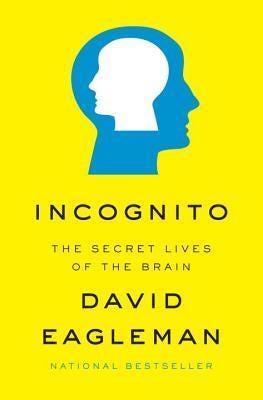
In our top 5, I want to bring an excellent book to get an introduction to neuroscience: Incognito by David Eagleman.
If you're a beginner in neuroscience and you're interested in how the human brain works and generates consciousness and cognition, then this book is for you!
David Eagleman is an American neuroscientist and science communicator. He also teaches neuroscience at Stanford University and is CEO and co-founder of Neosensory, a company that develops devices for sensory substitution (Source).
From exploring the subconscious processes that drive our decision-making to the nature of consciousness itself, Eagleman's insights shed light on the complexities of the mind in ways that are both fascinating and thought-provoking.
The book is also available in audio, where David himself reads the book for you!
So, if you're a curious person willing to start learning neuroscience in an easy language, Incognito is awaiting you!
Top 4 Know Thyself: The Science of Self Awareness — Stephen Fleming
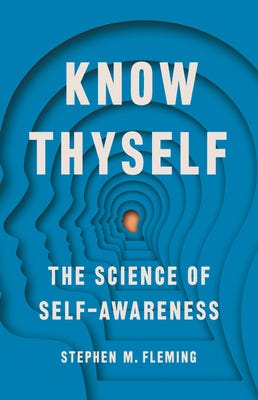
Moving on in this top 5, we have Know Thyself: The Science of Self-awareness by Stephen (Steve) Fleming.
If you're intested about yourself, others, how to learn, and how you take decisions about decisions, this book is for you.
Steve is a neuroscientist and teacher at the University College London, who works to understand the mechanisms supporting human subjective experience and metacognition by employing a combination of psychophysics, brain imaging, and computational modeling (Source).
His book is about metacognition, which is the ability to monitor, understand, and regulate one's thinking processes
Stephen covers several topics around this in 2 main parts:
- Part 1: Building Minds That Know Themselves
- Part 2: the power of reflection
He takes us from the basis of how our brains generate a model of ourselves to how it starts reflecting on its own.
What I loved about this book is that he covered hard neuroscience topics in an easy language that everyone can follow and engage with. Also, I liked how he explained the idea of being uncertain or certain about something, and all the neuroscience behind it.
Excellent piece of art to read!
Top 3 Phantom in The Brain: Probing The Mysteries of the Human Mind — David Eagleman
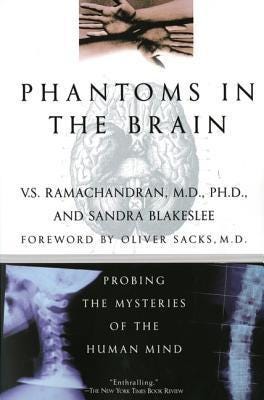
Do you control your mind or does your mind control YOU?
If you're interested in getting to the biggest (and weird) mysteries of our brain, then this book is for you.
Vilayanur Subramanian Ramachandran is an Indian-American neuroscientist, known for his experiments and theories in behavioral neurology. He is a distinguished professor in UCSD's Department of Psychology, where he is the director of the Center for Brain and Cognition (Source).
As one of my earliest reads during my undergraduate studies in Psychology, this book profoundly changed my perspective on the mysteries of the brain.
This piece covers a range of topics from neurology to psychology, and you will learn not only about how the brain works normally but also when unexpected events happen, such as losing a finger or a hand.
It turns out that these people, somehow, can still experience having them.
Also, you will learn about other cases such as the woman who died laughing, and more.
Must read!
Top 2 How Emotions Are Made? The Secret Life of the Brain — Lisa Feldman Barrett
In the Top 2, we have How Emotions Are Made by Lisa Feldman Barrett.
If you're interested in the current neuroscience of emotions and how our brains construct what we feel, then this book is for you.
Lisa is among the top 0.1% of most cited scientists in the world for her revolutionary research in psychology and neuroscience. She is a University Distinguished Professor of Psychology at Northeastern University, and Chief Science Officer for Law, Brain & Behavior in Harvard Medical School and Massachusetts General Hospital.
She wrote an AMAZING piece summarizing the actual state of the art of the neuroscience of emotions.
Although I already knew something about the topic, this book surprised me a lot.
Lisa's discoveries challenge the previous notion of emotion that reshapes our understanding. Here are some facts that surprised me:
- Emotions are not as universal as previously thought.
- Face expressions can vary a lot when expressing an emotion (therefore not universal).
- Sympathetic activity (heart rate, sweating, etc) is highly variable, and they don't correlate strongly with a particular emotion.
- Brain regions can also vary, so there's not a key region for a particular emotion.
When I say highly variable, I mean that people can have different biological markers for a particular emotion.
Therefore, the main argument of the book is that emotions are constructed, and Lisa did a great work on it.
Highly recommended!
Top 1 How We Learn: Why Brains Learn Better Than Any Machine . . . for Now — Stanislas Dehaene
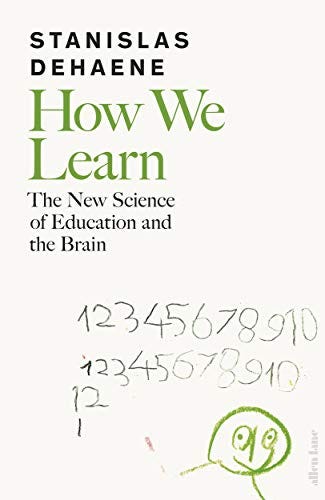
Finally, in the Top 1, we have How We Learn by Stanislas Dehaene.
If you're interested into the neuroscience of learning, as I am, then this book is definitely for you!
Stanislas Dehaene is a French author and cognitive neuroscientist whose research centers on several topics, including numerical cognition, the neural basis of reading and learning, and the neural correlates of consciousness. He is a professor at the Collège de France and director of INSERM Unit 562, "Cognitive Neuroimaging" (Source).
In this piece, Stan covers several topics about how we learn, divided into 3 parts:
- Part 1: What is learning?
- Part 2: How our brain leans?
- Part 3: 4 pillars of learning
He starts writing about the basics of learning, and how our brain reshapes with neural plasticity when new knowledge is created. Additionally, he explains how this changes during our lifetime, whereas babies are super-learners, and older people have more issues with it.
Then, Dehaene argues that most modern schools are still applying academic methods that were proven to be not good for students.
For that reason, the author shares 4 pillars of learning:
- Attention
- Active compromise
- Feedback
- Consolidation
Based on this, he proposes several methods that not only teachers or schools should apply, but the whole country.
He concludes that investing in infant education is a must, not only because they are excellent learners, but because all the knowledge created will be kept during their lifetime. Kids without proper education will have way more issues not only during their social lives but also in their health (including mental health, of course).
Excellent book!
Conclusion
I hope this article inspired you to learn more about neuroscience :)
Let me know in the responses if you have other book recommendations!
🦜 If you liked my post, clap 👏 50 times for more content about Neuroscience, Psychology, Productivity, Animals, and Python!
And don't forget to follow me for more!
Thanks for reading!
My Friend retro games NES SEGA