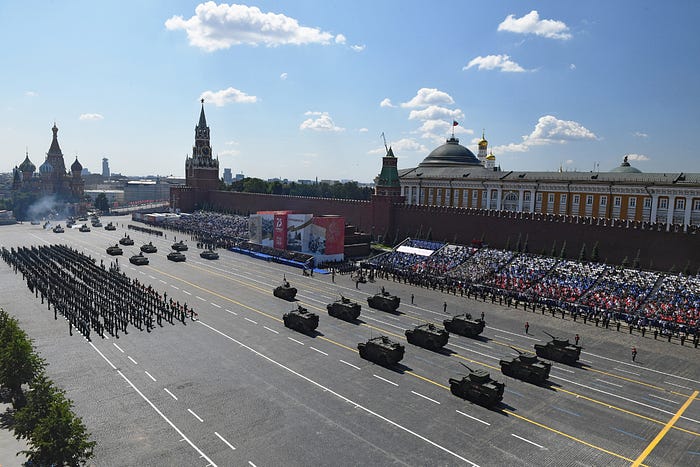
Hammered in to the brain of every espionage operative of all sides in the last 75 years, this code still rules today and has saved countless lives
Still applicable today, the code known as Moscow Rules was first brought to explicit public notice by John le Carré in his classic 1974 thriller 'Tinker, Tailor, Soldier, Spy'. John le Carré's real name was David Cornwell and he had a background in MI6, Britain's Secret Intelligence Service.
The basic operational rules were probably formally codified during the Second World War and used to train agents being inserted into Europe — principally France and the Low countries. The memorable name 'Moscow Rules' likely became attached in the middle 1950s as the Cold War evolved. Moscow was considered to be a particularly harsh operational environment for covert activities though surely no harsher than Occupied France.
Little mention can be found of the rules in any public official literature of any government.
During my teenage years I was an avid reader of the espionage genre, as far back as 1965, when I devoured novels such as 'The Ipcress File' (Len Deighton, 1962), 'The Spy Who Came in from the Cold' (John le Carré, 1963), 'The Thirty Nine Steps' (John Buchan, 1915) and the Erskine Childers 1903 classic 'Riddle of the Sands'. Graham Greene wrote the novella that became the 1949 film 'The Third Man', ranked the second best British film ever in a Time Out poll.
These are outstanding works of espionage fiction from my personal list of favourites and several were written by former members of Britain's MI6 — as was Ian Fleming, creator of James Bond. Greene and Cornwell in particular.
The Moscow Rules can be inferred in these books as guiding principles for an agent, rules which are not to be overlooked under any circumstances during a covert operation.
Of course it is the case that in fiction these rules are occasionally deliberately flouted by the main characters, as a plot device to increase tension.
Undoubtedly, these rules are trained into agents by most government intelligence service around the world but what they are called I know not.
Does the KGB train 'London Rules'?
Perhaps — London is said to have one of the highest CCTV camera coverage in the world, 399 per sq. km. With 76 cameras per sq. km, Moscow does not make the top 10.
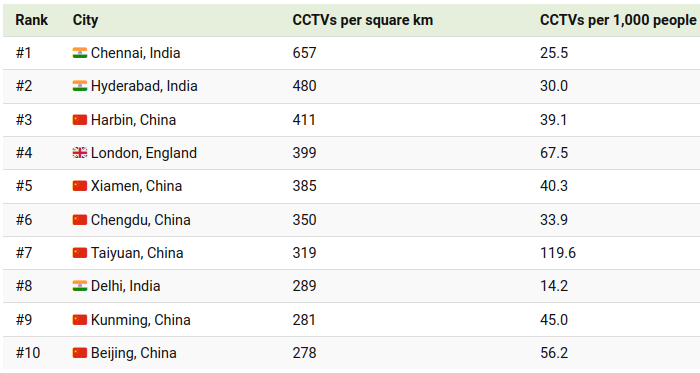
Washington DC figures are estimated at 269 per sq. km although the data is considered to be dubious.
Moscow emerged
Moscow today is still a city cloaked in secrecy and fear and surely the camera count is increasing.
Cold War tensions still crackled in the air when I worked there in the early 1990s as Russian society was emerging from the yoke of Soviet slavery. The Russians I worked with were still nervous and individually lived in alignment with several of the Moscow Rules even though they were just ordinary citizens — some of the rules had been necessary for basic day-to-day survival in the USSR. In 2023, under Putin, the Russian citizenry are once again well along the road to total enslavement, but I feel little sympathy for them.

The USSR had dissolved in 1991 but most of the people who had worked for the KGB either formally or informally were still in their jobs, and I probably met a few without knowing it as some of my work involved meeting with Oblast officials. The KGB's name had changed to the SVR/FSB but most of the apparatchiks, informers and torturers were still there.
At that time I worked for an IT consultancy and was never engaged in intelligence work of any form. Nevertheless, with my love of the espionage genre I experienced a deep frisson of excitement during my time there, travelling widely in Russia and in Kazakhstan. When I was in a train or plane, even on the metro, I liked to discreetly observe other passengers and wonder about them, their work, their history and their betrayals.
At that time I was unaware of the Moscow Rules and my company provided no personal security training. We just used common sense and armed guards on our office. That's normal for many I guess, but as a Brit I'm not used to people carrying guns. Anyway, I'm still alive although a previous occupant of my apartment was stabbed to death in the bath. Eerie.
The Moscow Rules
This is the set of ten guiding principles as far as I have been able to uncover.
1. Assume nothing
Assume nothing. Remain vigilant and validate information meticulously, distrusting both overt and seemingly innocuous sources.
2. Prioritise intuition
Cultivate and heed internal warning signs, recognising discrepancies and anomalies as potential indicators of compromise. Be conscious of your gut instincts and do not ignore them.
3. Universal suspicion
Consider everyone a potential asset of the opposition, regardless of apparent affiliation or social standing. Trust no one. Paranoia is healthy.
4. Do not look back
You are never alone and you may be tracked by any number of technologies as well as directly by people.
5. Environmental fit
Blend seamlessly into the locale and society, go with the flow avoiding conspicuous actions. Do not stand out — when in Rome, do as the Romans do.
6. Unpredictable movement
Adopt variable patterns of travel and communication, avoiding easily discernible routines and predictable schedules, and stay within your cover at all times.
7. Cultivate complacency
Project an air of normality and controlled indifference to deflect suspicion and avoid triggering aggressive counterintelligence measures.
8. Stay detached
Do not harass the opposition. That draws attention and raises questions and possibly triggers reaction.
9. Choose your ground and timing for action
Pick the time and place for action — this is classic Sun Tzu. Try to avoid your timing and place being governed by the opposition.
10. Contingency planning
Prepare for contingencies and unexpected scenarios, maintaining backup communication channels and escape routes.
Contradictions
When I write my novels I try to ensure that my main characters exhibit solid tradecraft and adhere to the Moscow Rules unless the plot requires that they make mistakes or misjudgements. The process of writing such tales has made me realise that there are contradictions within the Moscow Rules, and you may well have recognised a few already.
For example, it's often the case that a story demands a meeting and the old phrase 'make sure you are not followed' crops up in the dialogue. The process of losing a tail can be constructed in many ways but in many of the plots we read, the process of losing a tail is a dead giveaway and raises suspicion. There is not always a handy football crowd to make it work without suspicion.
Other rules such as blending in does not fit entirely with avoiding predictable patterns. If someone's cover involves working at an office, then the commuting is predictable. A break in routine could raise suspicion and so the change of routine requires a reason. How often can that be done with a flag being raised?
I'm a writer, not a trained agent and so I have a different perspective and don't have my guts churning every time I go outside the door. Perhaps I'm being too analytical. The Moscow Rules clearly work although in today's high technology climate I suspect they are becoming more challenging to adhere to. And of course we don't usually hear about the failures.
Dream on
One final personal exposé. I don't know why but for many years I suffered war nightmares. These were very vivid and I would wake up sweating and scared: In WWII I've fought against the Germans in Europe, the Japanese in the jungles of Burma, in Vietnam against the Viet Cong and on a few terrifying occasions as a covert agent in Northern Ireland.
That last series of dreams was particularly frightening and led ultimately to a confrontation with two enemy in a gent's toilet in Belfast. A Browning pistol appeared in my hand and I killed them. I still have those dream images in my brain. My war nightmares stopped after that final dream, but I still remember the excruciating terror of being hunted. Absolutely true.
Am I a suitable case for treatment? Go figure.
And Moscow rules, OK? Only in Putin's dreams.
Further reading
Tony Mendez (non fiction):
- Master of Disguise: My Secret Life in the CIA (1999)
- Spy Dust: Two Masters of Disguise Reveal the Tools and Operations that Helped Win the Cold War (2003)
- Argo: How the CIA and Hollywood Pulled Off the Most Audacious Rescue in History (2012)
- The Moscow Rules: The Secret CIA Tactics That Helped America Win the Cold War (2019)
Brixmis (no affiliation)
My novels are available at my Gumroad bookstore. Also at Amazon and Apple