US President Donald Trump issued a new threat to Iran, saying that
If Tehran tries to restart its nuclear program "without a deal," the US will obliterate any new site as well.
He said the June strikes on three Iranian nuclear facilities had already "wiped out" Iran's nuclear capability.
Trump described Iran's program as "gonzo," "obliterated," and "gone." Iran, meanwhile, rejected all US claims and blamed Washington for spreading fear.
What Happened in June
In June, the US and Israel carried out a 12-day operation targeting Iranian nuclear sites.
According to Trump, US pilots hit every single target, and analysts believe Iran would now need entirely new locations to restart enrichment.
Trump said that Iran could have avoided all of this if it had agreed to a deal earlier.
He repeated:
"They missed that opportunity."
But
Why This Fight Is Not Over
Even after the strikes, the US and Iran have not returned to talks. Washington still demands strict limits on uranium enrichment, missile development, and Iran's support for groups like Hezbollah and Hamas.
Tehran says it will not accept these conditions.
This stalemate creates a dangerous space where both sides are waiting — and preparing.
Iran Says This Is a 'Spiritual War'
Iran's Supreme Leader Ali Khamenei dismissed the idea of another war as "enemy propaganda."
He said the real fight now is a "propaganda war" and a "spiritual war", not a military one.
Khamenei's message is meant to show strength at home and calm the public.
But it also signals that Iran will not bend under pressure.
The Most Dangerous Player Is the One With Less to Lose
Iran may look weakened after the June attack, but that makes the situation even more unpredictable.
A country with fewer options often becomes more willing to take big risks.
Iran does not need to strike America directly. It can target the Gulf states — the places where the US has the most to lose.
What Happens if Iran Hits Saudi Arabia?
Iran has previously attacked Saudi oil facilities, showing it can reach deep inside the Kingdom.
If Iran hits five or six major oil fields, global oil prices could explode overnight.
Saudi Arabia is the world's 2nd-largest oil producer.
A major strike could trigger a global economic shock far worse than anything we've seen in years.
Saudi Vision 2030 at Risk
Saudi Arabia is investing hundreds of billions to turn its economy into a global tourism and tech hub.
Cities like Riyadh and futuristic mega-projects like NEOM depend entirely on stability.
If Iranian missiles hit these areas, hotels would empty, investors would flee, and the entire Vision 2030 plan could collapse.
Years of progress could disappear in minutes.
The UAE Is Even More Vulnerable
Dubai is built on tourism, trade, and global travel. A small number of Iranian strikes could shut down ports, airports, and skyscrapers.
Economists say that while Gaza's rubble will take 15 years to clear, Dubai's massive towers could take a century to rebuild.
One attack could erase decades of wealth and leave the UAE struggling for years.
Qatar's Greatest Fear: Contaminated Water
Qatar's prime minister recently warned that if radioactive material enters the Persian Gulf, the Gulf states could lose their water supplies.
All Gulf countries rely on desalinated seawater for drinking, cooking, and bathing.
If contamination spreads, millions could lose access to clean water. Only Saudi Arabia might survive thanks to its Red Sea access.
Iran Still Has Strong Military Tools
Despite the June setbacks, Iran still has powerful missiles. It has shown underground "missile cities" and revealed weapons like the Khyber-buster, which Iranian officials claim can bypass American and Israeli defenses.
Iran is also believed to have small submarines built with North Korean help. Some reports even say Iran could build six nuclear weapons if it chooses.
Ukraine Is Learning from Israel

Far from the Middle East, Ukraine is closely watching these developments. Ukraine's Deputy Prime Minister Taras Kachka visited Israel and said the two countries now share a common threat — Iran.
Iran supplies Russia with deadly drones used in the war in Ukraine. Ukraine is looking to Israel for guidance on how to survive long-term threats and US pressure.
Trump's tough Iran stance has pushed Israel and Ukraine closer together.
Both countries depend on US support, both face enemies with missiles, and both fear being forced into peace deals they do not want.
Ukraine believes Israel's experience can help it avoid giving up territory to Russia. This creates a unique three-way connection between Washington, Jerusalem, and Kyiv.
But Lebanon shocked Iran through
Lebanon shocked the region by refusing to send its foreign minister to Tehran.
This was not a small diplomatic gesture; it was a bold message. Lebanon's new government wants Hezbollah to be disarmed by 2026, something Iran strongly opposes.
Tehran called the refusal "bemusing," but behind the scenes, Iranian officials were furious. For the first time in many years, Lebanon publicly signaled that it wants to control its own decisions, not follow Iran's agenda.
This shows three things clearly: Lebanon does not want Iran giving orders, it wants full control over its weapons, and it wants to avoid another destructive war with Israel.
For Iran, this is a major strategic setback. Lebanon has been Iran's strongest foothold in the Arab world for decades — and now that grip is weakening.
Cracks are appearing in the one place Iran thought it would never lose influence.
The FBI Warning: Iran Wants Revenge Inside the United States
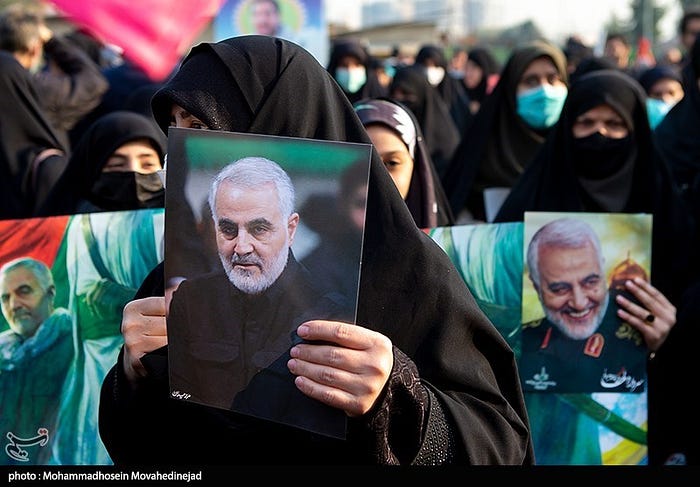
As tensions rise across the Middle East, the conflict is quietly spreading far beyond the region. The FBI recently issued a serious warning that Iran is still seeking revenge for the killing of General Qassem Soleimani, and this threat now reaches deep inside the United States.
American officials say Iranian operatives have been monitoring Jewish and Israeli targets, studying the movements of former U.S. officials, including Donald Trump, and increasing cyberattacks on American companies and government networks. Several plots have already been disrupted, proving that Iran's activities are no longer limited to faraway battlefields. The contest between Washington and Tehran is now global, stretching from Tehran's streets to major American cities.
This expansion of the conflict shows how quickly regional crises can become international dangers. What began as a dispute over nuclear sites has evolved into a worldwide shadow war with intelligence agencies, cyber units, and covert operatives operating across continents.
The U.S. believes Iran is trying to build its revenge slowly and patiently, hoping to strike when attention is elsewhere. This reality means the line between domestic security and foreign policy is disappearing, and the potential consequences for ordinary citizens are becoming harder to ignore.
A Single Misstep Could Trigger a Regional War
Despite the growing tension, every side in this crisis believes it can manage the situation. Yet these assumptions are fragile and could collapse without warning. In Washington, officials assume Iran is too weakened by the June strikes to hit back seriously.
In Tehran, the leadership believes its network of militias and proxy groups gives it enough power to hurt U.S. allies without directly fighting America. Saudi Arabia counts on U.S. protection, Israel trusts its missile defense systems, the UAE believes Iran will avoid damaging Dubai, and Lebanon hopes Hezbollah can be disarmed without provoking a wider conflict.
History shows that wars rarely begin with a carefully planned attack. They usually start with misunderstandings, overconfidence, or accidents.
A drone might strike the wrong target, a missile might land in the wrong city, or a military commander might misinterpret a routine patrol in the Gulf as an attack. Even an assassination or a brief clash at sea could spiral into a full regional conflict. One small mistake, whether made by Iran, Israel, the United States, or one of the many militias operating in the region, is enough to ignite a war that no one wants and no one is fully prepared for.
This is why officials around the world are quietly worried. The Middle East is packed with armed groups, overlapping interests, and competing superpowers. A crisis in one corner quickly spreads to the rest. And once events begin to escalate, they can become impossible to control. The danger today does not lie in a grand decision to start a war — it lies in the possibility that a war could begin unintentionally.
If War Comes, Iran Will Decide How It Ends
If open conflict breaks out, Iran may not fire the first shot, but it will certainly influence how the war unfolds. Iranian leaders understand they cannot defeat the United States in a traditional battlefield fight. Instead, their strategy is built around the idea of making the region so unstable that everyone around them suffers.
Iran knows that hitting the right targets at the right time could push global oil prices to unprecedented highs, damage the economies of Saudi Arabia and the UAE, and overwhelm Israel with coordinated missile and drone attacks launched through Hezbollah and other allied groups.
A wider war could also disrupt shipping routes in the Red Sea and Persian Gulf, choke off major global trade flows, and create water shortages in small Gulf states like Qatar and Bahrain. All of this would send shockwaves through the world economy, harming countries far removed from the Middle East. To Iran, instability is a weapon. Chaos gives Tehran influence where military strength cannot. It allows Iran to shape events not through victory but through disruption.
For this reason, the cost of any new war would be far greater than many governments acknowledge. Iran's ability to spread instability makes it one of the most unpredictable players in the region. And if the conflict does erupt again, Iran will aim to ensure that no side, not the United States, not Israel, not the Gulf states, escapes without serious and lasting damage.
The world often thinks Iran is weak after strikes. But a cornered Iran can cause more destruction than a powerful Iran.
Trump says Iran wants a deal now. Iran says it refuses to negotiate under pressure.
Between these two positions lies a huge risk. All it takes is one misunderstanding, one strike, or one drone attack to trigger a new regional war.
A new US–Iran conflict will not stay limited to nuclear sites. It will hit oil markets, global shipping lanes, water supplies, and regional economies.
Iran may be down, but it is not gone. And if a war begins, Iran will decide how it ends.