The USA has been becoming more inward-looking since the end of the Cold War in 1991, when the Soviet Union fell, which led to the political end of a state that had waged a war of political dominance against the United States from 1945 until the Soviet Union could no longer afford the Cold War by the 1980s.
With the US victory and the unipolar moment of the 1990s, American foreign policy ran on autopilot, and that was not helped by US political leadership, which was very top-heavy, with only the US President really making American policy.
It does not matter who you are; that's too much for one person, and it is a big reason why U.S. presidents from 2001 to 2021 were too focused on Afghanistan rather than on Russia's actions and China's rise as challenges to American power around the globe.
That's why the US is unprepared to fight the second Cold War, which began when Russia invaded Georgia in 2008, and the US and the West were too focused on that year's financial crisis, which nearly led to a return to the Great Depression of the 1930s.
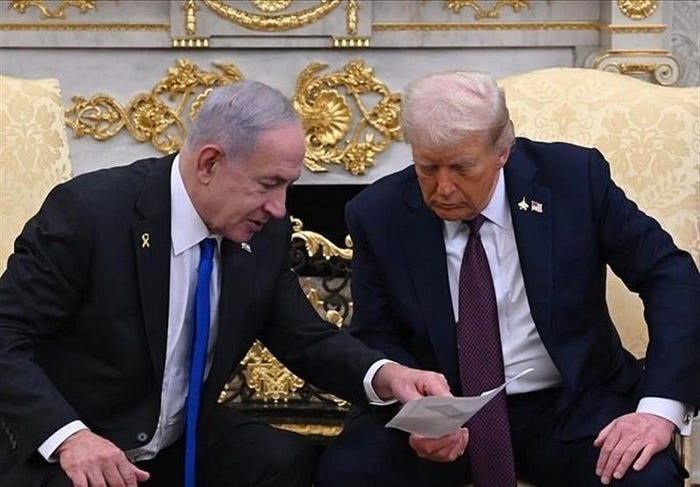
It is also one of the historical ironies that an American isolationist, such as Donald Trump, noted when he ran for President back in 2016, the danger of China to American power, with himself being a danger to American power due to his poor planning when it came to the 2026 Iran-American/Israel War.
The immediate consequence is opening up opportunities for regional powers to act independently of the United States of America for the first time in over 80 years.
The best way to break this down is into three chunks: the role of the US as it leaves, the role of regional powers as they rise, and the role extra-regional powers might play.
America is mowing the lawn of the Middle East
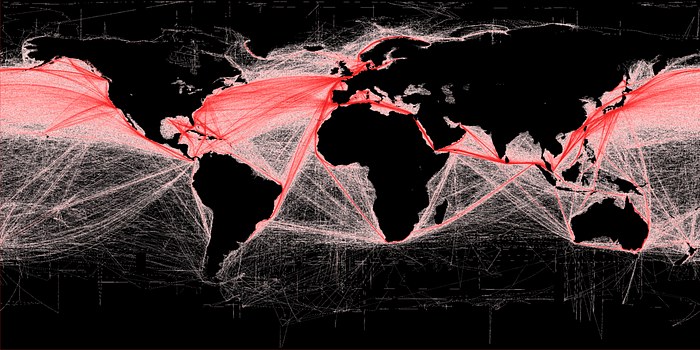
During World War II and after 1945, America repeatedly interfered in the Middle East region. This was primarily due to oil, which was also a major reason the USA and UK first carried out a regime change in Iran in 1953 to secure the oil, because the oil must flow.
For a layperson, the Middle East is best described in the Frank Herbert Science Fiction Novel Dune as follows: "In this time, the most precious substance in the universe is the spice melange. The spice extends life. The spice expands consciousness. The spice is vital to space travel." — Princess Irulan.
"He who controls the spice controls the universe." — Baron Vladimir Harkonnen.
The above equation can just as easily apply to the Middle East and its oil as to its role as a major trading hub between the East and the West.
That's why the region is so geopolitically important and why no great power, or any nation that secures its geopolitical security, would leave the Middle East to itself and hope for the best; hope and prayer are not a way to govern a nation.
It is a key reason why the British and the French were competing with one another over who could control the region's oil in other areas of significance. From 1919 to 1939, during the post-World War I period, and including the Second World War, both great powers undermined each other's position in the Middle East.
The Brits, for example, gave away French colonies without asking the French, and the French, in turn, supported Israeli terrorists against the British, forcing them to leave the lands formerly called Israel and Palestine in 1948.
As for where the Americans fit into all of this, for the US, their involvement in the Middle East was to support their Allies, and after World War II, the Americans would fight for their geopolitical security interests, write their foreign policies and in turn, those former warring nations of Europe could demilitarise.
In Europe, they had been fighting wars against one another from the start of the Italian Wars in 1494 until the end of World War II, a span of nearly half a millennium.
The USA has historically always been an oil exporter.
For oil needs, the United States has primarily sourced oil from Canada, Mexico, and Venezuela, as well as from domestic sources.
The American involvement in the Middle East, particularly in Saudi Arabia, was driven by the United States of America fighting for the interests of its allies during the Cold War.
This period, which started in the aftermath of World War II and ended with the fall of the Berlin Wall and the collapse of the Soviet Union in 1989 and 1991, respectively.
The United States is growing increasingly energy-independent due to the Shale Revolution of the 2000s, and American presidents and the American public have become increasingly isolationist since 1992, following Bill Clinton's election to the presidency.
In practical terms, this means the United States of America is no longer interested in the rest of the world because, in political terms, the rest of the world doesn't matter to the United States of America, a continental nation with a continental economy.
Though the USA has the creeping issue of its birth rates being below replacement level since 2007, and that's what keeps the USA stable, it's an attractive place for foreigners to go. For many, the US is still seen as the golden city on top of a hill.
Because of its sheer size, population, and geographic diversity, America doesn't need the rest of the world. This same attitude also applies to India, another continental nation, and the Chinese, only to a lesser extent.
Though China's economic growth depends on trade, both imports and exports, and for the Chinese, their prosperity depends on geopolitical security arrangements that rely on the US as the world policeman.
Movers and shakers in the Middle East
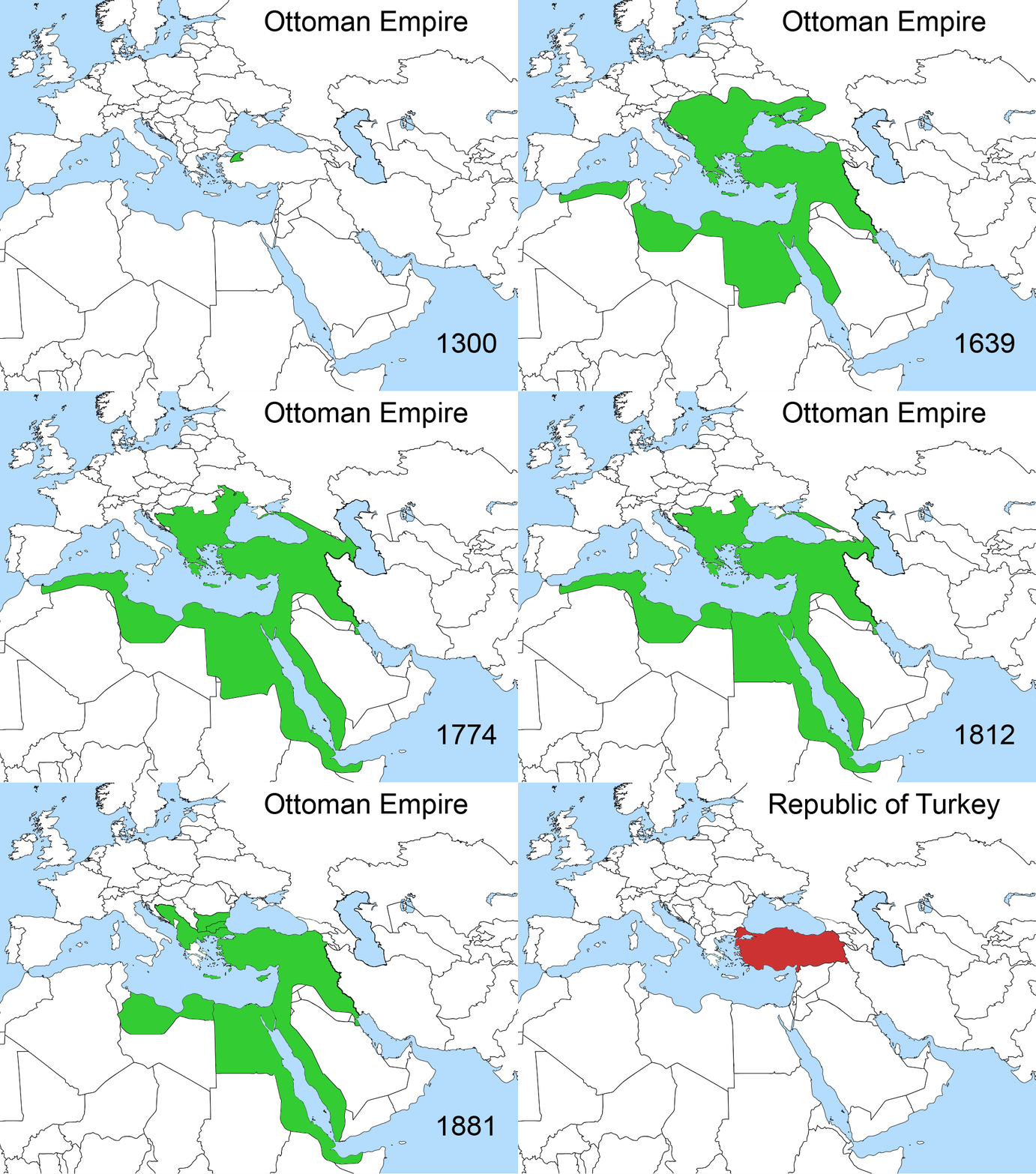
Within the Middle East, the actual military power is Turkey, which possesses the most prominent military and, without interference from the United States of America, has historically dominated its territories and sphere of influence, comprising the former Ottoman Empire.
Unfortunately for the Turks, or fortunately, depending on your point of view, Turkey has a problem due to its geography, being a European and Asian power at the same time.
Turkey cannot leverage its strength and stand up for its interests due to competing interests and geographic limitations.
The Turks must be concerned about the Balkans and the Greeks, with the two arguing and fighting over their territories in Cyprus and over competing island interests and border disputes between Turkey and Greece.
Other issues facing Turkey include a separatist movement within Turkey and Syria, Iran and Iraq, which combined have over 30 million Kurds wishing for independence.
Turkey will be the one to watch once the USA leaves the region for good. As stated above, the only thing that might keep them from leading the Middle East is their overinvolvement in other regions.
Turkey faces issues from multiple regions, leaving the other regional powers in the Middle East, Iran and Saudi Arabia, as key players, even with the Iran-America War of 2026. Iran will recover and will leverage the conflict to restore their influence when Donald Trump calls it mission accomplished.
The Israelis will also most likely partner with the Saudis, who will leverage their oil to get protection from Israel against the Iranian regime or even China if they can overcome their Straits of Malacca problem.
With the United States leaving the region, the Kingdom of Saudi Arabia requires the support of another significant military backer, making the more likely alternatives, as of now, the Chinese or Israelis, and other potential actors seeking to influence the region.
The external powers that could play a role here are pretty limited. Outside of the US, Britain, France, and Japan are the only real countries that could and would want to project power in this area of the world.
And with the Japanese/American partnership, the US will empower them to do so.
The reason China hasn't been discussed as a significant player in the Middle East is that, of the 600-ship Navy, only 50 vessels travel more than 1,000 miles from the coast of China.
Also, according to geopolitical analyst Peter Zeihan, China will be a non-issue in the Middle East in the immediate future, at least militarily.
With all these power moves and manoeuvring within the Middle East, the most significant wish for the Americans is that Israel, Turkey, Iran, and Saudis keep the region divided so it doesn't threaten American interests.
However, with all these manoeuvres and transitions in the Middle East, the United States of America doesn't give an F any more.