A RARE OPPORTUNITY IS UNFOLDING
I hate to say it, but if you haven't already started building wealth, these next 5 years might be your last chance.
I know that sounds ridiculous. I thought so, too, until I started to notice a fundamental shift in the way wealth is being created.
After all, artificial intelligence is doing a lot more than just changing jobs. It's quietly concentrating wealth into fewer and fewer hands.
Like, for the first time, a small number of people can now do the work of entire teams.
Some researchers estimate that a huge portion of entry-level white-collar work is already a risk.
And as this trend continues, the traditional paths of getting ahead, like jobs, investing, and real estate, won't just disappear.
They're going to get a lot more expensive and much more difficult to access. That's why we absolutely have to break down exactly what's happening.
Why the next 5 years could represent the last realistic window for the average person to get ahead.
And finally, what you could do starting today to avoid getting left behind.
Because if you wait to react, you're not just going to be late, you're going to be completely priced out.
1. The AI Reset
For those unaware, here's the general premise. Some economists argue that the moment artificial intelligence renders human labor economically valueless.
The only source of capital left is going to be ownership. And depending on who you ask, we may only have a short time left before AI could pretty much do whatever you want it to.
Like, imagine there's no need for cars or drivers. Robots build whatever you could want. Accountants, doctors, and lawyers are taken over by a program that works 100 times faster. And eventually this continues until we're all unemployed.
Now, if that sounds far-fetched or inconceivable, it's already happening. The rules of how people build wealth are already changing extremely quickly.
And the easy way of going to college, getting a good job, and buying a house is getting more and more difficult each and every day, relative to the advantages that AI gives to capital and top performers.
This is why we are now at a critical point where AI no longer replaces wealth; it amplifies it.
So if you own stocks, real estate, or a business, AI becomes leverage. But if you rely on wages, then AI becomes competition.
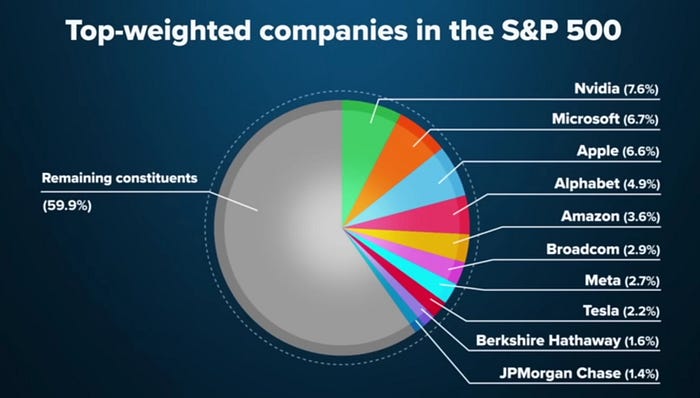
Simply put, we are moving into an economy where productivity no longer guarantees prosperity.
We're working hard doesn't necessarily get you further, and the biggest returns are going towards those who already have ownership and not those who rely on wages, promotions, and waiting for affordability to come back.
So the real question isn't whether AI will AI take jobs. It's how you could build something meaningful before it does.
2. Economic Shift
Experts believe that four forces will begin to take over in the next few years. And it all begins with number one.
#1. AI becomes winner-take-most.
The reality is that AI is going to let a smaller number of people or companies produce way more output with fewer people.
For example, Meta recently said that an individual employee can now have the output equivalent of 20.
On top of that, the CEO of Anthropic predicts that AI could displace half of entry-level white-collar jobs within 5 years, potentially creating a very low-wage underclass of workers.
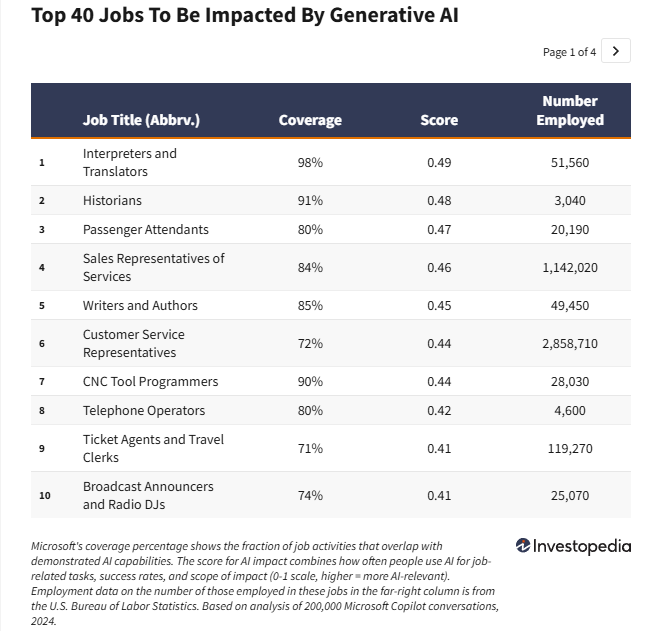
And even Microsoft found that many highly educated white-collar roles rank among the most vulnerable to AI.
Not to mention, if you want to hear something crazy, Bill Gates expects that within the next 10 years, humans will not be needed for most things.
This means that instead of a large group of people collectively benefiting from increased output, ownership, and wealth could begin to concentrate even more so that the top 1% owns significantly more than the other 99%.
Or in this scenario, we'd see a much more pronounced K-shaped economy.
Where those who have assets see enormous gains, while those who sell their labor see lower wages and more competition.
#2. Wealth is becoming privatized.
Just consider this. Throughout the United States, the number of public companies has dramatically dropped. This suggests that a large portion of early-stage growth now happens behind the scenes with venture capital, private equity, or pre-IPO. And then by the time it actually becomes viable by the average person, they're already trading at valuations above 100 billion or even at a trillion dollars.
Which is no longer the 100x opportunity it used to be.
#3. Housing is increasingly expensive.
What used to be a consistent wealth builder for middle-class America is now priced at its worst affordability ever on record.
Meaning a lot of people no longer have access to the same opportunities that earlier generations had.
Making it so that if you're not ahead now, it becomes even harder to get ahead in the future. Leading to the AI expansion.
Look, I'm not going to read off the charts here because I think this one is better off coming from me.
I tend to believe that over the next few years, there's going to be a huge deviation between those who know and use AI and those who don't.
If you embrace it, if you could increase your output by two to five times, you're going to see way more job opportunities, way higher income, and way more investable cash.
If you put it off, if you don't think you're affected by it, trust me, at some point you're going to be replaced by someone who does.
This makes me think that now is the best time to get ahead of the curve before it's too late.
And while everyone is just scrolling on TikTok, you have the power to harness and use some of the biggest advancements in history before it's too late.
And you could use this to build substantial wealth. So, in terms of what you could do about this and how you could actually benefit through the next few years, here's what you came for, because there is a huge opportunity out there if you know where to look.
Although before we go into that, there's something this entire conversation keeps coming back to, and that's ownership.
If AI is accelerating everything, then the systems you use to actually build ownership matter more than ever.
And that's where something like Bitcoin comes into the equation. Some of the biggest banks in the world have started to acknowledge that digital assets aren't going away, and they're beginning to recommend that some people add a small exposure to their portfolio to the tune of 1% to 4%.
Now, obviously, I'm not saying to go and yolo everything you have into crypto, but it is the idea that a small allocation over a long period of time could improve performance because you're spreading out your bets.
That's why I do everything I can to invest a consistent amount on a regular basis.
3. The Great Decoupling
In terms of how to use this economic reset to your advantage, it's really important to understand what won't work.
And that's what brings us to the great decoupling. See, as a bit of background, wages and productivity have not matched up ever since the 1980s.
And if you want specifics, worker productivity in the US rose about 81% while average hourly compensation rose only about 30%.
So where did the extra growth go? Well, pretty much corporate profits, stock ownership, and higher managerial pay.
Essentially, those at the very top captured the vast majority of income and productivity gains.
For the simple reason that a lot of the jobs could be easily outsourced. This suggests that in the near future, the traditional path of trading labor for money is becoming a lot less viable.
And if AI could essentially handle everything, employers would have less incentive to hire and train humans, starting at the bottom and then making its way to the top.
However, this also means that AI will dramatically lower the barrier to entry for those who know what to expect.
And this is where you could build some serious wealth. Theoretically, all of this advancement means that a solo entrepreneur or a small group of people could leverage artificial intelligence to create what would normally take dozens or even hundreds of people and tens or hundreds of thousands of dollars for practically free.
That's why some people are warning that this window of opportunity might not be available for much longer.
For instance, if AI continues to drop the cost of labor to the point where anything is possible, competition is going to come swarming in, and from that point onwards, it's going to be another winner-takes-all scenario.
Now, some people will say this sounds like every tech panic in history, and we'll cover that shortly.
But in terms of what you could do today to get ahead and what this means for the rest of the economy, here's what you came for.
4. The AI Golden Age
Look, the reality is this isn't all bad news. And there are quite a few people out there who believe that we could actually be entering the AI golden age.
As scary as it sounds that AI could literally wipe out entire industries, the reality is that history shows us that new technologies actually wind up creating more jobs than the ones they replaced. Like, take a look at farming.
In the early 1900s, 40% of the US population worked in agriculture. Then came tractors and fertilizers.
The result? Well, today, only 2% work in agriculture. At the same time, food is cheaper and more abundant, and millions more jobs were created in manufacturing, logistics, processing, and retail. Or take a look at cars.
Even though the automobile eliminated the need for blacksmiths, carriages, and horse breeders, it gave way to mechanics, dealerships, highways, insurance, tourism, and personal injury attorneys.
That's why so far every new technology has created more jobs than they've destroyed.
But the question with AI isn't whether there are going to be new jobs. It's who's going to capture the upside when this happens?
And why five years specifically? Well, AI adoption is happening faster than any major technology shift we've ever seen.
And once it becomes standard within companies, the early mover advantage that you have right now is going to completely disappear.
So, in terms of what you could do about this today, here's what I recommend.
4. The 2026 Strategy
#1. Learn New Skills
Here's the reality. It's estimated that half of all workers will need significant reskilling by the end of this decade to stay relevant.
In addition to that, learn how to use AI to increase your own productivity. Even a basic level understanding is going to have such a huge compounding effect on the rest of your career.
And at this point, literally everything you could ever need to know is already free online instantaneously in just a few clicks.
#2. Diversify Your Income
I personally believe that micro entrepreneurship is going to skyrocket by 2030.
And that's the idea that you could have a solo entrepreneur who's working from home around their own schedule who could make a consistent income doing something within a very niche market.
#3. Create Ownership
The purpose of that is just to lead to third-party conversion income to ownership.
Look, throughout every past disruption, workers who invested and created ownership pulled ahead. Those who stayed wage only fell behind.
This means it's worth it to diversify across index funds, stocks, and real estate. Have equity in a business.
Take ownership of something that you control yourself, or invest in precious metals if the price makes sense.
Ideally, AI should be for the purpose of boosting income for the sake of investing more, not necessarily to get more done.
#4. Lower Your Expenses
But on the same token, at number four, you should also always reduce unnecessary expenses.
Throughout history, the people who had the most problems were those with high fixed expenses, high debt, and no margin of error whatsoever.
That's why if you're a few paychecks from everything falling apart, it's worthwhile to cut everything you don't need.
Track your expenses, save a three to six-month emergency fund, and just have something to fall back on just in case.
#5. Learn Deep Focus
Surprisingly, this is the first time I've ever mentioned focus being a priority, but these days it just seems like a bit of a rarity.
I hate to say it, but if you have the ability to sit in a room undistracted for 4 hours without your phone, you're probably ahead of 99.9% of people out there.
Combine that with showing up on time, being attentive, and constantly learning, and all of a sudden, it's easy to get ahead of practically everyone else on the planet.
However, I will admit this still isn't the entire picture. And in terms of what else you need to be able to make all of this work, here's what you have to keep in mind.

So far, in terms of why right now is one of the most unique times ever in history, Peter Diamandis makes the argument that the economics of scarcity are flipping to the economics of abundance.
AI and humanoid robots can produce nearly anything we need, goods, services, healthcare, and education at costs approaching zero.
Therefore, his argument and proposition for the future is simple. When AI cuts the cost of producing something by 30%, that value creation could either flow entirely to shareholders or be partially recaptured for society.
This means there's a reality where AI could produce so much abundance that prices collapse.
Your money goes and buys infinite resources and labor, and the baseline human existence is elevated without any additional work whatsoever.
Like, even the poorest family today has access to luxuries that the richest people 500 years ago could have only dreamed of.
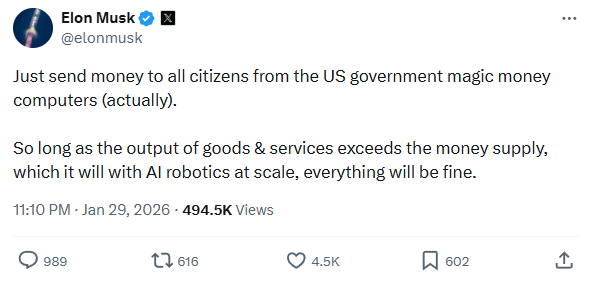
And Elon agrees with this. He says so long as the output of goods and services exceeds the money supply, which it will with AI robotics at scale, everything will be fine.
That's why I don't actually think this ends in doom or some sci-fi collapse where nobody works and everything falls apart.
Instead, to me, the more realistic outcome is this. AI increases productivity, but redistributes exactly who's able to capture it.
Or in other words, prices could come down, productivity might explode, and the standard of living could increase.
But ownership is going to matter more than ever. And that's where this entire conversation comes full circle.
The way I see it, 5 years to get rich isn't a countdown for failure. It's a head start. It's a window where skills could compound. Income could skyrocket.
And being early is so much better than being perfect. Eventually, this transition is going to stabilize.
AI is going to be everywhere. And the early adopters will disappear. But we're not quite there yet.
That's why my belief is that AI doesn't get rid of opportunity.