Thank you for joining me today.
Thousands worldwide are avid readers and listeners of The Turbulent World. They make this column and podcast possible.
Join them in helping to maintain and expand the column and podcast by subscribing to The Turbulent World with James M. Dorsey.
Thank you for your support and loyalty.
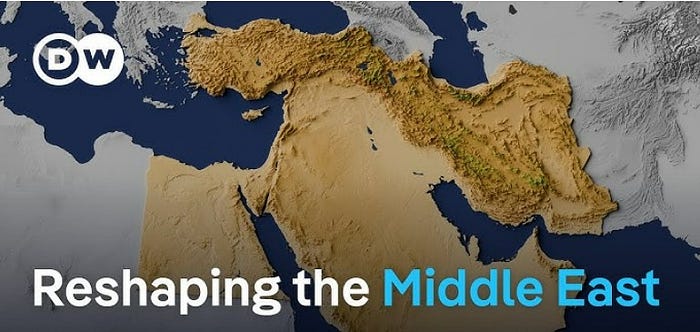
If Israel and the United Arab Emirates have their way, 2026 promises to be a year of further fracturing of the Greater Middle East.
In the latest incident of Israeli and Emirati efforts to exploit weak or failed states, often by supporting rebellious minorities and secessionist movements, Israel this week became the first state to recognise the strategic breakaway Somali territory of Somaliland.
After more than two years of Yemeni Houthi rebel missile and drone attacks against Israel and international shipping, the recognition potentially gives Israel operational intelligence and a maritime base on the Gulf of Aden, close to the Bab al-Mandeb Strait, a chokepoint linking the Mediterranean Sea and the Indian Ocean.
Roughly a third of the world's container traffic flows through the Strait.
In supporting Somaliland's independence aspirations, Israel joins the UAE, which has shied away from recognition but maintains close ties to the Somali secessionists.
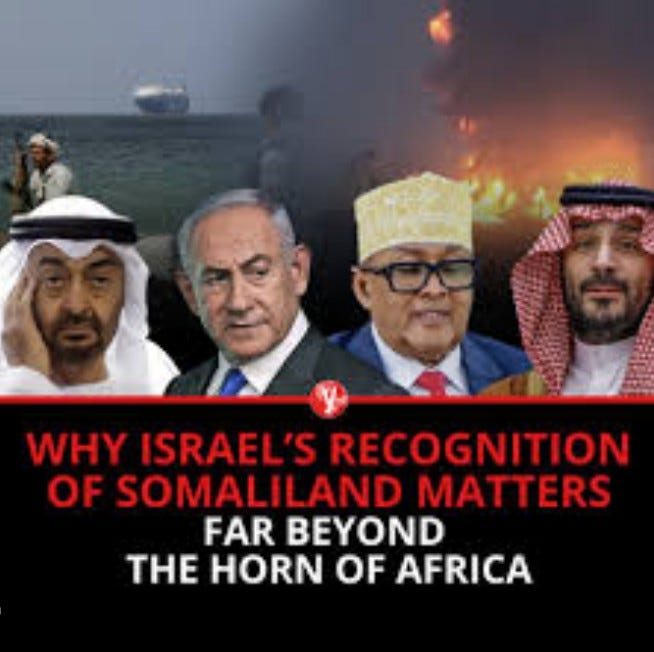
The UAE, the only foreign investor in the territory alongside Ethiopia and Taiwan, has a 51 per cent stake in Somaliland's Berbera port and is funding the construction of an economic free zone and a road linking the port with Ethiopia.
With the Emirates, Israel's foremost Arab partner, suspected of having facilitated Israel's recognition, the UAE was conspicuously absent among the 21 Arab, African, and Muslim-majority states and governmental organisations that condemned the Israeli move.
Recognising Somaliland days before Somalia becomes the chair of the United Nations Security Council suggests that Israel is confident in its belief that US diplomatic protection allows it to ignore the wishes of the international community.
The Israeli recognition and Emirati involvement in Somaliland fit a pattern. The two countries' regional strategies mutually reinforce one another.
In Syria, Israel projects itself as the protector of minorities, including the Druze, the Kurds, and the Alawites. It opposes the Turkish-backed Syrian government's insistence on a centralised state rather than a federation favoured by the country's minorities.
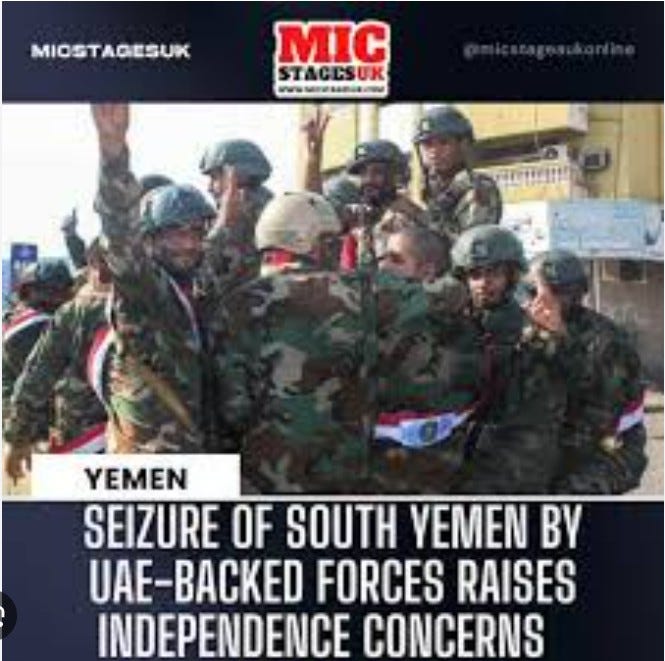
Like with its investment in Somaliland, the UAE supports separatist or rebel forces in Libya, Sudan, and Yemen.
In Yemen, the UAE-backed separatist Southern Transitional Council (STC), which controls the ports of Aden and Mukalla, pushed earlier this month into the oil-producing provinces of Hadramawt and Al-Mahra, provoking retaliatory Saudi airstrikes.
If Israel's strategy is to balkanise, if not break up states, the UAE's approach is to capitalise on opportunities failed states offer, much as Iran did with its support for militant non-state actors in Lebanon, Iraq, and Yemen, and the toppled regime of former Syrian President Bashar al-Assad.
Israeli and Emirati interests also share a common interest in using government-aligned analysts, media websites, and social media influencers to target Qatar for its alleged support of Hamas and the Muslim Brotherhood.
In Lebanon, US and Israeli insistence on disarmament of Hezbollah, the Iranian-backed Shiite militia and political movement, in the absence of a complete Israeli withdrawal from southern Lebanon, the replacement of social services provided by Hezbollah, and reconstruction of war-ravaged Shiite areas of Lebanon, is about more than restoring the Lebanese state's monopoly on violence and defanging a non-state actor.
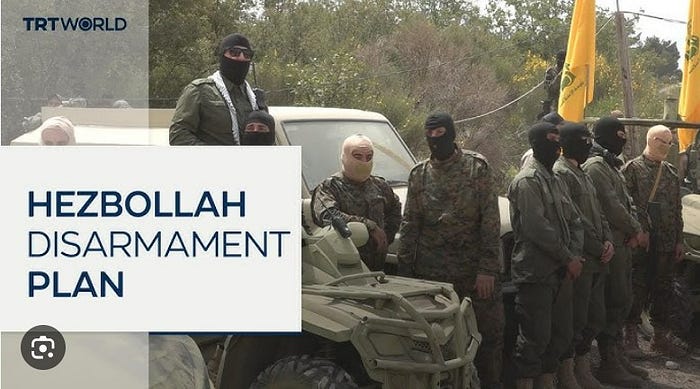
It's about marginalising and disenfranchising Shiites, Lebanon's numerically largest religious denomination, rather than ensuring that they have an equitable say in the country's politics, according to scholars Maria Fantappie and Vali Nasr.
It's a goal tacitly supported by the UAE.
"Israel wants to break up Iran's regional network by actively fomenting further fracturing among Shiites. If weak yet pliant governments that harass or threaten their own minority populations — particularly Shiites — take hold in Lebanon and Syria, the thinking goes, Shiite energy will focus on internal battles for turf and influence rather than on combating Israel," Ms Fantappie and Mr. Nasr said in a Foreign Affairs essay.
"Keeping the Levant fractured will not bring stability to the Middle East. … Shiite groups have been weakened, but trying to keep them subdued by excluding them from politics will only make them prey for future efforts by Iran to rebuild its proxy network — and imperil any broader vision of regional peace," the scholars warned.
The scholars's worst case scenario is already playing out in Syria, where the Israeli-backed Druze, Alawites, the sect associated with Mr. Al-Assad, and the Kurdish minorities, reject the authority of President Ahmad al-Shara's government.
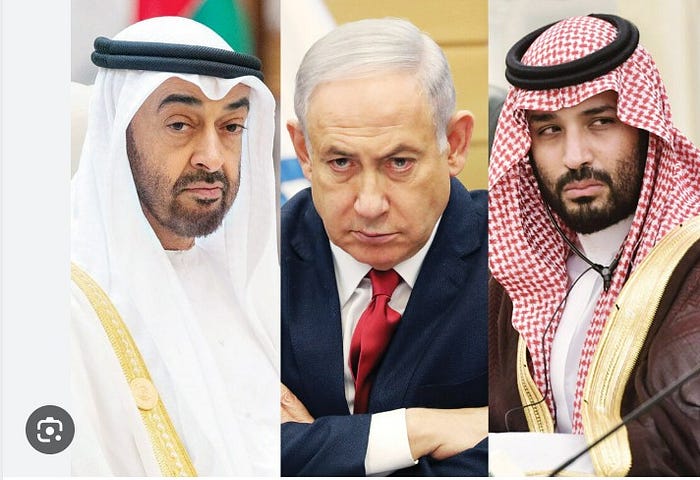
The Israeli and Emirati strategies put the two countries at odds with Saudi Arabia, which supports the internationally recognised governments of failed states like Somalia, Sudan, and Yemen, despite their loss of legitimacy and inability to stabilise their nations, and opposes secessionist forces.
The UAE-Saudi rivalry plays out not only in conflict-riddled Middle Eastern countries but also in fragile states like Pakistan, where the Emirates has outsmarted Saudi Arabia, notwithstanding the kingdom's defence treaty with the South Asian nuclear power, and China.
Two decades after China began investing billions in Gwadar, located at the mouth of the Strait of Hormuz, one of the world's most vital waterways for the seaborne oil and gas trade, the Arabian Sea port is nowhere close to becoming the maritime hub it was envisioned to be.
Meanwhile, the UAE has gained operational control of key Pakistani infrastructure and resources.
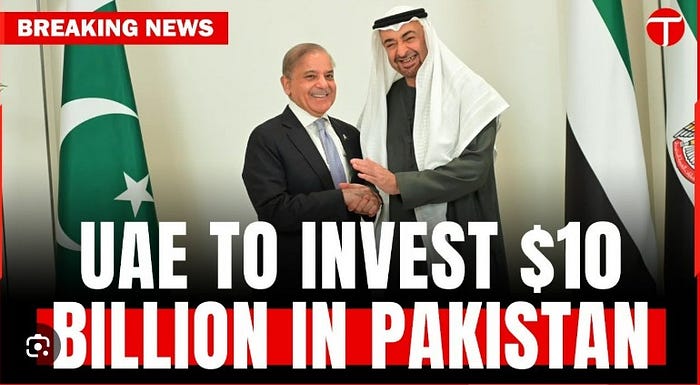
The Gulf state invested $220 million to control the multi-purpose East Wharf of Karachi Port, by far Pakistan's busiest. Earlier, the UAE concluded a similar deal with Port Qasim, the country's second-most important seaport.
"The details of the Karachi Port deal read like a masterclass in how to exploit institutional weakness while calling it {a} partnership. The Karachi Port Trust, Pakistan's own agency, got zero representation on the board of the operating company. Pakistan secured no right to resolve disputes over its own port in its own courts; everything goes to London arbitration. The government never appointed independent consultants to determine fair value, even though that's legally required," said brief, a Pakistan-focused Substack column.
In addition, Pakistan plans to convert a US$1 billion deposit in the country's central bank into an Emirati equity stake in the Fauji Foundation, which controls the Pakistani military's business empire that includes ports, logistics, power plants, fertilizer, cement, and agriculture.
Already, UAE telecom giant Etisalat has operational control of the Pakistan Telecommunications Company, the country's largest integrated information and communication technology (ICT) company, Islamabad airport, and mineral exploration licenses in Balochistan.
Pakistan's most mineral-rich and most underdeveloped province, Balochistan, potentially could be the next flashpoint offering Israel and the UAE opportunities to exploit.
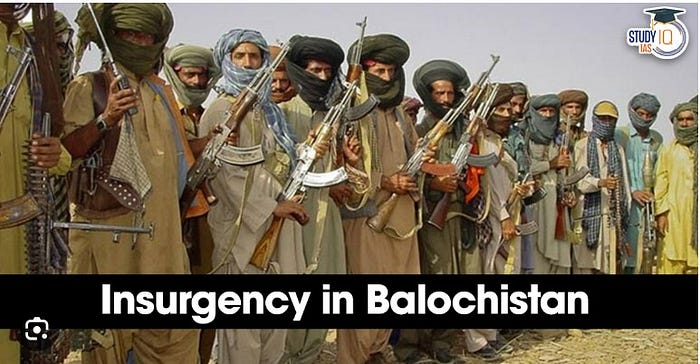
A decades-old low-level ethno-nationalist insurgency has evolved into an organised resistance sparking the worst violence since the 1970s, further dampening Chinese hopes of turning Gwadar into a success story.
Across the border, separatist groups in the Iranian province of Sistan and Baluchistan, including groups that at times enjoyed covert US support and often operate from Pakistan's Balochistan, said earlier this month that they had united under one command, the Popular Fighters Front.
In a statement, the groups rebranded themselves as part of a broader Iranian opposition movement rather than as separatists.
Calling for the overthrow of Iran's clerical regime, Mahmoud Baluch, the Front's spokesman, said its goal was "restoring and protecting the economic, political, cultural and religious dignity" of Iranians.
Dr. James M. Dorsey is an Adjunct Senior Fellow at Nanyang Technological University's S. Rajaratnam School of International Studies, Contributing Editor to WhoWhatWhy, and the author of the syndicated column and podcast, The Turbulent World with James M. Dorsey.