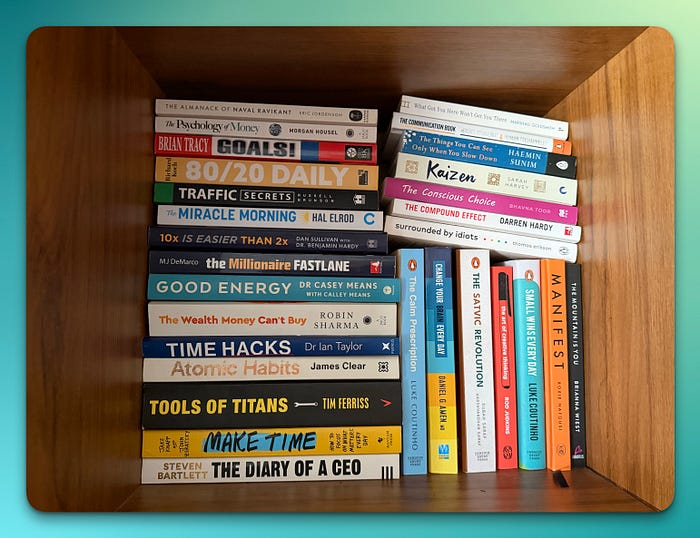
I moved back to India in 2022 after spending five years in Melbourne, and within a few months, I found myself in one of those life phases where everything feels slightly off, but nothing is broken enough to demand immediate action.
I had started a new job at an early-stage startup that was showing all the classic red flags (budget issues, salary delays, constant pivots, office politics that would make a reality TV producer proud), and I was spending close to 12 hours every day either working or commuting on my bike through Chennai traffic, which if you've never experienced it is basically a cardiovascular workout combined with a meditation on mortality.
Most of my friends from Melbourne had either stayed back or moved to different countries or cities, and the ones who were still in Chennai were understandably busy with their own lives, so I found myself with a lot of empty evenings and weekends and not much to fill them with.
I was single, slightly lonely, developing back problems from the commute, sleeping terribly, and constantly exhausted in a way that felt disproportionate to what I was actually accomplishing.
So I did what millions of people in this exact situation do: I picked up Atomic Habits.
The Gateway Drug
Atomic Habits felt like a revelation at the time because it gave language to things I vaguely understood but had never articulated.
The idea that small changes compound over time, that systems matter more than goals, and that you should focus on identity rather than outcomes. I highlighted passages, took notes, and felt genuinely motivated to put what I'd learned into practice.
And I did try. For maybe two weeks. Then the motivation faded, the habits didn't quite stick, and I started wondering if maybe I just needed a different book that would finally unlock whatever was missing.
So I read The Miracle Morning, which told me to wake up at 5 AM and do six specific things before the rest of the world.
Then I read The 5 AM Club, which told me roughly the same thing but with a fictional story wrapped around it.
Then I read 12 Week Year, which told me to compress my goals into shorter timeframes. Then Goals, which told me to write them down.
Then The Mountain is You, which told me I was self-sabotaging. Then Manifest, which told me to visualize what I wanted. Then, The Magic of Thinking Big, which told me to think bigger. Then The Let Them Theory, which told me to stop caring what others think. Then 80/20 Daily, which told me to focus on the 20% that matters.
I read probably 20 of these books over the span of a year, each promising some version of transformation, each leaving me with a brief high that faded within days, each sending me back to the bookstore in search of the next fix.
The Pattern I Couldn't Unsee
The more self-help books I consumed, the more I started noticing something uncomfortable: I should have stopped at one.
They were all saying the same things, just painted in different acronyms, frameworks, and personal anecdotes.
Set goals. Build habits. Think positive. Take action. Focus on what matters. Believe in yourself.
The packaging varied (some used stories, some used science, some used spirituality), but the core message was almost always interchangeable.
Some of them had genuinely useful concepts that could have been a blog post instead of a 250-page book.
The author would introduce one interesting idea in the first chapter and then spend the remaining chapters repeating it with different examples, padding it with stories about CEOs, athletes, and random acquaintances who transformed their lives by following this one simple principle.
And the worst part was that I kept reading them anyway, hoping the next one would be different, hoping the next one would finally be the book that changed everything instead of the book that just described what changing everything might theoretically look like.
The Book That Made Me Lose Faith
The one that finally broke the spell was The Power of Your Subconscious Mind.
I bought this thinking it would be about psychology, maybe some neuroscience, something grounded in how the brain actually works.
The title includes the word "mind" and promises "power," which sounds scientific enough. I was expecting research, case studies, and practical techniques backed by evidence.
What I got instead was a minister telling me to pray about my problems, except he dressed it up in language that made it sound like science.
The entire book has one solution for everything: impress your subconscious with positive images, and the universe will manifest your desires.
Health problems? Visualize being healthy. Money problems? Visualize being rich. Relationship problems? Visualize the perfect partner. Your subconscious will handle the logistics.
There's a story in the book about a woman who desperately wanted an expensive designer purse but couldn't afford it. So she visualized owning this purse every single day, pictured herself carrying it, and felt the emotions of already having it. Then one day her boyfriend surprised her with that exact purse as a gift.
The book presents this as evidence that the subconscious mind can manifest physical reality.
I present it as evidence that her boyfriend had a credit card.
The lowest point in the book (and there's real competition for this title) is when it essentially argues that poverty is a mental illness. You're broke because your mind is sick. Fix your thoughts, and you'll fix your bank account. Never mind the economy, systemic inequality, or the fact that some people start life on a completely different difficulty setting than others. Just visualize harder.
After finishing that book, I sat with the book and genuinely asked myself what I was doing with my reading time.
What Self-Help Actually Sells
The core promise of every self-help book is transformation.
Read this and become a different person. Read this and finally fix the thing that's been holding you back. Read this and unlock the version of yourself that's been waiting to emerge.
It's a compelling promise because it suggests the answer is out there, external, waiting to be discovered in the right combination of words. And when one book doesn't deliver the transformation, the natural conclusion isn't that the genre itself might be limited. The natural conclusion is that you just haven't found the right book yet.
So you keep reading. And the self-help industry keeps publishing. And the cycle continues because the product is hope, and hope is infinitely renewable.
I'm not saying every self-help book is useless. Some of the books I read had genuinely valuable ideas that I still think about.
Four Thousand Weeks by Oliver Burkeman fundamentally changed how I relate to time and productivity (though I'd argue it's more philosophy than self-help).
Tiny Experiments by Anne-Laure Le Cunff is one of the most practical and actionable books I've read about trying new things without betting everything on them working out.
But the genre as a whole has a problem: it keeps promising revolution when what most people actually need is evolution, and evolution is boring to write about because it doesn't sell books.
What I Read Now Instead
I didn't stop reading. I read 76 books last year, which might actually be a problem in its own right, but the composition of what I read has changed significantly.
Instead of generic self-help that promises to transform everything, I now read books about specific topics written by people who are actually experts in those areas.
Instead of a book about "success" written by a motivational speaker, I'd rather read a book about psychology written by a researcher who's spent decades studying how people actually behave.
Instead of a book about "productivity" written by someone who makes money selling productivity advice, I'd rather read a book about time management written by someone who's managed complex projects in the real world.
Some examples of what this looks like in practice:
Surrounded by Idiots taught me more about understanding the people around me than any generic communication book ever did, because it's built on an actual personality framework rather than vague advice to "listen more."
Change Your Brain Every Day, written by a neuroscientist, offers specific, science-backed practices rather than feel-good affirmations.
The Satvic Revolution changed how I think about food and health in ways that no "wellness" book ever managed, because it's rooted in actual dietary science rather than trendy pseudoscience.
The pattern I look for now is specificity and credentials. What exactly is this book about? Who wrote it, and why should I trust them on this topic? What will I be able to do differently after reading this that I couldn't do before?
How My Relationship With Reading Changed
The bigger shift wasn't just what I read but how I read.
I used to highlight passages randomly, dozens per book, feeling productive because I was marking things as important. Then I would finish the book, never look at those highlights again, and move on to the next one. The highlighting was a performance of learning rather than actual learning.
Now I keep a physical notebook next to me whenever I read, and I write notes in my own words as I go. Not quotes from the book, but my interpretation of what the author is saying and how it connects to things I already know or problems I'm actually facing. This forces me to process ideas rather than just consume them, and it means I can't speed through a book without engaging with it.
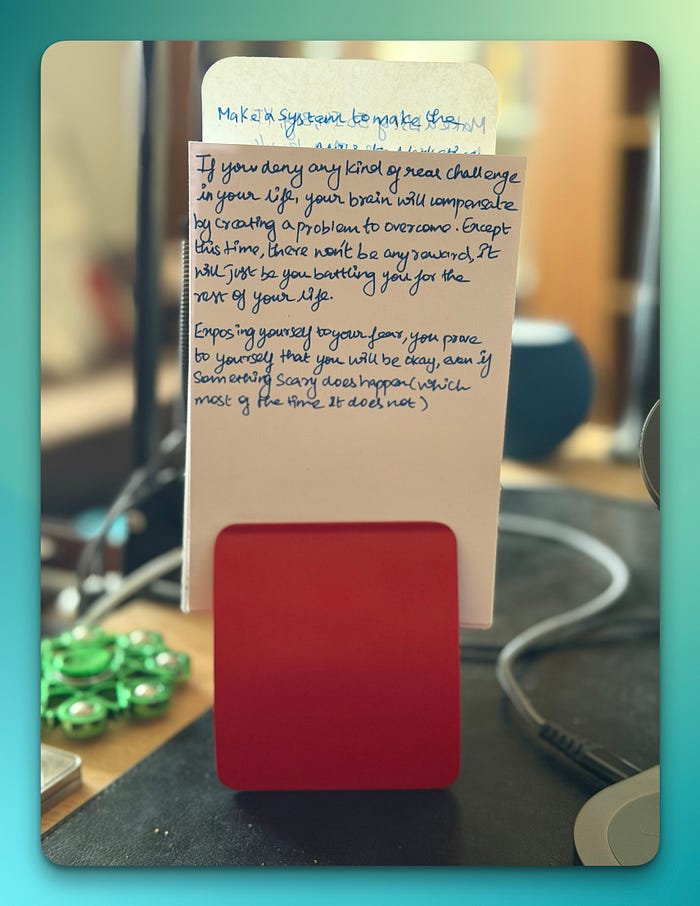
I also revisit these notes weekly, which sounds like a lot but actually only takes 15 or 20 minutes. I look at what I wrote, ask myself if I've applied any of it, and pick one or two things to actually try. For concepts I want to remember long-term, I create flashcards and review them periodically.
This approach means I read fewer books than I used to, but I retain and apply significantly more from each one. Which, now that I think about it, is probably what all those productivity books were trying to tell me in the first place. Ironic.
The Book That Taught Me More Than Self-Help Ever Did
If I had to pick one book that taught me more about life than any self-help book ever did, it would be Four Thousand Weeks by Oliver Burkeman. And I realize I mentioned it earlier, but it deserves more explanation because it genuinely rewired something in my brain.
The premise is simple: you have about 4,000 weeks to live if you're lucky, which is not very many, which means you cannot do everything, which means the entire productivity-optimization-life-hacking project is fundamentally misguided because it assumes you can somehow fit everything in if you just manage your time well enough.
You can't. You will die with books unread, places unvisited, projects unfinished, and versions of yourself unexplored. The question isn't how to do everything. The question is how to choose what actually matters and make peace with everything you're leaving behind.
That reframe did more for my anxiety and my relationship with work than any amount of habit-tracking or morning routines ever managed. Because it acknowledged something that self-help almost never acknowledges: you are finite, your time is finite, and no amount of optimization will change that fundamental constraint.
Where I Landed
I still read books about improving my life. I'm not above wanting to be better at things. But I no longer believe that the next book will be the one that finally transforms everything, and I no longer consume self-help the way I used to, which was basically like an addict looking for the next hit of motivation.
These days, when I pick up a book, I ask myself a few questions before committing: Is this about something specific that I actually want to learn? Is the author qualified to teach this particular thing? Will I be able to apply something from this within the next week?
If the answer to any of these is no, I put the book down.
There are too many good books in the world to waste time on ones that exist primarily to make you feel like you're improving while you sit on your couch highlighting passages you'll never revisit.
The self-help industry will keep publishing books that promise transformation, because that's what sells. But transformation, if it happens at all, usually comes from doing rather than reading about doing.
The books can point you in a direction, occasionally, if they're specific enough and honest enough. But they can't walk the path for you.
And no amount of visualizing is going to change that, no matter what the boyfriend's credit card says.