People following developments in the personal computing market already know just how volatile it can be: it ebbs and flows depending on what's affecting other parts of the economy or social life, be it e.g. a recession or a pandemic. Often, though, it's just a plain old hardware upgrade cycle that greatly influences PC sales, like the one this market is entering as the second most popular PC operating system is now rendered obsolete.
See, Windows 10 reaching end-of-life recently means that hundreds of millions of non-upgradeable computers based on that operating system are no longer supported by Microsoft, so they will have to be replaced at some point — either very soon or in less than a year (if they partake in the Extended Security Updates program).
Most businesses will probably migrate to Windows 11 by purchasing new PCs, just to be safe. For them it does make sense. But what about mainstream consumers, though?
Well, consumers using Windows 10-based PCs have more options than businesses, but it's still slim pickings: if they need to be relatively safe online they can only (a) buy new Windows 11-based PCs, (b) install one of the numerous freely available Linux distributions on their current PCs or © switch to macOS, which only runs on Apple's own computers (the Hackintosh route is not a viable mainstream option). And… that's basically it: one free option, two options that lead to the purchase of a new system.
Consumers of Windows 10-based PCs only have three options at their disposal if they want to remain safe online.
The "Windows vs macOS vs Linux" debate is hardly new, but we have now arrived at crossroads when it comes to which operating system would actually serve consumers well in 2026 onward. A lot has changed when it comes to personal computing over the last 18–24 months, on both the software and hardware front — so If there was ever a time for an up-to-date, dispassionate but meaningful head-to-head between these three operating system options, it is now. Let's break everything down so mainstream consumers can decide for themselves.
Windows vs Linux: is it compatibility or privacy you value the most?
It's no coincidence there's so much talk about people wanting to leave the Windows ecosystem nowadays. The world's most popular operating system for personal computers has seen a steady decline in terms of privacy, reliability and stability over the last decade — and it all has to do with Microsoft's choices. Windows 10/11 collect way too much personal information and usage data than necessary — without consent, no matter what Microsoft claims — they are constantly trying to get consumers buy into the company's services, they are bolting on the kind of AI functionality nobody asked for (people have to actively opt out of it or disable it by other means).
At the same time, both Windows versions need considerably more system resources than their predecessors (without offering substantial benefits in return), they have suffered from sloppy, problematic or downright disastrous system updates numerous times (even resulting in loss of user data), while Windows 11 officially demands of all consumers to login with a Microsoft account in order to use their own computers (!). The OS that has grown in popularity over multiple decades thanks to the openness of the PC ecosystem is now so consumer-hostile that hundreds of millions of people literally put up with it instead of enjoying using it.
Linux does not suffer from any of those issues. It can be as private as consumers want (from simply not collecting personal information or user data to being locked down to a military-level degree), it's solid as a rock in terms of system stability (requiring fewer resources also makes it more responsive and performant on the same hardware), it does not try to promote other products, services or AI functionality, it's the safest OS in the market by far (for a number of different reasons) and its graphics user interface can be as simple or as complex as any individual user needs it to be. It is the most flexible and capable OS for personal computers, period.
Linux is the fastest, most stable, most secure and private computer OS today. It's also not that interested in being easy to use by mainstream consumers' standards.
What Linux isn't, is easy for mainstream consumers — in every sense of the word. It's not easy to just migrate from Windows 10 or 11 to any Linux distribution…and, sadly, that's where this whole discussion ends for many, many people. Computer users who are experienced or curious enough will be able to set up a Linux novice-friendly distro without major issues, but managing one will require some reading and experimenting. Notably, not all PC hardware works flawlessly with Linux, but troubleshooting is community-driven… so definitely not a given.
Then there's the software side of things. Many creative or productivity applications don't have a Linux version, not all PC games work in Linux — even in specialized distros — and online multiplayer is off the table in most cases. Things are improving on the games front, most popular Windows apps can work through compatibility layers (like Crossover or WINE) and, for those that can't, there are some high-quality Linux-native alternatives nowadays. But mainstream consumers can't assume they'll just be able to replicate their exact Windows workflows or general computer use patterns in a snap. It will take time and a few changes in their habits too.
The reasons why 1.5 billion people have put up with an unpleasant Windows user experience for over 10 years are important: easy installation, a familiar user interface, maximum hardware compatibility, excellent software compatibility, unparalleled game compatibility, they all matter. Microsoft's OS ecosystem is 40 years old, so there are literally multiple generations of consumers who have never used a computer OS that was not Windows.
More and more people, though, wake up to the fact that there's an extremely high price to pay for this familiar ecosystem: with Microsoft disrespecting consumers' privacy rights at every opportunity and its agenda for AI in Windows officially confirmed, things will only get worse on that front. Linux is the only path leading to actual freedom when it comes to using personal computers, but it's a hard one. Yours truly can imagine millions of people taking the first steps on that path and running frustrated back to Windows… but it's worth to at least try.
Linux vs macOS: are you into tinkering or into just getting things done?
This is a much easier comparison to make than the one between Windows vs Linux. For one, the way people love using Linux and the way people are accustomed to using macOS are totally different. There will be some overlapping cases, yes, but it basically comes down to this: Linux users like to tinker with it, changing how it looks and works to any degree they see fit, while consumers who use macOS are pretty much OK with Apple's strong opinions on how an operating system should work and, while they may install additional software for extra functionality, they consciously choose to use the company's Mac computers the way the company wants them to.
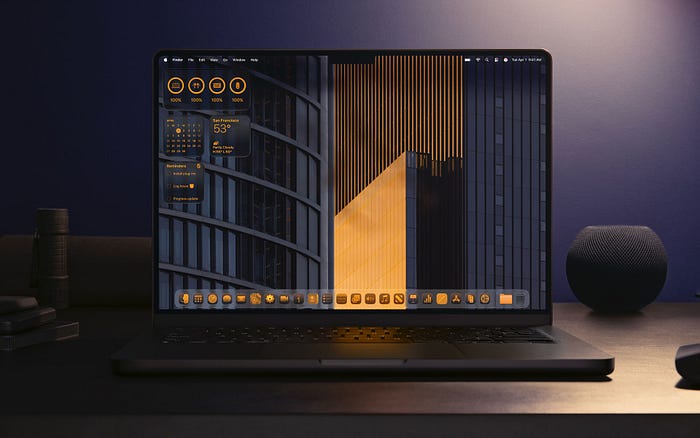
That is one difference to keep in mind, then: Linux users remain completely free in terms of how they use their computers, while macOS users accept the limits that Apple's thinking and "walled garden" impose, in exchange for a refined graphics user interface and a streamlined user experience overall. The other difference is, obviously, cost: Linux is offered free of charge in numerous flavors and it can be installed on practically any PC out there, while consumers only have access to macOS through a Mac computer, which will invariably lead to a purchase.
The good news — and the one thing that makes this discussion so relevant in late 2025 — is that it's nowhere near as costly as it used to be to enter the Mac ecosystem: new Mac laptops and desktops cost less than $750 and $500 respectively — even less if one opts for models based on the M3 or M2 processors instead of the M4, even less on Black Friday/Cyber Monday — and they are perfectly capable of doing what 90% of consumers do 90% of the time on a computer. Capable Linux-compatible PCs can always be found for less, but build quality and software support matter in the long run, so Apple ends up looking like a better choice here.
Between macOS and Linux it all comes down to how involved a consumer wants to be in terms of installing, configuring and maintaining an OS.
Funnily enough, one reason why it would be preferable to get a reasonably capable PC and install Linux on it instead of getting a Mac of equivalent cost is… PC games made for Windows. See, the Linux community and companies like Valve have done a lot of great work on emulation layers like Proton over the last few years, so people who would like to do mainstream stuff on a computer and play modern games now have a much, much wider range of Steam titles at their disposal on a Linux PC than on a Mac. Things are improving for Apple's computers on that front, but so are they for Linux — so the latter already has a considerable advantage there.
In other areas Linux and macOS are not as different as people sometimes seem to think. They are both fast or very, very fast, depending on the hardware they run on (they depend on similar Unix OS cores after all), they are both quite secure (Linux can be locked down more effectively than macOS but macOS is updated more frequently), they both respect consumers' privacy (Apple does collect certain user information and system usage statistics but nowhere near as much as Microsoft does in Windows). They are both supported for free with system updates for long periods of time and they can both run Windows programs through emulation (but Linux can do so without the need for commercial software).
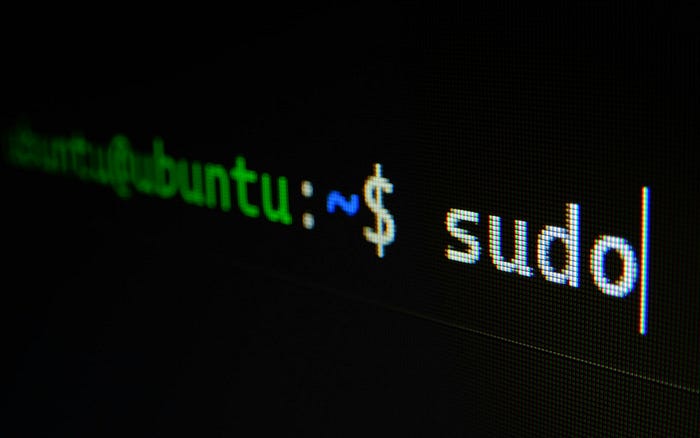
All in all, though, it all comes down to how involved a consumer wants to be when it comes to installing, configuring and maintaining a modern operating system. People who want to truly make their computers their own and retain absolute control over them (in exchange for learning a lot of new stuff and not counting on any hand-holding when it comes to system problems) will be happy with any one of several high-quality Linux distributions. People who want to concern themselves as little as possible with how their system works and performs, choosing to focus on using it as a creative and productivity tool instead of tinkering with it, should go with macOS. For people who use Apple's devices and services macOS is a no-brainer, as is Linux for PC gamers.
Windows vs macOS: how much of a gamer are you really?
It is admittedly this comparison that's of more interest to mainstream consumers looking into what their next computer should be based on. Linux has always been an absolutely great operating system for a certain type of user, after all, but also not that interested in welcoming all types of users. It seemingly can't be bothered, for example, to make the transition from Windows 10 easy for non-techies or even serve as a true alternative to Windows 11 for people who just don't have a lot of experience with computers.
Windows vs macOS, though? That's a different story entirely.
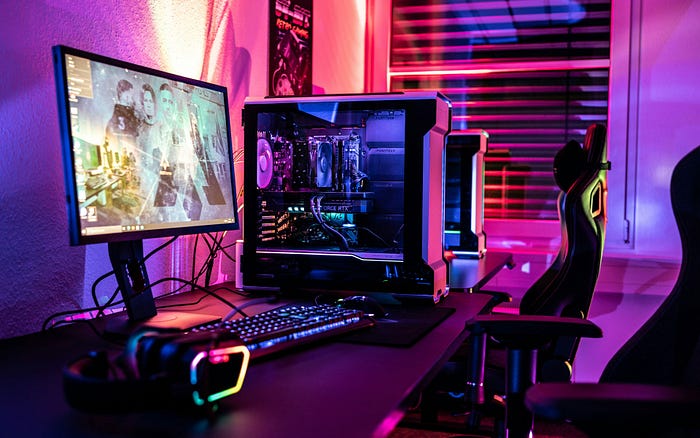
The reason for that is simple: while Windows has now hit an all-time low in terms of popularity — due to Microsoft's disregard for user privacy, consumer choice and code quality control over the last decade — macOS, during the same period, has retained its loyal fans and even added quite a few new ones. Apple's operating system has always been leaner and faster, more stable and more secure (thanks to its UNIX/BSD core), but now it's also more carefully developed (so more reliable) and decidedly more privacy-respecting than Windows. All of that while it's still an easy to understand and use OS that does not try to force pointless AI functionality down anyone's throat at every opportunity.
As stated earlier, it used to be that macOS was not as readily available to mainstream consumers as Windows because Apple hardware commanded notably higher prices than similar PC hardware in all personal computer categories. Not so anymore. Continuous improvements in the excellent M-series of chips allowed Apple to bring powerful, versatile desktop and laptop Macs to market that easily cater to the needs of mainstream consumers for way less money than before: people can now get recent MacBook and Mac Mini models for way under a grand or half a grand respectively.
The familiarity of hundreds of millions of consumers with Windows is essentially weaponized in order to push a corporate agenda.
There will always be cheaper Windows-based laptop and desktop PCs, but not as well-built, as power-efficient or, frankly, as capable as these. It took Apple a long while, but Macs are now well-represented in all price ranges.
So if macOS is now as accessible to mainstream consumers as Windows and superior to that, why hasn't everyone left Microsoft's OS behind? Force of habit for one, PC games for another. Windows users tended to just migrate from one version to the next for decades and it was basically with Windows 10 that major problems (and Microsoft's consumer-hostile choices) piled up, coming to a head with Windows 11. But, as mentioned earlier, whole generations of people have only ever used computers based on Windows: it's not easy to leave software that familiar behind… unless said software is now weaponized in order to push a corporate agenda, that is.
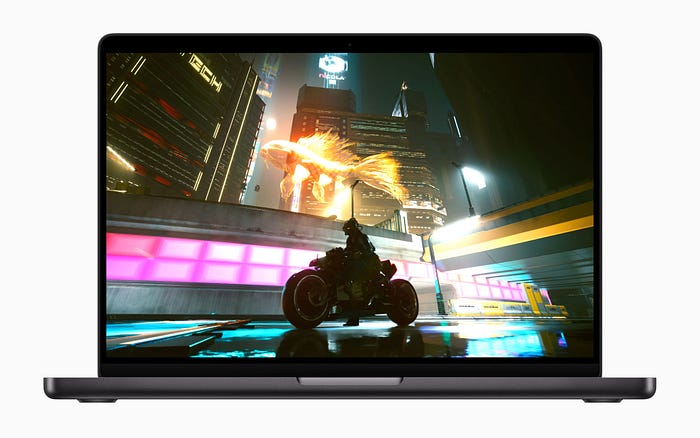
The other reason, PC games, is actually valid: not only is Windows compatible with the widest range of modern games, hardware components, store fronts and services, but it's also compatible with thousands of legacy PC games from previous decades. It's compatible with all online multiplayer PC games too, many of which are either not supported (Linux) or simply don't exist (macOS) on other operating systems. The Windows gaming ecosystem is so vast that no other OS can hope to match it any time soon. Whether that reason alone is enough for people to put up with Microsoft's unacceptable practices going forward, is up to each individual to decide.
Windows vs macOS vs Linux: for mainstream consumers the choice is clear
Based on the above, it's not that hard to see why macOS emerges as the best option mainstream consumers have for a modern operating system right now, despite the associated cost of purchasing a Mac in order to actually use it. It's not perfect by any means, but macOS is an extremely well-balanced compromise between Linux and Windows in terms of speed, stability, usability, security, privacy, software range and hardware support. If all of these factors are taken into account, then — as a whole — macOS is the best OS for most people.
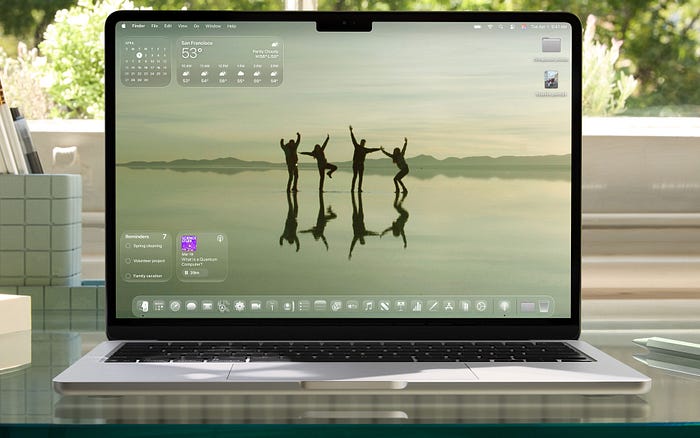
To make a point, here's a quick breakdown: macOS is not as fast as Linux, but it's close and much faster than Windows. It is not as stable as Linux, but it's close and way more stable than Windows. It is almost as secure as Linux and much more secure than Windows. It is almost as privacy-respecting as Linux and vastly more privacy-respecting than Windows. For mainstream consumers it is just as easy to install, use and maintain as Windows, while being far easier to set up and live with than Linux. Its range of native applications is not as wide as that of Windows, but it's close enough while being both wider and of higher quality than that of Linux.
Software emulation is always an option here, but it's not ideal for mainstream consumers and, even if leveraged, it does not redress the balance between these operating systems in particular. In terms of hardware support, what's offered by macOS is limited to Apple systems — so it obviously isn't as strong as that offered by Windows or even Linux. Plus, in terms of cost, there can be no comparison between macOS (e.g. $499), Windows (e.g. $49-$249) and Linux (e.g. free-$49.99). As an operating system per se, though — the most important piece of software consumers are depending on for work and play — macOS really is the most balanced option out there.
Windows erosion and Linux introversion could finally help macOS gain some serious ground — it certainly deserves as much.
That said, it's also easy to see why Linux is considered to be the best operating system in the world in technical terms: it is the fastest, the most secure and the most private of "the big three", while offering good hardware and software support. Its very nature though — open source, modular and highly customizable — also proves to be its biggest problem, as it is difficult to set up, tricky to properly maintain and quite hard to troubleshoot if things go wrong. These are deal breakers for mainstream consumers who need devices that "just work". Linux — with very few exceptions — is not the OS that can or even particularly want to provide something like that to the masses.
So, for most people, macOS it is — even if there's a cost involved, even if hardware is limiting their choices, even if the range of available games is not wide enough yet. It is the operating system with the highest probability of serving well most people buying a new computer going forward, regardless of the OS they've been using up until now. Apple's OS will not really give anyone a hard time, regardless of their being tech-savvy or not, which is what mainstream consumers may need above all else these days.
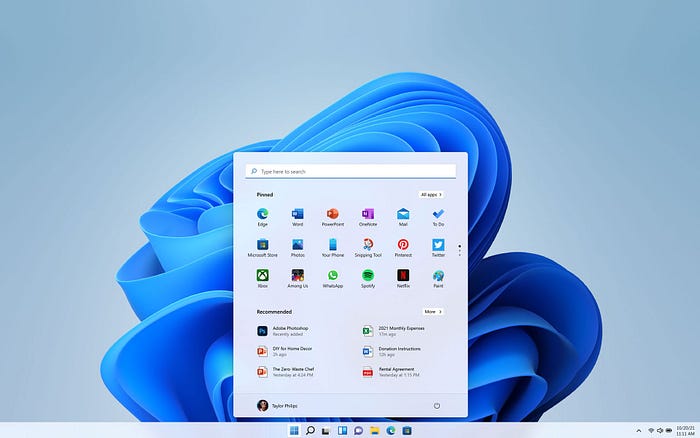
For people currently looking into migrating from Windows 10 — which is now unsupported — to an actually secure OS, the second-best option after macOS is a user-friendly Linux distribution such as Mint or Zorin Core. The same obviously goes for people who want to leave Windows behind for no cost at all. In fact, the only consumers who should actually stick with Windows 11 for the time being are hardcore PC gamers, as it still reigns supreme when it comes to this particular use case. People who have the option can always keep around a PC just for gaming… but do everything else on a different computer. One they don't actively hate, you know?
If you enjoyed reading this story, please consider supporting my work through BuyMeACoffee or KO-FI. Since I run on coffee anyway… more cups, more stories!