I've been a huge fan of their work since the original Max Payne came out (oh no) 23 years ago. In all that time, they've only made one "traditional" follow-up in Max Payne 2, and it was one of the most unfortunate sales flops in the history of the universe. It didn't fall on its face, exactly, but it didn't sell nearly the number of copies as its predecessor.
It shouldn't shock me then that Remedy has mixed things up with each game they've made in the last two decades. They released three distinct new IPs in Alan Wake, Quantum Break, and Control, and I enjoyed each one. All three of them are broadly action games and although they're all technically set in the same fictional universe, they're also wildly different from each other in terms of tone, setting, and visual aesthetics. Each one was built around the idea of a cool action hero with a gun married to surrealistic storytelling. They enhanced the legacy of action games that Remedy worked so hard on in their early days. Then it all fell apart.
Two years ago, they shipped Alan Wake 2, which seems on the surface like it should just be the sequel to Alan Wake. That would make sense, right? Instead, it shifted genres from action to survival horror, and it got so deep in the weeds of the greater Remedy lore that large swathes of its narrative won't matter to you if you haven't been following along this whole time. You basically need to have played every prior Remedy game (even the Max Payne titles) to fully "get" Alan Wake 2.
I loved that idea in theory, but I found the experience of actually playing the game to be a painful one. The game took the fast combat of the original title and slowed it way down into a clunky, ammo-limited horror nightmare. The aiming was muddy, the movement was cumbersome, and every encounter felt super dangerous. The whole game was also peppered with streamer-friendly jump scares and annoying backtracking puzzles, totally removing the fun fast pacing of the original. The first Alan Wake was an enjoyable action romp with a great horror-tinged story, but the sequel just didn't connect with me at all. It didn't even feel like it came from the same company, outside of the broadly surreal vibe and some of the characters.
It had one awesome musical sequence that led to an amazing live performance at the Game Awards, but that sequence so overshadowed the rest of the game because it's the only genuinely and unambiguously good thing that's in there.
All of this is to say that I have a personal history of going up and down with Remedy's games. They always have great atmosphere and storytelling, and often soundtracks that are unrivalled, but their weird recent refusal to iterate and refine the action combat that they're so known for sometimes backs them into a corner.
I love the original Control more than anything else the company has ever made. It just barely outshines Alan Wake and Max Payne 2. It's the most accomplished action game they've ever produced mechanics-wise, with incredible combat set across environments that break apart dynamically with physics debris going everywhere. It has an excellent soundtrack and some really fun live action video stuff that I won't spoil here. Protagonist Jesse Faden is a fully awesome character, and simply one of the coolest women to ever appear in a game.
So of course, Remedy has now spent many years making multiple follow-ups that don't feature Jesse. I do not understand this, nor can I wrap my head around it. Earlier this year they put out FBC Firebreak, a low-budget and poorly conceived multiplayer shooter about characters that were essentially random faceless NPCs from the background of the original Control. They promoted it like it was going to be the next mega-hit, and then it failed so profoundly that the CEO left the company. Yikes.
I still had high hopes for Control 2 to come along and save the day. Last night this long-in-development project made its grand entrance at The Game Awards, now called Control: Resonant. It takes the action shooting gameplay and protagonist Jesse Faden…and throws them promptly away, instead opting to be a melee-focused action RPG that looks kind of like a fast character action game or a Souls-like.
This is the worst possible outcome I can imagine for a Control sequel.
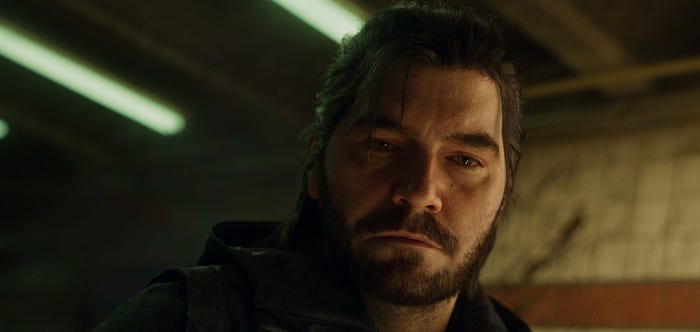
The new main character is Dylan Faden, Jesse's brother who is sort of psychically connected to her, and who has spent the last several years trapped in a glass cube for Important Plot Reasons. In this new game he has a beard and a magical sword thing that can transform into other weapons. He runs around New York hitting monsters, and doing air combos, and just generally looking like he fell out of Stellar Blade or Devil May Cry.
I don't know why this is happening. Remedy built Control entirely around some of the best physics-driven shooting action I've ever played, so of course the sequel is now about hitting stuff with swords? I know that Souls-likes and character action games are popular right now, but they're the absolute last thing that comes to mind when I think of this studio or Control. They've never made a game like this before, so they're starting over just like with Alan Wake 2 instead of playing to their strengths, and I don't understand why. I know that it's easy to fall into a creative rut, but of all the things they've released in the last twenty years, Control was the one that felt like it had the most stories left in it, to me.
I just wanted a new adventure with Jesse Faden in a new place, and some cool new things to break apart with a magic gun that might also be Excalibur. This is the part of the article where I'm supposed to say "I do like this team, so maybe this will turn out great and I'll eat my words," but I've fallen into that trap twice recently with Alan Wake 2 and Firebreak and it didn't work out either time, so I'm not going to fall for it again.
I think Remedy used to be one of the best action studios on the planet, but they've now spent the last half decade making a clunky horror game, a bad multiplayer game, and a conceptually baffling melee-focused action RPG. Again, I know that variety is the proverbial spice of life, but if you make too many changes to a video game series you risk losing its identity and the very things that made it fun. Reboots are generally huge gambles when the original was beloved, and I thought the first Control was so successful that it didn't need this kind of treatment. It's only six years old. It hasn't been gone long enough to need this kind of shake up.
I'm also starting to worry that the whole "Remedy Connected Universe" thing is just a way to keep hardcore fans on the hook and hope that it'll make up for any other narrative foibles. I waited years for Alan Wake to get a satisfying plot resolution only for it to get bogged down in extra lore and metaphysical pondering. It was interesting, but not worth the wait. Why bother coming up with a proper ending for something when it can just end on a cliffhanger that teases other loosely connected future games? It's the same problem that Marvel's movies have run headfirst into, and while I think they're finally digging out of the pit I'm not sure that a Remedy game will ever have a complete-feeling story again as long as it has to connect to this huge pile of other ideas.
I do want to be wrong about Control: Resonant, but I also don't at all want to play a game where Dylan hits things with a sword, so they've already lost me. The Jesse Faden DLC chapter was my favorite part of Alan Wake 2 outside of that musical number, and I'll be around in case they ever decide to develop her some more. If she appears minimally in the background or as a villain in this new game, as it seems like they're hinting towards, that'll just upset me more.
Control 2 seemed like one of the few things at the Game Awards that would be specifically targeted at me, and instead I'm just here going "well that sucks." So many other companies are so tremendously skilled at making this sort of game, and within franchises that have identities more strongly suited to the form.
I think old Remedy is officially gone, and this game seems designed around chasing players who have never heard of their stuff. I know they've struggled to grow a mainstream audience, but Control was a solid hit for them in a sea of missed sales expectations. It was a good and non-risky template to follow, and I would have loved to see what they'd do with another take on its mechanics and character.
Instead, we get bearded sword man, now starring in his eight millionth video game.