
Most people believe language learning is mainly about memory, grammar, and vocabulary. But if that were true, why do so many intelligent, well-prepared learners freeze when they have to speak?
Sometimes it isn't a lack of knowledge that holds us back.
It's fear.
Not fear of forgetting a word, but fear of being judged, of being "less than," of being exposed.
Language learning is not only an intellectual activity. It's a deeply personal and emotional one. Every time we open our mouths in a new language, we put a part of ourselves on the line. We show our imperfections. We risk being misunderstood, corrected, dismissed, or ridiculed.
That emotional exposure can feel paralyzing.
Many of my students — brilliant, capable adults — have told me things like:
- "I'm fine writing emails in English, but I get tongue-tied in meetings."
- "I rehearse my sentences in my head a hundred times before I dare to speak."
- "I feel stupid when I open my mouth, even though I understand everything."
These aren't isolated stories. They're recurring patterns.
And they point to something that language textbooks never address: the emotional history we carry with our voice.
1. Tracing It Back: Childhood Roots of Language Anxiety

I remember being in school in Belarus. I was a top student, graduating with a golden medal. I studied a lot and almost always knew the answers. I wanted to participate in class discussions. But I couldn't. I would sit with a lump in my throat, hands cold and sweaty, heart pounding.
I kept repeating to myself, "Come on, Viktoria, raise your hand, you know this!" But the fear always won. By the time I gathered the courage, someone else had already answered. And once again, I was left in silence, angry at myself, ashamed, and helpless.
This fear didn't come out of nowhere. Like many children, I internalized the idea that speaking up could be dangerous. Maybe it was a stern teacher, a moment of public correction, or a fear of being wrong.
I also dreaded oral exams. In our post-Soviet educational system, almost all testing was oral. I prepared day and night, reciting everything by heart. But, sometimes, when the exam came, my mind went blank. It was especially the case when a stern Soviet teacher was interrogating me. The pressure to perform perfectly in front of authority figures made me feel like I was under attack, not being evaluated.
The classroom, which was supposed to be a place of growth, became a battlefield. And this experience isn't unique to me. Millions of children grow up in environments where speaking is loaded with pressure. Where perfection is expected, where mistakes are punished or laughed at, where voices are silenced, explicitly or subtly.
And these experiences leave deep imprints.
As children, we absorb them both cognitively and somatically. Our bodies remember. Our nervous system gets wired to interpret speaking up as a threat.
So, as adults, when we find ourselves in a new language class, facing the prospect of speaking in front of others, the fear returns. The stakes feel impossibly high, even if we're trying to say, "Could you pass me the salt?"
2. Language Learning as Emotional Re-exposure

Years later, I found myself in Sweden, preparing for a job interview. I had already achieved a C2 level in Swedish and passed the teaching certification exam. But the fear returned. I worried about my accent. About making a grammar mistake. About people thinking: "How dare she teach this language? She needs a class herself."
This is despite knowing, scientifically, that as an adult language learner, achieving perfect native-like speech is nearly impossible. As Cook (1999) and Ortega (2009) have shown, non-native speakers often reach high levels of proficiency, but slight deviations persist because of how adult brains process language. Still, knowing this doesn't silence the inner critic.
Learning a language is not a neutral experience. It reawakens our oldest fears of being seen, of being imperfect, of not belonging.
For many adults, language learning brings back the sensation of being in school — small, evaluated, and on display. The stakes feel higher because the pain is older. We remember every time we were silenced. Every time we weren't enough.
And so we freeze. We avoid speaking. We obsess over correctness. We'd rather stay silent than risk being judged. This is what makes language learning such a profound emotional journey.
3. Science Behind Speaking Anxiety and Language Learning
Imagine you're standing at the edge of a cliff, ready for bungee jumping.

You know you're wearing a harness. You know other people have done this jump before you. But your heart races. Your palms sweat. Your legs freeze.
You hesitate to jump, not because you can't, but because your body doesn't feel safe.
That's what speaking a foreign language can feel like for many people. Even when the stakes are low. Even when you know what to say.
Your mind says, "It's just a sentence."
Your body says, "This is dangerous."
And your body wins.
Anxiety is not a personal flaw. It's a biological safety response. Your brain, in that moment, believes that speaking might lead to danger, humiliation, rejection, loss of face. And it does what it was built to do: protect you, like a loving mom who protects her baby.

Speaking anxiety has been well-documented in psychology and applied linguistics.
According to Horwitz, Horwitz, and Cope (1986), foreign language anxiety includes three main components:
- Communication apprehension (the fear of speaking in front of others)
- Test anxiety (the fear of being evaluated)
- Fear of negative evaluation (the fear of being judged or criticized).
Learners experiencing high levels of anxiety tend to avoid speaking altogether, underperform during lessons or exams, and suffer from intense emotional discomfort in classroom and real-life interactions.
MacIntyre (1995) explained that anxiety can interfere at three levels:
- Input (we can't take in information clearly)
- Processing (our thoughts get scrambled)
- Output (we struggle to speak fluidly).
In other words, when we are anxious, our brains struggle to take in information clearly. We have difficulty organizing and retaining what we've learned. And when we try to speak, that stored knowledge often falls apart, like a carefully built tower collapsing under pressure.
In short, anxiety hijacks fluency.
4. But What's Actually Happening in the Brain During These Moments of Panic?

The amygdala, the brain's fear center, becomes overactivated when we perceive social threats, like being judged or laughed at (LeDoux, 2000). This might be a disapproving look, a correction from a teacher, or even the internal fear of sounding "stupid." The brain doesn't distinguish between real danger and imagined humiliation. It responds in the same way: by triggering the fight-flight-freeze response (LeDoux, 2000).
Under stress, cortisol floods the body. Blood flow is diverted away from the prefrontal cortex (where language and logic live) and redirected toward survival systems. The body prepares to run or shut down. That's why you blank out during oral exams. Your voice shakes, even when you've practiced. You stumble over simple words, or feel your mind go completely silent exactly when you need language most.
Put simply, you are not incompetent, your body is trying to keep you safe. And often, anxiety doesn't arrive dramatically. It hides.
It whispers, "Better not speak."
It makes you rehearse a simple question twenty times before giving up. It keeps your hand down in class. It avoids eye contact. It presses you to write instead of talk. It can even convince you that you're "not good at speaking", when in reality, you're protecting an old wound.
Anxiety affects not only the brain, but also the entire body. People may feel foggy-headed, dizzy, or dissociated. Their breathing becomes shallow, their muscles tense, and their stomach churns. These are natural symptoms of a dysregulated nervous system. Unfortunately, many learners mistake them for personal failure, reinforcing a cycle of fear and silence.
5. My Journey From Fear to Healing
You might think that after teaching for over 20 years, standing in front of a classroom would feel easy. But the truth is, every time I meet a new group of students, I still feel butterflies in my stomach.
Every ten weeks a fresh group of adult learners enters my Swedish classroom, and for a brief moment before and during the first lesson, I feel that familiar flutter of nerves. I breathe in. I smile. And I remind myself: they won't eat me alive.
And they never do. Quite the opposite. They smile back and look at me with curious eyes, eager to start learning.
Over time, teaching became my greatest therapy. During those classes, I slowly rewired the fear that had lived in me since childhood. The fear of being judged. The fear of not being perfect. The fear of speaking.
I spoke anyway, I made mistakes, I laughed with my students. I listened to their stories. I watched them growing. I supported them fully, and they gave me the same in return.
One of the most moving moments was when a group of my students organized a surprise baby shower for me. I walked into the room expecting a normal class, and instead found decorations, gifts, snacks, and happy tears. I was overwhelmed by their love, our connection, and the deep, mutual respect we had built.
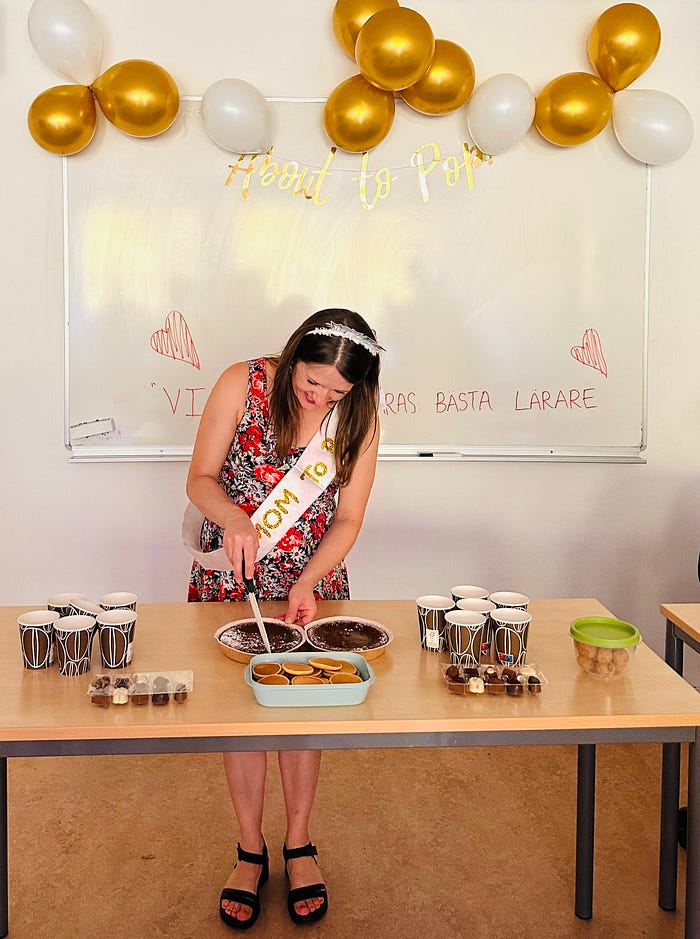
I've taught thousands of students over the years. I still remember so many of their names and faces. When we cross paths, sometimes they stop me with glowing eyes and say: "You believed in me." But in reality, they taught me how to believe in myself.
Teaching gave me voice.
Not only in the classroom, but beyond. I spoke at academic conferences. I represented PhD students in meetings with professors, deans, and the university rector. I gave talks at science festivals and joined Toastmasters. I practiced public speaking as much as I could not simply to develop a useful skill, but primarily to heal my fears.
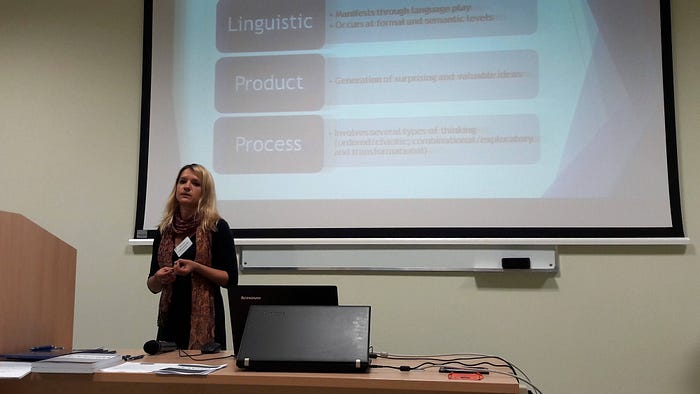
And every time I speak, even with a tremble in my voice, I become freer.
6. Psychological Strategies for Rewiring Fear

The good news is that the brain is not fixed. It's adaptable, responsive, and capable of healing. With repeated, safe exposure and emotionally positive experiences, fear patterns can be rewired. Through neuroplasticity, we can build new associations rooted in safety and self-trust instead of fear.
Here are some of the most effective psychological approaches I've heard about:
Cognitive Behavioral Therapy (CBT)
It focuses on identifying irrational beliefs, like "If I make a mistake, they'll think I'm incompetent", and challenging them with evidence and logic. A therapist might help you reframe that thought into something more realistic: "Everyone makes mistakes. People will notice my effort more than my accent." Over time, this reshaping of internal dialogue helps reduce the emotional charge around speaking.
Mindfulness-Based Stress Reduction (MBSR)
This approach helps you notice anxious thoughts without identifying with them, while grounding the body through breathing, present-moment awareness, and relaxation techniques (Kabat-Zinn, 2003).
When you feel anxiety rising before speaking, a simple breath practice can regulate your nervous system and bring clarity back online.
Somatic Grounding
It includes body-based techniques that focus on calming the physiological symptoms of anxiety:
- Deep belly breathing
- Progressive muscle relaxation (tense and release muscle groups to release held tension)
- Vagal nerve stimulation (like humming, slow exhalation, gentle neck stretches, to stimulate the parasympathetic nervous system and signal to the body that you're safe)
- Grounding practices (like focusing on the soles of your feet) to anchor you in the present when panic starts to rise.

These techniques shift the body from fight-or-flight to rest-and-digest — a state where you are calm and language flows more easily.
Exposure Therapy
We don't overcome speaking anxiety by avoiding it. You should start speaking gradually in safer and safer contexts.
For example:
- Practicing phrases alone in a mirror
- Recording your voice and listening back
- Speaking with a trusted tutor one-on-one
- Sending a voice message to a friend or tutor
- Participating in small group conversations
- And eventually, speaking in public or on camera
Each step, if done mindfully and with kindness, builds new neural connections. You start teaching your brain: "This is not a threat. I can handle this."
Self-Compassion
Dr. Kristin Neff's research shows that self-compassion helps reduce anxiety, increase resilience, and even improve academic performance.
Instead of responding to a shaky voice or forgotten word with criticism, you pause and offer yourself the same kindness you would give a friend:
"I'm doing something brave. It's okay to be imperfect. This is how I grow."
7. Practical Strategies for Language Learners

Now that we've explored the psychological roots of speaking anxiety, and the ways it can be softened and rewired, let's move into simple practical strategies for anxious language learners.
1. Choose Safety Over Perfection
The fastest way to shut down your voice is to place it in a judgmental environment. If you're learning with someone who constantly corrects you, interrupts, or makes you feel small, your nervous system will not allow you to relax enough to speak.
Instead, choose speaking partners (tutors, language buddies, or friends) who create a safe and encouraging space where mistakes are expected, where effort is celebrated, where laughter is kind, not cruel.
You don't grow in hostile soil. You grow where you're safe.
2. Rehearse in Private, Speak in Public Later
If the thought of speaking to others terrifies you, begin with no one listening. Start by:
- Talking to yourself while cooking or walking
- Reading simple texts out loud
- Recording voice memos about your day
Then listen back. Do not to judge, just notice your progress. Hearing your own voice, over and over, builds familiarity and confidence. This also allows your brain to practice without pressure, gradually desensitizing your fear response.
3. Write Before You Speak
Writing activates the language centers in your brain in a low-pressure way. Journaling in your target language, writing simple dialogues, or creating vocabulary-based sentences gives your brain a gentle rehearsal space before you speak out loud.
This technique works especially well if you combine it with speaking: write, read it aloud, revise, then try again without the paper. You'll build fluency and flexibility.
4. Build a Streak of Small Speaking Wins
Start a "speaking streak" journal. Every day, write down one thing you said out loud, no matter how small:
- I ordered coffee in Italian
- I joined a group call and introduced myself
These moments may feel tiny, but they're neurobiologically massive. Every time you speak, especially when it's scary, your brain updates its prediction: "Speaking didn't hurt me. Maybe it's okay to do that again."
Over time, this creates a new normal. Speaking becomes less threatening, more natural, and enjoyable.
5. Reframe Mistakes as Connection Points
Most of us assume mistakes are humiliating. But the opposite is often true.
When you make a mistake and laugh, apologize, or correct yourself, you show vulnerability. And vulnerability invites connection.
Think of the last time someone tried to speak your language. Were you judging them? Or rooting for them?
Flip the narrative in your head: "Mistakes are not evidence of failure. They're proof I'm actively learning."
6. Use Visualization Before Speaking
Before you enter a class, a call, or a conversation, close your eyes.
- Visualize yourself speaking calmly and clearly
- Imagine pausing and recovering when you forget a word
- See the other person responding kindly
- Feel your body remain steady, grounded, and open
This type of mental rehearsal is used by athletes, actors, and can certainly be used by language learners. It primes your nervous system to expect success instead of panic.
7. Make Speaking Playful
Fear thrives in pressure. But language at its core is playful.
- Sing in your target language
- Read a silly children's book out loud
- Talk to your pet in Spanish
- Mimic accents while brushing your teeth
- Make mistakes on purpose to see how it feels
The more fun you can inject into your speaking life, the more your brain learns: "This isn't danger. This is joy."
8. Be the Kind of Learner You'd Admire
If someone else spoke your native language the way you speak your target one, what would you say to them? Would you mock them for their grammar? Or would you smile and encourage them?
Now give yourself the same grace.
Stand in front of the mirror, look yourself in the eye, and say: "I am proud of you. I see your courage. And I love the sound of your voice."
Because your voice doesn't need to be flawless to be worthy of being heard. It just needs to be yours.
Final Thoughts

There will be days when the words won't come.
When your throat tightens and your heart beats faster just thinking about opening your mouth. When you feel like you've forgotten everything, even though you studied for hours. You'll be tempted to believe that this means you're not ready, that you're not good enough, that you're not "a language person."
But that voice in your head isn't telling you the truth. It's fear talking. And fear is rarely honest. Those thoughts are not facts. They're echoes of old stories. Stories you no longer have to believe.
You are allowed to speak.
Not when your grammar is perfect or when you sound fluent. But now. In the process of learning and becoming.
So when anxiety whispers that you're not ready, speak anyway.
When your voice trembles, let it.
When the words feel stuck, breathe, stumble, laugh, and try again.
Thanks for reading!
If you enjoyed this article, leave a comment and follow for more research-based insights on language learning, fluency, and mindset.
References
Cook, V. (1999). Going beyond the native speaker in language teaching. TESOL Quarterly, 33(2), 185–209. https://doi.org/10.2307/3587717
Dewaele, J.-M., & MacIntyre, P. D. (2014). The two faces of Janus? Anxiety and enjoyment in the foreign language classroom. Studies in Second Language Learning and Teaching, 4(2), 237–264. https://doi.org/10.14746/ssllt.2014.4.2.5
Gregersen, T., & Horwitz, E. K. (2002). Language learning and perfectionism: Anxious and non-anxious language learners' reactions to their own oral performance. The Modern Language Journal, 86(4), 562–570. https://doi.org/10.1111/1540-4781.00161
Horwitz, E. K., Horwitz, M. B., & Cope, J. (1986). Foreign language classroom anxiety. The Modern Language Journal, 70(2), 125–132. https://doi.org/10.2307/327317
Kabat-Zinn, J. (2003). Mindfulness-based interventions in context: Past, present, and future. Clinical Psychology: Science and Practice, 10(2), 144–156. https://doi.org/10.1093/clipsy.bpg016
LeDoux, J. E. (2000). Emotion circuits in the brain. Annual Review of Neuroscience, 23, 155–184. https://doi.org/10.1146/annurev.neuro.23.1.155
MacIntyre, P. D. (1995). How does anxiety affect second language learning? A reply to Sparks and Ganschow. The Modern Language Journal, 79(1), 90–99. https://doi.org/10.2307/329395
Neff, K. D. (2003). The development and validation of a scale to measure self-compassion. Self and Identity, 2(3), 223–250. https://doi.org/10.1080/15298860309027
Ortega, L. (2009). Understanding second language acquisition. Routledge.